Trump to Attend Supreme Court Birthright Case
President Trump may attend the Supreme Court's hearing on birthright citizenship, a case that could reshape immigration policy. The court's decision hinges on the interpretation of the 14th Amendment. The discussion also covered the impact of government shutdowns on national security and recent adjustments to asylum application rules.

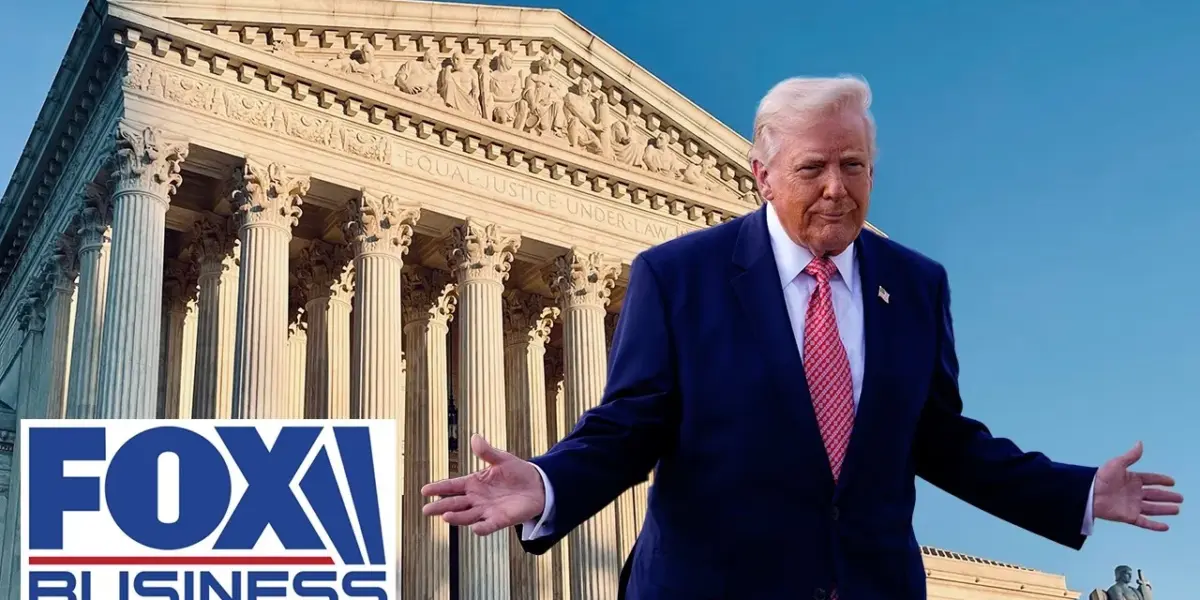
Supreme Court Hears Birthright Citizenship Case; Trump May Attend
The Supreme Court is set to hear arguments in a major case that could change birthright citizenship in America. President Trump has stated he may attend the proceedings in person. This marks a significant moment, as a sitting president has never before personally observed oral arguments at the nation’s highest court.
Immigration Policy at the Forefront
The case centers on the interpretation of the 14th Amendment, specifically the clause stating that all persons born or naturalized in the United States, and subject to its jurisdiction, are citizens. The Trump administration argues that this clause should not automatically grant citizenship to children born in the U.S. to parents who are in the country illegally or are not legal residents.
During a discussion on the matter, a legal analyst explained the historical context. The 14th Amendment was originally intended to protect the children of formerly enslaved people after the Civil War. The analyst argued that the founders did not envision it being used by wealthy individuals or those exploiting the system to gain citizenship for their children. The current interpretation, they suggest, may not align with the amendment’s original purpose.
“The whole point of the amendment had nothing to do with the illegal immigrants and tourism and all that nonsense that is going on where people exploit our system.”
A key question before the court is the meaning of being “subject to the jurisdiction of the United States.” Some legal interpretations suggest this implies more than just being born on U.S. soil. It could involve having a loyalty to the United States. The argument is that one cannot simultaneously be subject to U.S. jurisdiction and the jurisdiction of their parents’ home country, especially if the parents are not legal residents.
Potential Impact on Immigration
If the Supreme Court rules in favor of the Trump administration’s interpretation, it could significantly alter the landscape of U.S. immigration policy. It might also make it harder to deport parents of children born in the U.S. if those children are granted citizenship.
The analyst acknowledged that challenging over 100 years of legal interpretation is difficult. However, they emphasized the importance of bringing this issue to public discussion. If the Supreme Court does not rule in favor of this reinterpretation, the administration might consider pursuing a constitutional amendment to clarify the law.
Broader Context: Government Operations and National Security
The discussion also touched upon the recent government shutdown, which impacted the Department of Homeland Security (DHS). Former acting ICE Director Tom Homan noted that ICE agents may continue to assist at airports even after TSA officers return to normal operations. This is partly because 500 TSA agents were affected by the shutdown.
Homan highlighted that having ICE agents present at airports serves as a deterrent to illegal immigration and helps supplement law enforcement. In times of heightened security risks, such as the recent tensions with Iran, visible law enforcement presence at airports is crucial for deterring potential threats to travelers and airlines.
The extended shutdown raised concerns about cybersecurity. If skilled personnel like cybersecurity experts do not receive pay, they might leave their jobs, and these positions are not easily replaced. Furthermore, national security experts worry that internal discord and a seemingly weakened government can make the U.S. appear more vulnerable to adversaries.
There was criticism leveled at Democrats regarding a recent funding bill. It was suggested that the bill did not fund ICE but also lacked any reforms, despite claims that it was about ICE reform. The sentiment expressed was that funding for DHS and ensuring public safety and national security should always be prioritized above political disagreements.
Asylum Policy Adjustments
In separate news, the White House has eased some restrictions on asylum applications for migrants from certain non-risk countries. These restrictions were put in place in November after an incident involving an Afghan national. The DHS has stated that the U.S. Citizenship and Immigration Services has lifted certain requirements for asylum-seekers from these specific countries. This move is seen by some as a pragmatic step to manage the asylum process while maintaining security by keeping high-risk countries under stricter scrutiny.
Source: Trump plans DRAMATIC Supreme Court appearance in MAJOR case (YouTube)

Related Articles

GOP Lawmaker Demands ‘Aggressive’ AG Replacement
GOP lawmakers are divided over border security funding as one representative calls for a more "aggressive" Attorney General. The debate over funding and the upcoming replacement for AG Pam Bondi highlight internal party struggles. Meanwhile, concerns about birthright citizenship and FEMA's low disaster fund add to the political landscape.

Trump Moves to Pay DHS Staff Amid Funding Stalemate
President Trump plans to sign an executive order to pay DHS employees amid a prolonged shutdown. This action comes as the department faces funding challenges and a review of its contracting policies. Expert Andrew Arthur discusses the need for congressional action and the push for greater accountability and efficiency within DHS.

Iran’s Regime Faces Pressure as US Focuses Inward
The U.S. faces a dual challenge: navigating complex foreign policy in Iran while grappling with deep domestic political divisions. The administration's strategy towards Iran is under scrutiny, with questions about its clarity and effectiveness. Simultaneously, the Supreme Court is hearing a pivotal case on birthright citizenship, potentially reshaping constitutional law.