Starship V3: SpaceX Reveals Revolutionary Engine Feed System
SpaceX's Super Heavy V3 booster incorporates a revolutionary new engine feed system, featuring a side-mounted liquid oxygen header tank and an advanced methane transfer tube. This design is critical for enabling propulsive landings and increasing the reliability of Starship's ascent stage. Meanwhile, Falcon 9 continues its record-breaking launch schedule.

Starship V3: SpaceX Reveals Revolutionary Engine Feed System
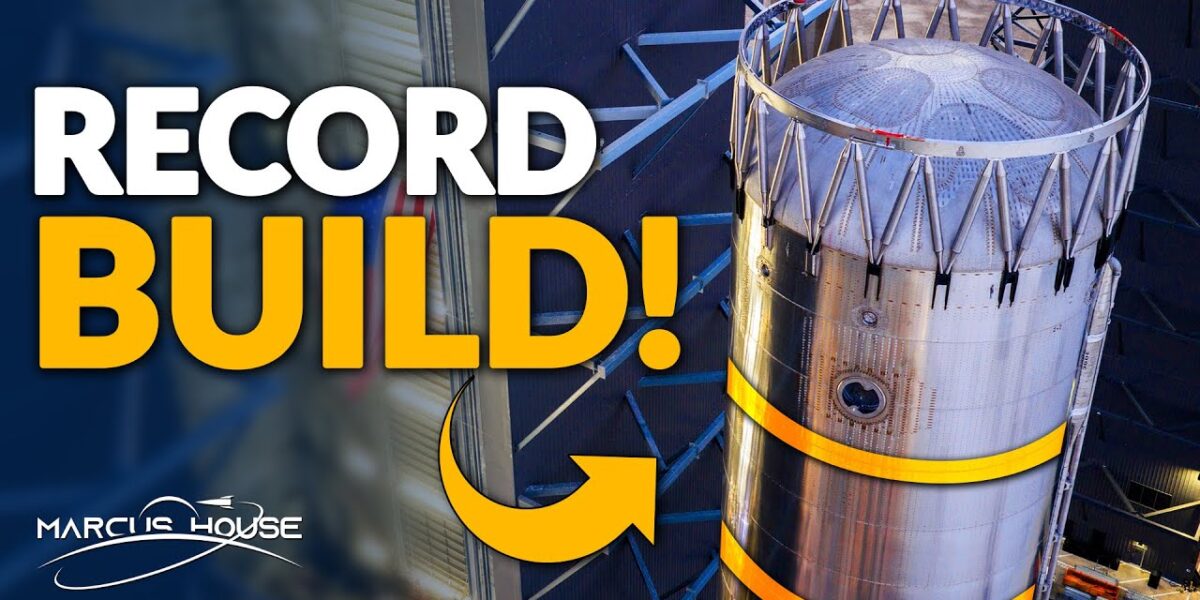
SpaceX is rapidly pushing the boundaries of reusable rocket technology with its Starship program, and recent developments in the Super Heavy booster’s Version 3 reveal a sophisticated and innovative approach to propellant management. As Booster 19 approaches record-breaking construction timelines, a closer examination of the V3 Super Heavy’s aft section unveils a redesigned system for feeding its 33 Raptor engines, particularly addressing the challenges of propulsive landings and potential tower catches.
Anatomy of the V3 Super Heavy
Recent teardowns and detailed photographic analysis of Booster 18 have provided unprecedented views into the V3 Super Heavy’s intricate design. The removal of the large central transfer tube has clarified the routing of propellant lines.
The liquid oxygen (LOX) for the 33 Raptor engines is no longer fed through this central conduit. Instead, the LOX tank, when full, directly supplies the outer Raptor engines, eliminating the need for complex plumbing to those units.
The real innovation lies in the handling of liquid methane (LCH4) and the supply of LOX during critical landing phases. The heavily reinforced central transfer tube now carries liquid methane from an upper tank down to the engines. This reinforcement is crucial, as the tube must withstand the immense pressure of the LOX pushing outwards when full and the methane pushing outwards when it’s being consumed.
The Ingenious LOX Header Tank
A significant point of confusion and fascination surrounding the V3 Super Heavy is the introduction of a new, side-mounted liquid oxygen tank. This component plays a vital role in ensuring a stable propellant supply for the engines during the demanding propulsive landing burn, especially when attempting a ‘catch’ maneuver or a landing on the launch pad.
As the main LOX tank depletes during descent, propellant can slosh, potentially starving the inner engines. The side-mounted tank acts as a liquid oxygen header tank, remaining full for a larger portion of the flight and providing a clean, uninterrupted supply to the inner 13 engines during the final burn.
This side tank’s plumbing is a marvel of engineering. Visible pipes branch out in a structure reminiscent of organic forms, feeding the inner engines.
Crucially, these pipes are equipped with valves that allow the engines to draw LOX either from the main tank or, when necessary, from the dedicated side header tank. This dual-source capability ensures optimal performance and prevents engine cutoff during the most critical phases of flight.
Methane Transfer Tube and Engine Feed
The methane transfer tube itself is a subject of much interest. It features an inverted cone at the top, tapering into a narrower inner tube that extends partially into the tank.
Speculation suggests this inner tube may act as a buffer, potentially being closed off at the top to manage pressure fluctuations and prevent issues akin to ‘water hammer’ in fluid systems. Parts of this system are designed to remain filled with gas throughout the flight, contributing to pressure regulation.
While the exact configuration is still being analyzed, the current understanding is that all 33 Raptor engines are fed from within this landing tank system. The 20 outer engines are supplied by dedicated methane lines routed around the exterior of the tank, while the inner engines draw from the central system. This configuration marks a significant departure from the V2 Super Heavy’s propellant supply architecture.
Launch Site Progress and Infrastructure Upgrades
Beyond the intricate details of the booster design, SpaceX’s Starbase facility continues to hum with activity. The removal of old infrastructure, such as the methane storage tanks from Pad 1, indicates a streamlining of operations and a focus on the new launch and catch systems. These tanks, used for recondensing boiled-off methane, were transported off-site, potentially destined for other SpaceX facilities or even the Cape Canaveral launch site.
Significant work is also underway on the launch towers. The ‘steel pancake’ structure is being dismantled, and the ‘chopped sticks’ supporting the original tower are receiving upgrades, including the installation of new circular plates to cap cut sections. At the new Pad 2, the Methane Quick Disconnect Hood has been reinstalled, ensuring a flush fit with the Liquid Oxygen hood, a critical step in preparing for integrated testing.
Deluge system testing has been observed, with multiple long-duration runs indicating thorough preparation and dialing-in of the safety systems. These tests, involving the flame buckets and top ridge, are vital for ensuring the system can handle the immense forces generated during a Starship launch and landing. The clamp arm hoods, designed to seal off gaps around the launch mount ring after retracting, are also being installed, further preparing the launch infrastructure for the full complement of 33 Raptor engines.
Booster 19: A New Speed Record?
The construction of Booster 19 is proceeding at an astonishing pace, potentially setting a new record for the fastest Super Heavy build. The massive methane transfer tube and the distinctive side-mounted LOX tank have already been integrated, with only the aft section remaining before stacking can commence. The speed at which these components are being manufactured and assembled in the Starfactory, especially with the addition of the Gigabay, suggests SpaceX’s increasing mastery of mass production for its Super Heavy boosters.
Falcon 9’s Relentless Schedule and Orbital Missions
While Starship development captures significant attention, SpaceX’s Falcon 9 rocket continues its relentless launch cadence. Booster 1088 successfully launched 28 satellites from Vandenberg Space Force Base, with its return and landing on the droneship ‘Of Course I Still Love You’ showcasing flawless signal integrity. Shortly after, Booster 1067 achieved a remarkable 32nd flight, setting a new record for Falcon 9 reusability with a launch from Pad 39A.
The week also saw the NROL-77 mission launch from SLC 40, carrying a secretive payload. This mission demonstrated a return-to-launch-site landing for Booster 1096.
The pace continued with another Starlink launch from California, followed by Booster 1082’s 18th landing. The week concluded with Booster 1083’s 16th flight carrying 29 satellites, marking an impressive five Falcon 9 landings in just five days.
Beyond the Launch Pad: Space Station and Future Ambitions
The International Space Station (ISS) saw the safe return of Cosmonauts and NASA astronaut Jonny Kim after an eight-month mission. Kim’s contributions, including research on microgravity bone loss and 3D bioprinted human liver tissue, highlight the ongoing scientific endeavors in orbit and their potential impact on future long-duration spaceflight and terrestrial medicine.
The development of commercial space stations is also advancing. Vast’s Haven 1 mission is proving the technology intended for the full station, with successful testing of redundant systems, calibration of instruments, and verification of the propulsion system. The successful fit check of Haven-1’s passive docking hardware is a significant step towards the first commercial station docking adapter.
Artemis Program Under Scrutiny and NASA Leadership
Meanwhile, NASA’s Artemis program faces increasing scrutiny. Lawmakers and former officials are raising concerns about the program’s reliance on unproven in-space refueling and its complex, multi-piece architecture, with some suggesting China may reach the Moon first. These concerns are fueling debate about the program’s feasibility and timeline.
The nomination of Jared Isaacman as NASA Administrator is progressing, with a key committee vote indicating potential approval. Leaked documents, such as ‘Project Athena,’ suggest a vision for reshaping NASA to accelerate lunar and Martian ambitions, streamline bureaucracy, and foster a robust space economy. This includes a focus on nuclear propulsion, maximizing ISS research, and an ambitious Mars exploration timeline.
Looking Ahead
The rapid advancements in Starship’s V3 Super Heavy design, coupled with the sustained cadence of Falcon 9 launches, underscore SpaceX’s aggressive trajectory. The innovative propellant feed systems in the Super Heavy are crucial for enabling the full reusability and ambitious mission profiles envisioned for Starship. As SpaceX continues to iterate and refine its technology, the prospect of regular flights to orbit, the Moon, and Mars draws ever closer, promising a new era of space exploration and utilization.
Source: SpaceX’s New Starship Super Heavy Is… Kind of Mind Blowing! (YouTube)

Related Articles


SpaceX IPO Could Reach $2 Trillion Valuation
SpaceX is reportedly preparing for an IPO that could value the company at $2 trillion, driven by its advancements in AI and satellite internet. The company's innovative approach to space travel and its vision for orbital data centers position it as a major player in the tech landscape.
NASA Aims for Moon Base, Eyes Mars After Artemis 2 Success
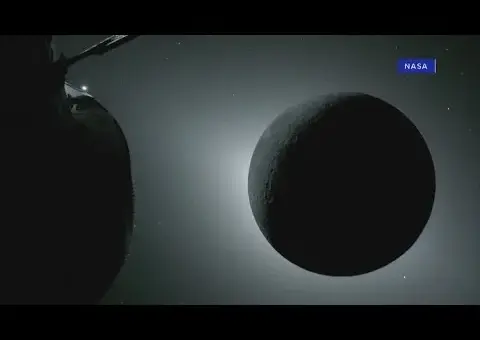
NASA's Artemis 2 mission successfully returned astronauts to Earth, paving the way for a permanent Moon base and future Mars missions. The program faces challenges like meteoroid impacts and radiation, requiring innovative habitat designs. International collaboration is key to this ambitious lunar future.

US Aims for Lunar Dominance with New Artemis Missions
NASA's Artemis program is charting a course for the Moon with upcoming missions III, IV, and V. These missions aim to test new lunar landers, return humans to the surface for the first time since 1972, and establish a foundation for sustained exploration.