Trump’s Iran Announcement: Markets Brace for Impact
Former President Donald Trump is set to announce his strategy on Iran, leaving markets on edge. Analysts foresee potential escalation scenarios, with a 60% chance of increased regional tension impacting oil prices. A 'nothing burger' announcement is also possible, though less likely.

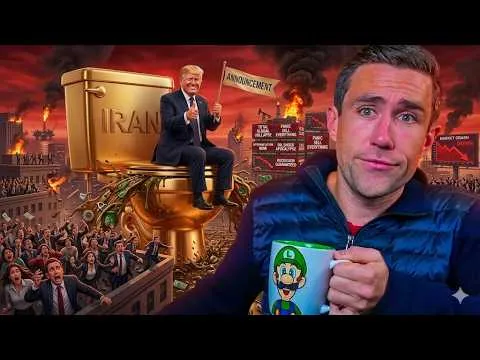
Markets on Edge Ahead of Trump’s Iran Address
Investors are bracing for significant market reactions as former President Donald Trump prepares to make a major announcement regarding Iran. The speech, scheduled for Wednesday evening, April 1st, 2026, comes just one trading day before Good Friday, leaving markets a narrow window to digest any news.
Key Statements and Troop Movements Raise Questions
Statements from the Trump administration over the past 24 hours paint a complex picture. Trump has asserted that the U.S. will be “leaving very soon” and criticized allies like Britain, France, and NATO for not taking a stronger stance on oil security. He suggested that U.S. involvement in the Strait of Hormuz might cease, a stark contrast to previous declarations.
Further adding to the uncertainty, Trump indicated a potential withdrawal from Iran within two to three weeks. This suggests the upcoming announcement may not signal an immediate end to the conflict but could represent either a de-escalation or an escalation of actions. The administration has also noted that removing Iran’s uranium stockpile, estimated at 460 kg of highly enriched uranium, would be difficult, with intelligence possibly pinpointing its location at the Pickax Mountain site or even buried near nuclear facilities struck last summer.
These pronouncements seem to clash with recent military movements. Over the last seven days, an estimated 15,000 troops have reportedly moved into the Middle East, bringing the total American service members in the region to potentially 60,000. This includes two Marine Expeditionary units, quick reaction forces, over 2,000 paratroopers, and the deployment of a third aircraft carrier battle group. One carrier had previously returned to Croatia for repairs after a fire, raising questions about its operational status.
Potential Scenarios Emerge
Analysts are considering several scenarios based on the available information and statements from figures like Senator Marco Rubio and Representative Pete Hegseth. Rubio has stated that the conflict’s end is inevitable but not immediate, citing Iran’s refusal to negotiate on missile programs and uranium enrichment despite multiple opportunities.
Scenario 1: Prepare for Escalation (35% Likelihood)
This scenario suggests Trump will prepare the world for a more challenging period as the U.S. aims to “finish the fight.” The administration might forecast a short-term increase in oil and gas prices, followed by a decrease once operations conclude. This could involve taking control of the Strait of Hormuz within two to three weeks, potentially through invasion or other operations, though specifics would likely remain vague.
Scenario 2: Mission Accomplished with Strait Control and Tariffs (20-25% Likelihood)
In this scenario, Trump would declare most objectives met, with the exception of securing the Strait of Hormuz. An operation to open the strait within two weeks could be announced, possibly leading to a new business model where the U.S. charges tariffs on oil flowing through it. This could be framed as addressing unfair trade practices and recovering costs, similar to past U.S. actions in Venezuela.
Scenario 3: Market Calming Pep Talk (30% Likelihood)
This scenario involves Trump delivering a speech aimed at calming markets ahead of the Easter holiday. He might suggest negotiations are progressing well and that troop advancements are unnecessary unless circumstances change. Victory would be declared on various fronts, with assurances of short-term pain for long-term gain regarding gas prices. This could include referencing claims that Iran no longer poses an existential threat to Israel.
Scenario 4: Total Abandonment (10% Likelihood)
The least likely scenario involves Trump announcing complete withdrawal, leaving troops in the region only to maintain stability. This outcome could be viewed as the worst-case scenario, potentially leaving Iran in control of the Strait of Hormuz and offering little clarity on future actions.
Market Impact and Investor Considerations
The combined probability of scenarios suggesting an escalation (Scenario 1 and 2) stands at approximately 60%. This indicates a significant chance that the announcement will signal a period of heightened tension or direct action in the region. Conversely, there is a 30% chance the announcement could be a “nothing burger,” offering little concrete news and potentially leading to market indecision.
What Investors Should Know:
- Oil Prices: Any escalation or prolonged military operation in the Strait of Hormuz could lead to increased volatility and higher oil prices in the short term.
- Geopolitical Risk: The situation highlights the ongoing geopolitical risks in the Middle East and their potential impact on global markets.
- Trading Window: The limited trading day before Good Friday means any market reaction will likely be concentrated on Thursday.
- Long-Term Outlook: While short-term impacts could be significant, the long-term implications will depend on the actual course of events and the effectiveness of U.S. policy.
The coming announcement carries substantial weight, and investors will be closely watching for signals that could influence energy markets, international relations, and broader economic stability.
Source: **PREPARE FOR TRUMP'S ANNOUNCEMENT** (YouTube)

Related Articles

Markets Rally on War End Hopes, But Risks Remain
Global markets surged on hopes of a swift end to the Iran conflict, but analysts warn that elevated oil prices and ongoing geopolitical risks could still significantly impact economic growth. The true economic fallout may not yet be fully reflected in stock prices.

US Faces Iran War Test Amid Shifting Goals
President Trump faces a critical juncture in the war with Iran, with shifting objectives and domestic pressures influencing his strategy. Iran's control over the Strait of Hormuz presents a significant challenge, testing American resolve and global leadership.

US Allies Face Oil Crisis as Trump Shifts Burden
President Trump's stance on allies securing the Strait of Hormuz signals a major shift in US foreign policy, risking global economic stability. Rising oil prices are already impacting consumers, with further price hikes expected for everyday goods. This disruption highlights the interconnectedness of the global economy and could reshape international alliances.