Starship Construction Accelerates Across Three Sites
SpaceX's Starship program is experiencing a period of rapid expansion, with significant construction and testing activities underway at multiple sites. This includes major upgrades at Starbase, Texas, and progress on launch infrastructure in Florida, alongside advancements in Starship vehicle development and successful Falcon 9 missions.

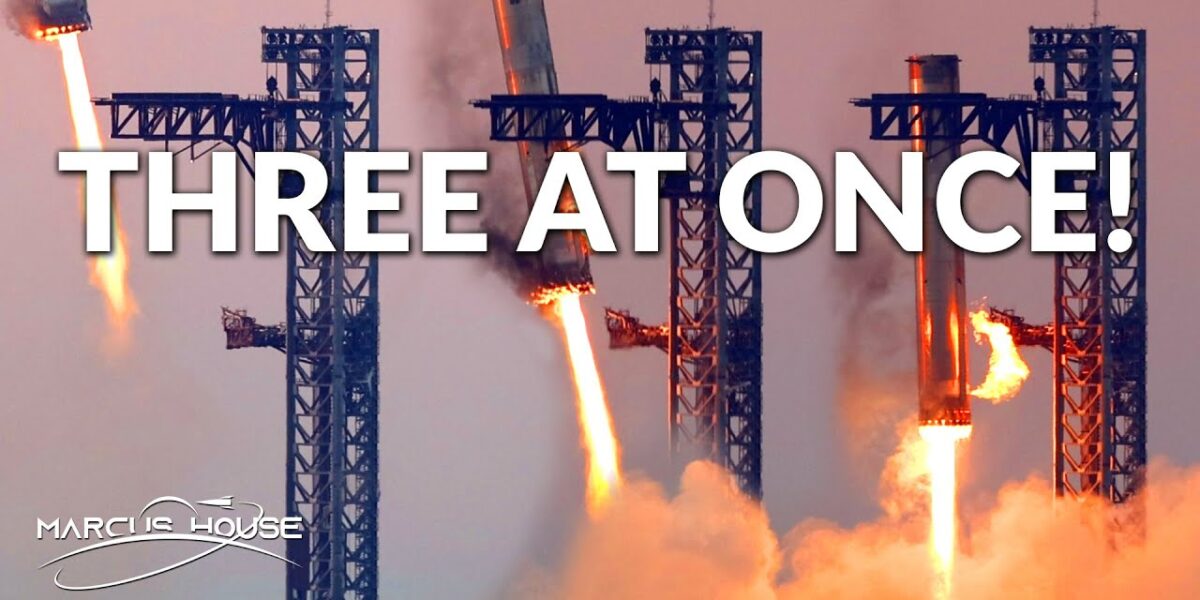
Starship Program Experiences Unprecedented Growth with Multi-Site Construction and Launch Activity
The past week has marked a significant acceleration in the development of SpaceX’s ambitious Starship program, with intense activity observed across three key launch and construction sites. From rapid transformations at Starbase, Texas, to crucial updates at Launch Complex 39A in Florida and new developments at Space Launch Complex 37, the Starship ecosystem is evolving at an astonishing pace. This surge in progress is not only focused on the Starship vehicle itself but also on the ground infrastructure required to support its future missions, including lunar endeavors and deep space exploration.
Starbase, Texas: Pad 1 Reimagined and Tank Farm Expansion
At the heart of Starship development in Boca Chica, Texas, the Starbase facility is undergoing a dramatic overhaul. Pad 1, the site of many early Starship tests, is being transformed. Recent work has seen the removal of old structures and the backfilling of the site, preparing it for new foundational elements.
A pile drill has been actively working in the tank farm area, suggesting the installation of new cryogenic storage tanks, potentially larger than the current methane tanks. This new infrastructure is crucial for the massive propellant requirements of Starship and its Super Heavy booster.
The existing piles that once supported the previous launch mount are being incorporated into the new construction, demonstrating an efficient use of resources. Rebar cages for the new structure are being stockpiled, and new sheet pilings are being installed, mirroring the advancements seen at Pad 2. The relocation of deluge tanks to the McGregor site indicates a consolidation of resources and a focus on preparing the Texas facility for its next phase of development.
Florida Facilities: Pad 2 Nears Completion and SLC-37 Activates
In Florida, progress at Launch Complex 39A is reaching critical milestones. Pad 2 has seen extensive testing of its new actuators and the Ship Quick Disconnect Arm. These tests are vital for refining the software that controls the massive mechanical systems of the launch tower, ensuring precise and safe operations.
The new shielding on the actuators suggests an enhanced control system for hydraulic fluid flow. The Ship Quick Disconnect Arm, a critical component for fueling and servicing the Starship vehicle, is now largely installed.
Meanwhile, at Space Launch Complex 37, construction is progressing rapidly. The arrival of crane components, identical to those used at 39A, signals the commencement of new tower construction.
FAA documents indicate updated coordinates for a new Starship tower at this site, and pile drilling has reportedly begun, confirming that all three launch sites are now actively constructing launch pads simultaneously. The Florida Megabunker, housing essential electrical and control systems, is also under construction, with above-ground commodity lines offering easier maintenance access compared to the underground systems at Starbase.
Starship Vehicle Development: Heat Shields and Testing Milestones
Beyond the launch infrastructure, significant advancements are being made on the Starship vehicles themselves. The first Version 3 Ship has had its extensive scaffolding removed, indicating the completion of heat shield integration and other necessary work.
Small holes have been observed on the tiles of the nosecone area and other sections of the body, a feature also seen on future Ship models. The purpose of these perforations is not yet fully understood but may relate to thermal management or sensor integration.
The S39.1 test article has undergone further assembly and testing, including cryogenic pressure tests. Its recent move to the Masseys facility, now equipped with a new docking port featuring a female drogue assembly and reinforced quick disconnect system, suggests preparations for more complex integrated testing. At Masseys, the B18.3 test article is being prepared for crucial hot staging tests, with systems being installed to simulate the immense forces involved.
Further testing is ongoing at the Sanchez site, with the Ship static fire stand relocated from Masseys. This move could expedite the verification process for the new tank farm and potentially allow for earlier static fire tests of Ship 39. The Ship thrust simulator rig, currently in use by S39.1, will likely be employed for similar verification on Ship 39 before engine installation.
Falcon 9 Missions: Twilight Rideshare and Starlink Deployments
The Falcon 9 rocket continues its busy launch schedule. The ‘Twilight’ mission from Vandenberg Space Force Base successfully deployed 47 spacecraft into a specific sun-synchronous orbit, known as a “dusk-dawn crossing-time orbit.” This orbit allows payloads to maintain consistent sunlight for optimal operation.
Among the payloads was NASA’s Pandora, a cost-effective exoplanet-focused telescope designed to complement the James Webb Space Telescope by observing specific exoplanet systems for extended periods. This mission also carried the Black Hole Coded Aperture Telescope (BlackCAT), a compact X-ray observatory studying gamma-ray bursts.
SpaceX also conducted multiple Starlink missions from Cape Canaveral Space Force Station. Group 6-97 and Group 6-98 missions deployed additional satellites, with Booster 1078 completing its 25th flight and Booster 1085 its 13th. These launches highlight the efficiency and high flight rate of the Falcon 9 program.
Artemis II and Lunar Lander Progress
Looking ahead to NASA’s Artemis program, the Space Launch System (SLS) rocket for the Artemis II mission is preparing for rollout from the Vehicle Assembly Building to Launch Complex-39B for prelaunch testing. This mission, potentially scheduled for February 6th, will mark a significant step in returning humans to the Moon.
In parallel, progress continues on the Blue Moon Mk 1 lander, destined for the Moon via a New Glenn rocket. This lander recently completed a demanding “direct field acoustic test,” simulating the intense sound pressure levels experienced during launch. It is now undergoing thermal vacuum chamber testing, moving it closer to its lunar deployment.
ISRO’s PSLV Mission Anomaly
An unfortunate anomaly occurred with ISRO’s Polar Satellite Launch Vehicle (PSLV) mission. The launch, carrying a hyperspectral Earth imaging satellite and a Spanish re-entry capsule, experienced a failure in its third stage shortly after liftoff. This marks the second consecutive third-stage failure for the PSLV, raising concerns and necessitating a thorough investigation by ISRO, a space agency historically known for its reliability.
Crew-11 Return and Future Missions
SpaceX’s Crew-11 mission successfully returned to Earth via the Crew Dragon Endeavour spacecraft, following an urgent medical evacuation from the International Space Station. While the specifics of the medical issue remain undisclosed, the mission proceeded as planned with undocking and a targeted splashdown in the Pacific Ocean. Preparations are underway for the Crew-12 mission, with potential for an earlier launch.
Conclusion: A Week of Pivotal Progress
This past week has underscored the relentless pace of innovation and execution in the space industry. The complex advancements in Starship development, coupled with successful Falcon 9 missions and critical progress on lunar programs, paint a picture of a future rapidly taking shape. While challenges like the ISRO anomaly serve as reminders of the inherent risks in space exploration, the overall momentum suggests humanity is steadily advancing its capabilities to reach further into the cosmos.
Source: SpaceX Just Turned the Starship Program Up a Notch (YouTube)

Related Articles


Alien Life Could Travel Between Stars, Scientists Say
Scientists are exploring the scientific concept of panspermia, where life could travel between star systems on asteroids or comets. Evidence shows life's resilience and the movement of material between planets, making this a credible hypothesis. The search for extraterrestrial life is now focusing on when and where we might find it.

Artemis II Astronauts Set New Human Distance Record
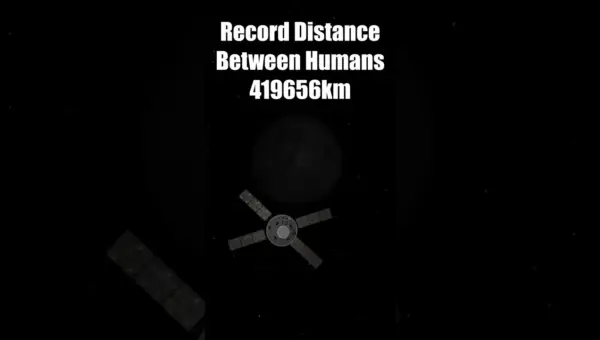
The Artemis II mission set a new human distance record, reaching 413,145 km from Earth. The mission also established a record for the greatest distance between two groups of humans, with astronauts on China's Tiangong space station being 419,656 km away from the Artemis II crew.


Mars Rover Detects Mysterious Lightning Signals
NASA's Perseverance rover has detected mysterious crackling sounds, providing the first tantalizing evidence of lightning on Mars. This discovery, along with a faint whistler wave detected by the MAVEN spacecraft, suggests that electrical discharges occur in Martian dust storms, impacting atmospheric chemistry and posing new challenges for future human exploration.