Trump Attends Supreme Court Birthright Citizenship Hearing
President Trump made an unprecedented appearance at the Supreme Court to hear arguments on his executive order challenging birthright citizenship. The case hinges on the interpretation of the 14th Amendment's Citizenship Clause. A ruling against birthright citizenship could have profound effects on millions of U.S.-born children of non-citizen parents.

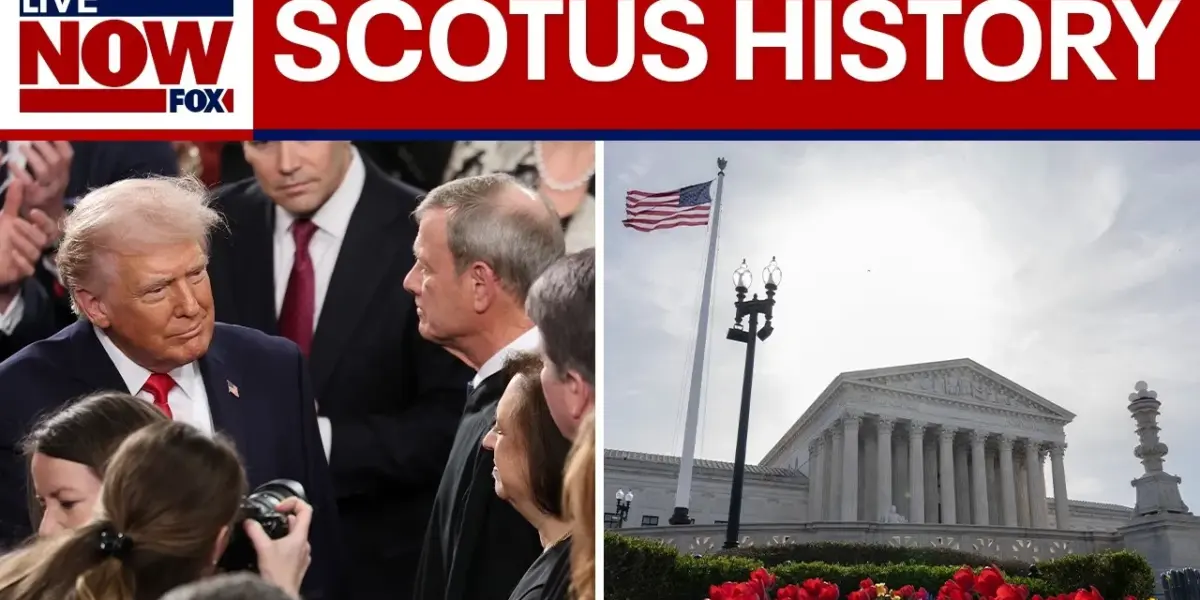
President Trump Attends Landmark Supreme Court Hearing on Birthright Citizenship
Washington D.C. – President Donald Trump made a historic appearance at the U.S. Supreme Court Wednesday morning, attending oral arguments in a case that challenges his executive order seeking to limit birthright citizenship. The case, Trump v. Barbara, centers on the interpretation of the 14th Amendment and its guarantee of citizenship to nearly all individuals born in the United States.
What is Birthright Citizenship?
Birthright citizenship is the principle that anyone born within the territorial limits of a country is automatically a citizen of that country. In the United States, this right is largely based on the Citizenship Clause of the 14th Amendment, ratified after the Civil War. The clause states that “All persons born or naturalized in the United States, and subject to the jurisdiction thereof, are citizens of the United States and of the State wherein they reside.” For over a century, this has generally meant that children born in the U.S. to non-citizen parents are granted citizenship.
Trump’s Executive Order and the Challenge
President Trump issued an executive order in January 2025 that aimed to deny automatic citizenship to children born in the U.S. to parents who are in the country illegally or are present only temporarily. The administration argued that this policy was necessary to combat “birth tourism,” where individuals come to the U.S. specifically to give birth and secure citizenship for their child. This move, however, was met with significant legal challenges, leading to the case now before the Supreme Court.
During an event at the White House, President Trump announced his intention to attend the hearing. “I think so. I do believe sit there and listen because I have listened to this argument for so long,” Trump said, emphasizing his view that the policy was being exploited by wealthy individuals from other countries. He stated, “This was about the babies of slaves and the protection of the babies of slaves.” He also expressed concern that the country was being “scammed” by people profiting from the current interpretation of birthright citizenship.
A Historic Presidential Appearance
President Trump’s decision to attend the Supreme Court hearing in person is unprecedented. According to the Supreme Court Historical Society, no sitting U.S. president has ever attended oral arguments. “As far as anyone knows, there’s no record of a sitting president ever before going to the Supreme Court and hearing oral argument,” noted Adam Winkler, a professor of law at UCLA. Winkler suggested that Trump’s presence could be driven by curiosity or an attempt to influence the justices, though he doubted it would sway their decisions, stating, “The justices really take pride in their independence.”
The Core Legal Debate
The central issue before the Supreme Court is the meaning of the phrase “subject to the jurisdiction thereof” in the 14th Amendment. Lawyers for the Trump administration argued that this phrase implies not just being physically present in the U.S., but also having allegiance to the country. They contend that individuals who are in the U.S. illegally or on temporary visas do not owe allegiance and are therefore not fully subject to U.S. jurisdiction in the way the amendment intended.
Conversely, challengers to the executive order argue that “subject to the jurisdiction” is standard legal language meaning simply being under the power and authority of the government. They point out that this interpretation has been the understanding for over a century and that any change would fundamentally alter immigration law and the status of millions.
Professor Winkler explained the differing interpretations: “The Trump administration says that’s not what the constitution means. that the constitution when it says subject to the jurisdiction means that not only are you born here but that you have allegiance to this country as if you were a citizen.” He contrasted this with the challengers’ view: “The challengers say, look, this is very ordinary language. Every first year law student in the first weeks of law school learns that jurisdiction means power of if you’re subject to the jurisdiction of a court that means a court can issue orders upon you.”
Potential Consequences of a Ruling
A ruling in favor of President Trump’s executive order could have profound implications. It would mean that children born in the U.S. to undocumented parents or those on temporary visas would not automatically be recognized as citizens. This could lead to a host of complex issues, including access to social security, driver’s licenses, employment, and public services like Medicaid and SNAP.
Winkler elaborated on the potential impact: “It could mean that children are denied public services like Medicaid or SNAP payments and could mean that children of undocumented immigrants if they’re not citizens might be denied access even to public schools.” He concluded, “It will really have a pretty profound effect on our economy and our nation what the Supreme Court does in this case.”
Looking Ahead
The Supreme Court heard arguments in Trump v. Barbara on Wednesday morning. The justices will now deliberate on the complex constitutional questions presented. The outcome of this case is expected to significantly shape the future of birthright citizenship in the United States, impacting millions of families and the nation’s understanding of citizenship itself. All eyes will be on the Court as they consider this pivotal issue.
Source: Trump to attend birthright citizenship arguments at Supreme Court (YouTube)

Related Articles
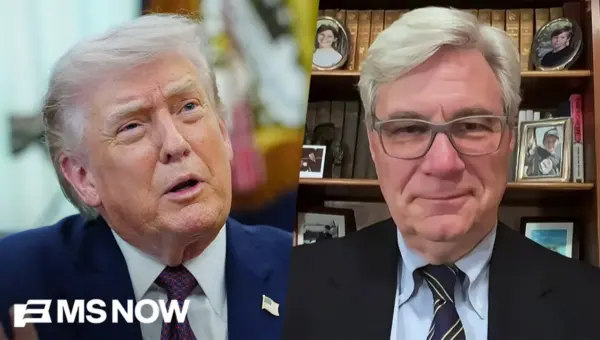
Whitehouse Slams Trump’s Mail-In Ballot Order as ‘Wildly Unconstitutional’
Senator Sheldon Whitehouse has sharply criticized former President Donald Trump's executive order concerning mail-in ballots, calling it "wildly unconstitutional" and a voter suppression tactic. Whitehouse argued that Trump's claims of widespread mail-in voting fraud lack evidence and used the phrase "spines of foam" to describe Republican lawmakers who support such initiatives.
Foreign Hackers Target Trump’s Inner Circle
Reports suggest foreign governments, particularly Iran, have hacked data from individuals close to Donald Trump, including FBI Director Cash Patel. This highlights concerns about election interference and national security. The incidents raise questions about the security of sensitive information and the integrity of democratic processes.
Trump’s Allies Reject Mideast War Demands, Seek Distance
President Trump's allies are distancing themselves from a Middle East conflict, with Spain and Italy denying U.S. warplanes access. Trump is urging allies to act independently, while his administration's shifting war aims and contradictory policies fuel distrust.