Iran Warns US Firms as Mideast Tensions Flare
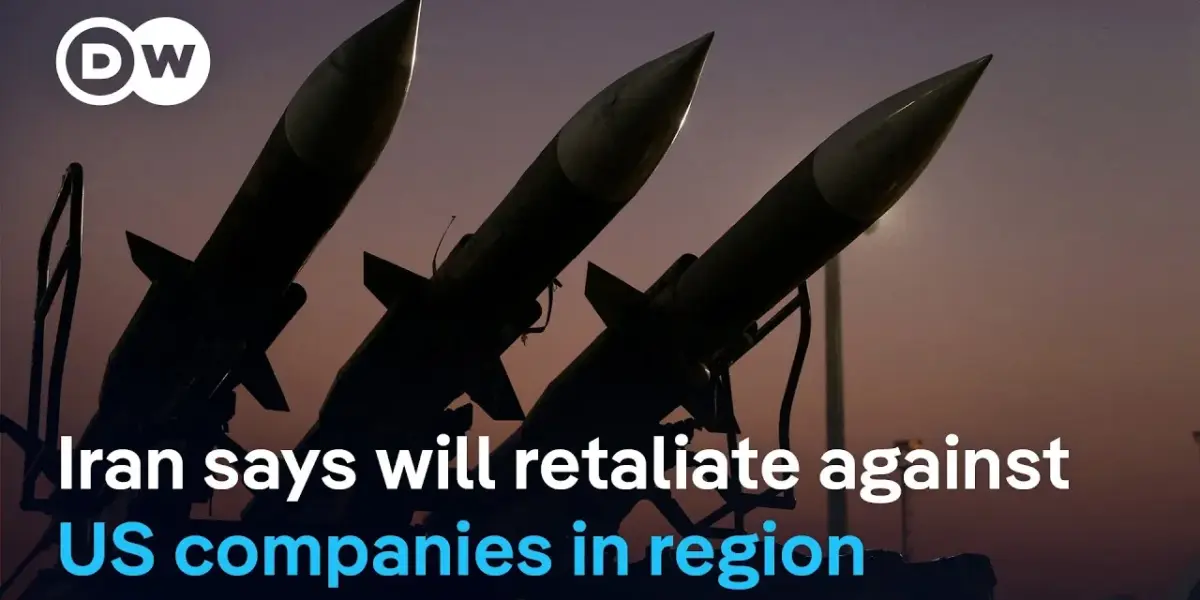
Iran's Revolutionary Guard has threatened to target U.S. companies in the Middle East as U.S. and Israeli forces launch new strikes. Defense Secretary Buttigieg believes Iran's window for retaliation is closing, though analysts warn its asymmetrical capabilities persist. Morale within Iran's military is reportedly plummeting amid escalating conflict.

US Boosts Forces Amid Escalating Middle East Conflict
Day 32 of the ongoing conflict involving Iran and the United States saw a sharp escalation on Tuesday, with Iran’s Revolutionary Guard issuing a direct threat to target American companies across the Middle East. This warning comes as both the U.S. and Israel launched a new series of precision strikes against air defense systems in Iran. Meanwhile, authorities in Dubai reported containing a fire on an oil tanker that had been struck by an Iranian drone.
Pentagon: Iran’s Retaliation Window Closing
At a press conference, U.S. Defense Secretary Pete Buttigieg acknowledged that Iran still possesses the capability and weapons to launch attacks. However, he emphasized that the time for Tehran’s leaders to act is rapidly diminishing. “The upcoming days will be decisive,” Buttigieg stated. “Iran knows that, and there’s almost nothing they can militarily do about it. Yes, they will still shoot some missiles, but we will shoot them down.”
U.S. Central Command (Centcom) reported that the past 24 hours saw the lowest number of missiles and drones fired by Iran. “Our strikes are damaging the morale of the Iranian military, leading to widespread desertions, key personnel shortages, and causing frustrations amongst senior leaders,” Centcom indicated.
Analyst: Both Sides May Be Surprised
Shaheen Modarres, an analyst specializing in Iran and director of the Iran team at the International Team for the Study of Security, shared his perspective on the situation. He suggested that both the U.S. and Iran might be surprised by recent developments. “The one to be surprised is actually both parties here, both Iranians and Americans,” Modarres explained.
Modarres believes the U.S. may have underestimated Iran’s ability to function without a centralized command structure, a tactic Iran has used for decades. “This means that the Islamic Republic is actually used to this partisan technique that they’re using,” he said. At the same time, he noted that Iran’s leadership seems surprised by the precision of U.S. and Israeli strikes, even against their launch sites and facilities they considered secret.
Asymmetrical Warfare: A Persistent Threat
The potential for significant damage from even a single missile or drone remains a critical concern. Modarres pointed to a recent incident where a U.S. AWACS plane in Saudi Arabia was severely damaged by an Iranian attack. “Iran may be weakened now, but is that also a strength?” he questioned, highlighting the ongoing threat posed by Iran’s asymmetrical warfare tactics.
He elaborated, “The Islamic Republic in Iran has been clearly weakened, but it’s still not being toppled. This means that the Islamic Republic, having learned in the past almost five decades one thing that how they can actually bring on a war and how they can continue a hostility or war such as this without conventional methods. That is the reason why the Islamic Republic is quite hard to topple just bombing.”
Shifting U.S. War Aims
The objectives of the U.S. in the conflict appear to be evolving. “In the span of these past four weeks, we’ve gone from fighting the threat of a nuclear weapon to pushing for regime change and most recently to securing the Strait of Hormuz,” Modarres observed, describing it as a “zigzag” of war aims.
He outlined what he sees as differing strategies: Israel’s focus on regime change or creating a non-threatening state, while the U.S. initially aimed to dismantle Iran’s nuclear program, ballistic missiles, and proxy groups. “Eventually, we need Iran to surrender,” Modarres stated, adding that the U.S. also sought to remove Iran’s navy from the Strait of Hormuz. “After that, it appears that the United States is going after a political change as well in Iran to guarantee the sustainability of the peace in the region. And one of the means to do so can be toppling the Islamic Republic, which can bring the scenario of a ground invasion, particularly in the south.”
Morale Plummets Within Iranian Ranks
The U.S. Defense Secretary’s assessment that Iran’s military is on its “last leg” with plummeting morale seems to be supported by internal reports. “Yes, that is completely true,” Modarres confirmed. “It is not only the missiles and the bombs that are hitting the Islamic Republic, it is also the psychological aspect of this war as well because they’re afraid.”
He confirmed reports that the head of the Revolutionary Guard’s aerospace force had not appeared during major battles, suggesting a lack of leadership. “The reason behind this is the morale within the country’s armed forces is falling in a significant way and it means that soon we might be witnessing some sort of defection from the ranks of the Islamic Republic.” Despite this internal weakening, Modarres cautioned, “this does not mean that we can yet underestimate what is left of the capabilities of the Islamic Republic because even one missile and one drone can create a serious damage in the region.”
Looking Ahead
As the conflict enters its next phase, the coming days are expected to be critical. The U.S. appears determined to press its advantage, while Iran’s ability to retaliate, even with diminished capacity, remains a significant concern for regional stability. The effectiveness of continued strikes against Iran’s military infrastructure and the potential for internal dissent will be key factors to monitor.
Source: US moves more forces to the Gulf region | DW News (YouTube)

Related Articles


Trump’s Iran Announcement: Markets Brace for Impact
Former President Donald Trump is set to announce his strategy on Iran, leaving markets on edge. Analysts foresee potential escalation scenarios, with a 60% chance of increased regional tension impacting oil prices. A 'nothing burger' announcement is also possible, though less likely.

Trump Signals Surrender in Iran Standoff, Critics Say
President Donald Trump is reportedly preparing to withdraw U.S. forces from Iran, marking a significant shift from his initial demands for "unconditional surrender." Critics argue that the operation, which saw shifting objectives from reopening the Strait of Hormuz to abandoning the goal of preventing Iran's nuclear program, has ended with no tangible gains.
Iran War WON’T Last: Veteran Explains Strategy
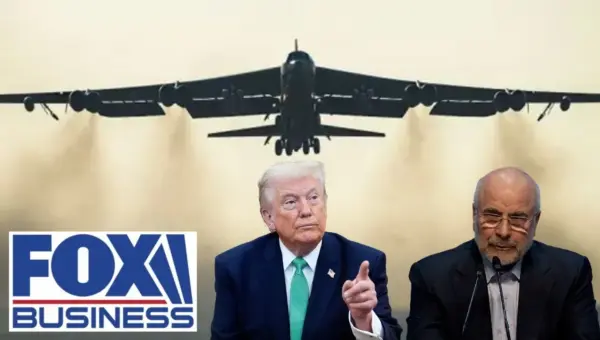
An Israeli special ops veteran explains the "Trump Warfare" strategy targeting Iran's terror capabilities, not territory. The approach aims for rapid pressure and withdrawal, believing Iran's power to threaten global shipping will be broken, leading to stability.