Trump Surrenders in Iran War, Faces Court Losses
Donald Trump has announced what appears to be a surrender in his war with Iran, shifting his focus as he faces significant court losses. Rulings have halted White House construction and questioned his actions surrounding the January 6th Capitol attack. The shift in foreign policy comes amid criticism of his leadership and a new executive order targeting mail-in ballots.


Trump Announces Iran War Surrender Amidst Court Setbacks
In a significant shift, Donald Trump announced what appears to be a surrender in the ongoing conflict with Iran. This comes as the former president faced a series of unfavorable rulings in court. The announcement, expected to be made formally on Tuesday evening, signals a de-escalation of tensions that have gripped the region and impacted global markets.
Shifting Objectives in the Iran Conflict
The conflict, which began with an initial objective of “unconditional surrender” from Iran, quickly saw its goals redefined. When Iran responded by closing the Strait of Hormuz, disrupting vital oil and other shipments, Trump’s objective shifted to reopening the crucial waterway. Despite repeated threats to “obliterate” Iran and its infrastructure if the strait remained closed, Trump consistently backed down as deadlines approached, a pattern observers have dubbed “chickening out.”
Trump’s initial ultimatum, issued in writing, threatened to “blow up and completely obliterate” Iran’s power plants, oil wells, and desalination plants if the Strait of Hormuz was not immediately opened. However, when pressed by reporters, his Secretary of Defense, Pete Hegseth, avoided answering whether the strait’s opening was still an essential objective. This ambiguity was later clarified by Trump himself, who stated that Iran no longer needed to do anything for the U.S. to end its operation, effectively withdrawing the ultimatum.
Court Rulings Undermine Trump’s Presidency
Beyond the foreign policy front, Donald Trump experienced a challenging day in court, facing multiple defeats. A federal judge in Washington D.C. issued a 35-page opinion halting the construction of a planned ballroom on White House grounds, ruling that such projects require congressional approval and that the president serves as a steward, not an owner, of the property.
Further legal setbacks included a ruling that Trump cannot claim immunity from being sued for his role in the January 6th attack on the Capitol. The judge found that some of his conduct described in the civil lawsuit fell outside official presidential duties. Additionally, another federal judge declared Trump’s executive order to cut funding to NPR and PBS unconstitutional.
Criticism Mounts Over War Strategy and Leadership
The handling of the Iran conflict has drawn sharp criticism. Congressman Adam Smith, the top Democrat on the House Armed Services Committee, expressed deep concern over the situation, noting that the U.S. is “worse off than when we started.” He highlighted the costs of the war, including casualties, civilian deaths, and damage to alliances, stating that the objectives set at the beginning have not been met.
Smith also pointed out that despite the conflict, Iran is no closer to developing a nuclear weapon. In fact, he argued, the existential threat presented by Trump’s actions may have given Iran a greater incentive to rush forward with its nuclear program. The congressman further criticized Trump’s approach to foreign policy, suggesting it was driven by instinct rather than careful planning and consultation with advisors.
Ballroom Project Takes Precedence Over Military Concerns
In a notable exchange with White House reporters, Trump’s focus seemed to be on the halted ballroom construction rather than the ongoing war. When asked about the possibility of the Iran war ending soon and the judge’s ruling on the ballroom, Trump spent over six minutes detailing the ballroom’s features, including its bulletproof glass and drone-proof roof, while entirely omitting any mention of the war’s conclusion.
Trump’s justification for the ballroom’s construction, aimed at accommodating foreign leaders like King Charles, was met with skepticism. Critics argued that his preoccupation with such projects, while neglecting the military and the war’s consequences, demonstrated a detachment from his presidential duties and the realities faced by American service members.
Concerns Over Mail-In Ballot Executive Order
The discussion also touched upon Trump’s executive order aimed at seizing control of mail-in ballots. This move was described as a significant attack on democracy, giving the federal government the power to decide who is allowed to receive a ballot. Critics argue that this action, coupled with his rhetoric about mail-in voting, is a war on the electoral process itself.
Broader Implications and Future Outlook
The series of court losses and the apparent retreat from the Iran conflict raise questions about Trump’s leadership and decision-making. Observers noted that the legal challenges, particularly those stemming from January 6th, could lead to depositions where Trump might be compelled to answer questions under oath, a prospect his legal team reportedly views with significant concern.
As Trump prepares to address the nation, the focus remains on the outcomes of his foreign policy decisions and the ongoing legal battles. The events of the day suggest a potential turning point, with significant implications for both domestic and international affairs. The coming days will reveal the full extent of Trump’s strategy regarding Iran and how he plans to navigate the mounting legal and political pressures.
Source: The Last Word with Lawrence O'Donnell – March 31 | Audio Only (YouTube)

Related Articles


Trump’s Iran Announcement: Markets Brace for Impact
Former President Donald Trump is set to announce his strategy on Iran, leaving markets on edge. Analysts foresee potential escalation scenarios, with a 60% chance of increased regional tension impacting oil prices. A 'nothing burger' announcement is also possible, though less likely.


Whitehouse Slams Trump’s Mail-In Ballot Order as ‘Wildly Unconstitutional’
Senator Sheldon Whitehouse has sharply criticized former President Donald Trump's executive order concerning mail-in ballots, calling it "wildly unconstitutional" and a voter suppression tactic. Whitehouse argued that Trump's claims of widespread mail-in voting fraud lack evidence and used the phrase "spines of foam" to describe Republican lawmakers who support such initiatives.

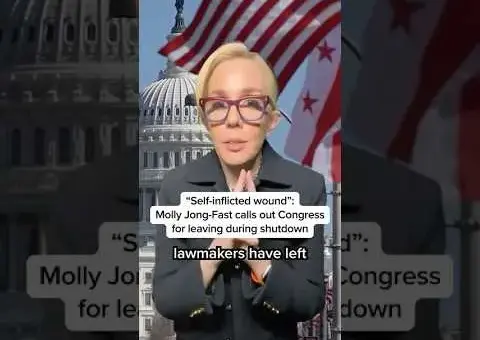
Congress Flees Amid Shutdown, Iran War: Analyst Slams ‘Self-Inflicted Wound’
Political analyst Molly Jong-Fast criticizes Congress for leaving during a partial DHS shutdown and escalating Iran conflict, calling it a "self-inflicted wound." She suggests Speaker Mike Johnson is using the recess to avoid difficult legislation, leaving the nation vulnerable.