Trump’s Golden Ballroom Blocked: A Clash Over Power and Legacy
A federal judge has blocked Donald Trump's $400 million "golden ballroom" project at the White House, citing constitutional violations. Trump has since tried to rebrand the project as a national security necessity to counter drones, sparking a clash over executive power and the rule of law.

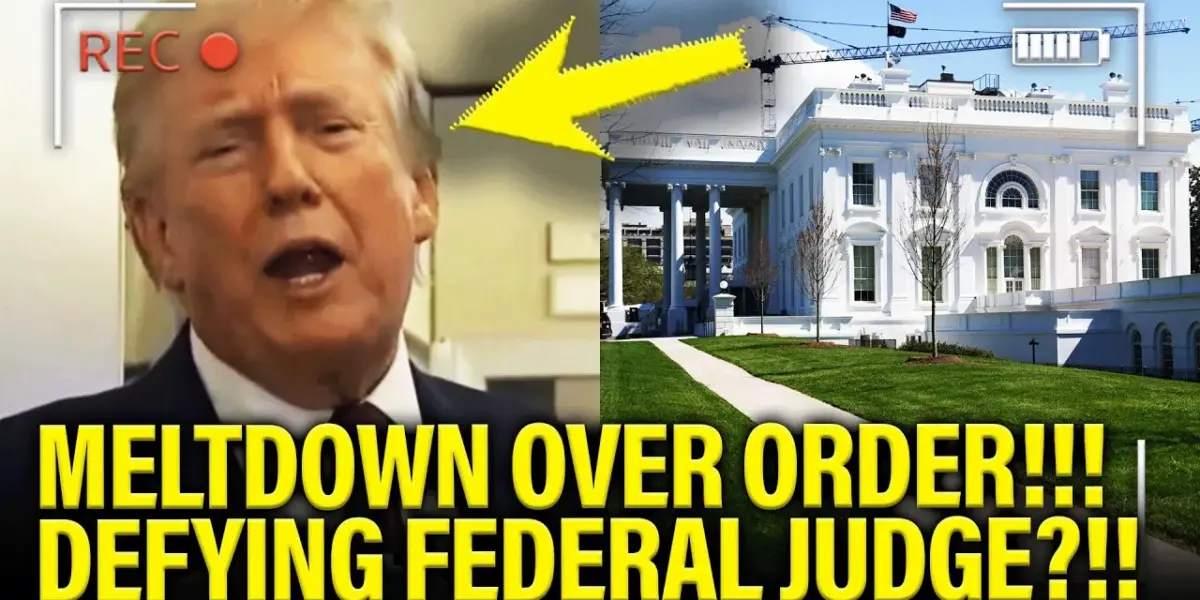
Trump’s Golden Ballroom Blocked: A Clash Over Power and Legacy
A federal judge has put a halt to Donald Trump’s ambitious plan to build a lavish “golden ballroom” at the White House. The project, estimated to cost $400 million, was blocked by Judge Leon in Washington D.C., who cited a violation of the Constitution’s “power of the purse.” This ruling highlights a significant conflict between executive ambition and the established system of checks and balances.
The Judge’s Ruling: A Constitutional Stand
Judge Leon offered a clear path forward, stating, “Why don’t you go to Congress, as the Constitution requires, ask them to authorize it, then if you want to have private funds pay for it, you can do that.” The judge emphasized that the Constitution grants Congress the authority over spending, and there are no laws allowing the President to bypass this process to undertake such a large construction project. The judge’s decision was framed as an “elegant solution” that respects both the National Trust’s concerns about governmental checks and balances and Trump’s desire for the ballroom.
Trump’s Reaction: From Outrage to Rebranding
Donald Trump’s response has been largely critical, expressed through social media posts. He has described the ballroom as the “greatest ballroom ever” and labeled the National Trust as a “radical leftist group,” bringing in unrelated topics like communism and sports. However, his narrative quickly shifted when discussing the judge’s order. Trump then claimed the project was not merely a ballroom but a crucial part of a bunker facility designed for security, specifically to protect against drones and ballistic missiles. He argued that the judge’s ruling, while blocking the ballroom, did permit measures for safety and security, which he then used to justify continuing construction.
During a press conference, Trump stated, “The safety and security have to be protected of the White House grounds.” He elaborated, “We have a drone proof roof and it talks about the president and his staff… This has the highest level of… bulletproof and it’s ballistic proof. It’s very thick… and every window is covered. Every door is covered. The roof is drone proof. We have secure air handling systems.” This rebranding of the project as a national security necessity appears to be an attempt to circumvent the judge’s order.
A Messy Process: Planning and Approval Concerns
Legal experts and commentators have pointed out the chaotic nature of the project’s planning and approval. Reports revealed issues with the initial designs, including a staircase that led nowhere, which were only addressed shortly before a crucial vote. This rushed process has led to questions about the legitimacy of the approval sought from entities that are seen as being under Trump’s influence. The historic preservation of Washington D.C.’s carefully planned central area is also a major concern, with critics arguing that the proposed ballroom would be a “grotesque” addition that drastically alters the landscape.
The legal battle itself has been a complex, multi-step process. Initially, a preliminary injunction was rejected on technical grounds. However, after the plaintiffs corrected their filing, Judge Leon granted the injunction. The National Trust, which filed the lawsuit, eventually prevailed after a corrected filing, but the situation remains tense as Trump seems unwilling to halt construction.
Why This Matters: Testing the Legal System
This case is more than just a dispute over a building; it represents a significant test for the American legal system. The core issue is whether a president can push through large-scale projects that alter national landmarks without proper congressional approval, even if they claim it’s for national security. The judge’s “elegant solution” of directing Trump to Congress is a clear reminder of constitutional boundaries. However, Trump’s defiance and attempt to reframe the project as a security measure create a potential standoff.
The situation also raises questions about executive power and the potential for personal vanity projects to override public interest and historical preservation. The proposed ballroom is seen by many as a monument to Trump himself, rather than a necessary addition to the White House. The fear is that if construction is allowed to proceed, even partially, it could become irreversible, creating a fait accompli that the courts would then have to contend with.
Historical Context and Future Outlook
The White House and its grounds have undergone numerous changes throughout history, but these have typically involved extensive planning, public input, and congressional oversight. The current situation stands in contrast to this tradition. The judge’s reference to seeking authorization from Congress echoes the foundational principles of American governance, where power is divided and no single branch or individual holds unchecked authority.
The future outlook hinges on Judge Leon’s next steps and the potential involvement of higher courts. If Trump continues to defy the order, the judge may have to take stronger action, possibly involving contempt of court. The case could also move up to the D.C. Circuit Court of Appeals, and potentially the Supreme Court, testing their commitment to upholding constitutional principles against claims of executive necessity or personal legacy. The outcome will set a precedent for how future presidential construction projects are handled and how rigorously the system of checks and balances will be enforced.
A Vanity Project or National Security?
The debate over the ballroom’s true purpose—whether it’s a vanity project or a genuine security measure—remains central. Trump’s supporters might see his efforts as necessary to protect the President and the White House in an increasingly dangerous world. However, critics argue that the scale and opulence of the proposed ballroom, along with its late rebranding as a security feature, point towards a desire to create a lasting, personal monument. The judge’s clear instruction to seek congressional approval suggests that, in the eyes of the court, the project’s justification requires a broader political consensus, not just an executive decree, however well-intentioned the security claims might seem.
The Stakes: The Nation’s Capital and the Rule of Law
Ultimately, this dispute is about more than just a building. It’s about the integrity of the rule of law and the preservation of the nation’s capital as a symbol of democratic ideals, not personal aggrandizement. The legal system is being tested to ensure that even the most powerful individuals are held accountable to the Constitution and the laws of the land. The potential for irreversible changes to a historic site, coupled with a disregard for legal orders, presents a serious challenge that the courts must address decisively.
Source: 🚨Trump SPIRALS after BALLROOM BLOCKED…REFUSES ORDER !!! (YouTube)

Related Articles


Trump’s Iran Announcement: Markets Brace for Impact
Former President Donald Trump is set to announce his strategy on Iran, leaving markets on edge. Analysts foresee potential escalation scenarios, with a 60% chance of increased regional tension impacting oil prices. A 'nothing burger' announcement is also possible, though less likely.


Whitehouse Slams Trump’s Mail-In Ballot Order as ‘Wildly Unconstitutional’
Senator Sheldon Whitehouse has sharply criticized former President Donald Trump's executive order concerning mail-in ballots, calling it "wildly unconstitutional" and a voter suppression tactic. Whitehouse argued that Trump's claims of widespread mail-in voting fraud lack evidence and used the phrase "spines of foam" to describe Republican lawmakers who support such initiatives.


Foreign Hackers Target Trump’s Inner Circle
Reports suggest foreign governments, particularly Iran, have hacked data from individuals close to Donald Trump, including FBI Director Cash Patel. This highlights concerns about election interference and national security. The incidents raise questions about the security of sensitive information and the integrity of democratic processes.