Iran’s Regime Crumbles: Is a New Era Dawning?
Recent U.S. declarations of "regime change" in Iran are met with nuanced analysis, suggesting internal fractures but not a complete overhaul of the oppressive government. Experts discuss strategic ambiguity, global oil security, and the role of allies in the face of shifting regional dynamics.

Iran’s Regime Crumbles: Is a New Era Dawning?
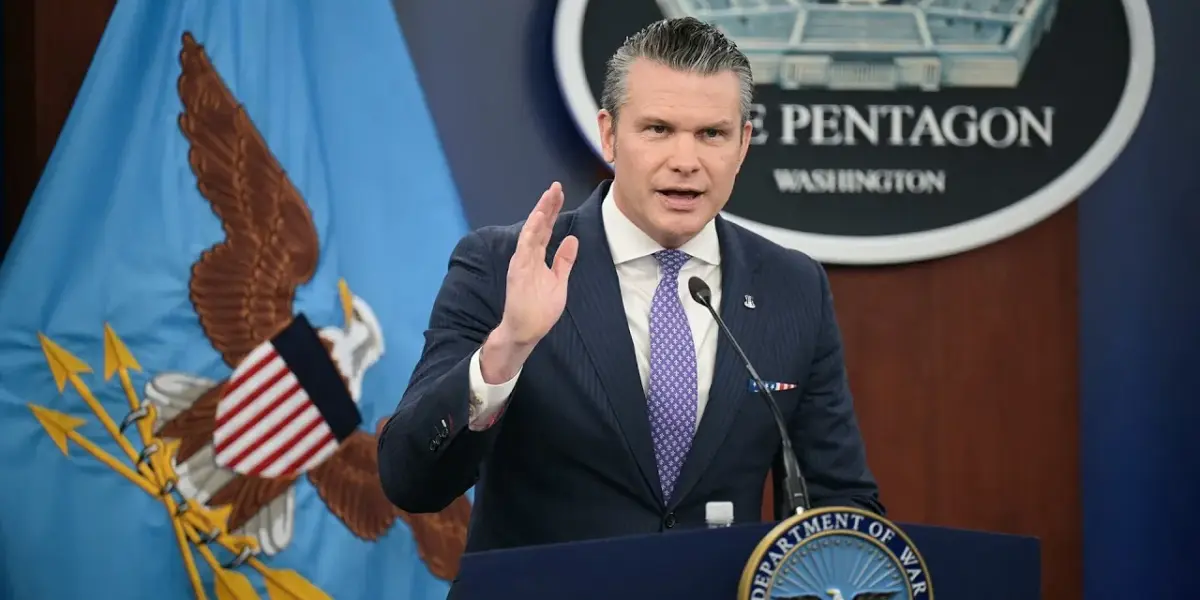
Recent statements from U.S. officials suggest a significant shift in American policy toward Iran. Secretary of Defense Pete Hegsth declared that a “regime change” has occurred, while President Trump urged other nations to either buy oil from the U.S. or secure the Strait of Hormuz themselves. These bold claims raise questions about the true state of Iran’s government and the future of the region.
Understanding the Shifting Sands in Iran
Retired Air Force Special Operations Major Glenn Agnazio offered a more nuanced view of the situation. He explained that while President Trump’s statement about a difference in leadership is valid, calling it a complete “regime change” might be an oversimplification. Agnazio pointed out that key figures, from the supreme commander down, have been removed. However, the core structure of the government and its oppressive nature remain in place.
“People have changed, but as far as the regime itself, which is still the oppressive government that is still in place,” Agnazio stated. He believes there are fractures within the Iranian government, leading to more moderates engaging with the U.S. Yet, he cautioned that this doesn’t represent a move towards democracy or freedom. It’s more of a strategic wordplay, as the fundamental system hasn’t been replaced.
Cracks Appear in Iran’s Intelligence Apparatus
Former Navy SEAL and FBI Special Agent Jonathan Gilliam highlighted the significance of these internal fractures. He noted that Iran’s intelligence apparatus is its strongest asset, and he hadn’t seen signs of it breaking down until recently. The emergence of internal divisions suggests different factions within the government, potentially including individuals within the intelligence services who are less extreme than the current leadership.
Gilliam sees this as a positive development, indicating that President Trump’s approach is putting immense pressure on Iran’s intelligence operations. This constant guessing game, he argued, is exhausting Iran’s resources and capabilities. The President’s ability to keep adversaries guessing without revealing his full hand is a key strength.
The Strait of Hormuz: A Global Chokepoint
President Trump’s challenge to other nations regarding oil purchases and securing the Strait of Hormuz is a critical point. While the U.S. doesn’t import oil from this specific strait, it’s a vital global shipping lane. Over 2,000 ships are often waiting on either side, and disruptions there have serious economic consequences worldwide. The Philippines, for instance, declared an energy emergency due to these issues.
Agnazio suggested that individual countries, especially those more dependent on the strait, should step up. He believes they need to be more involved defensively, stopping drones and missiles, and ensuring safe passage for ships. He criticized actions by allies like France and Spain, who have closed their airspace to U.S. military operations. He recalled a past incident where France closing its airspace during operations in Libya led to lost aircraft due to extended flight paths and refueling needs.
Political Maneuvering and Weak Leadership
Gilliam attributed the actions of countries like France and Spain to politics, suggesting leftist leadership in France might be hesitant to inflame domestic populations due to high levels of migration. He believes these nations are not acting as rational allies and are instead displaying weak leadership. He contrasted this with the resolve shown by President Trump and Secretary Hegsth, who he feels understand how to use military power effectively and avoid being rushed into conflict.
He described the current European leadership as some of the weakest seen in history, contrasting it with the strong stance of the U.S. administration. The opening of borders by some European nations to migrants from war-torn regions was also mentioned as a factor influencing their domestic politics and foreign policy decisions.
Strategic Ambiguity and Ground Operations
When asked about the possibility of U.S. boots on the ground in Iran, Secretary Hegsth emphasized unpredictability. He stated that Iran’s adversaries believe there are 15 different ways the U.S. could engage, and the reality is there are even more. This ambiguity is a deliberate strategy to keep opponents guessing and force them to expend resources preparing for various scenarios.
Agnazio elaborated on this strategic ambiguity, calling it a significant tool against adversaries. He discussed the challenges of a potential ground operation, particularly concerning Kharg Island, which handles a large portion of Iran’s oil exports. While this island is a key target, Iran has other export locations. He pointed out the logistical difficulties and dangers of operating near Iran’s coastline, with potential threats from Iranian weapons.
He suggested that controlling islands like Hormuz or Qeshm could be more feasible. These operations could secure the strait by neutralizing threats from the shoreline. Agnazio stressed the importance of logistics and exit strategies in any military planning. He believes any potential ground operations would likely focus on specific objectives, not a prolonged occupation, and might involve retrieving sensitive materials like uranium.
The Long Game in Iran
Gilliam concluded by comparing the current U.S. preparations to those before interventions in countries like Venezuela. He sees the U.S. administration demonstrating resolve but believes President Trump is not interested in prolonged warfare. Instead, the goal is to resolve the long-standing issues with a nation that has caused significant harm to American interests.
He emphasized that the U.S. is not in a hurry and can handle the situation independently if necessary. Gilliam even speculated that U.S. special forces might already be operating in Iran, especially if assets like A-10 Thunderbolt aircraft are present. This could allow for rapid retrieval of critical items like uranium, potentially avoiding the need for a larger ground invasion.
Why This Matters
The ongoing developments in U.S.-Iran relations are crucial for global stability and energy markets. The U.S. is employing a strategy of pressure and strategic ambiguity, aiming to weaken Iran’s government and influence without necessarily resorting to direct, large-scale military conflict. The effectiveness of this approach hinges on Iran’s internal divisions and the willingness of international partners to cooperate or at least avoid hindering U.S. efforts.
Implications and Future Outlook
The situation suggests a continued period of tension and strategic maneuvering. If Iran’s internal fractures deepen, it could lead to more significant changes, though not necessarily a democratic transition. The global economy remains sensitive to any disruptions in the Strait of Hormuz, making U.S. efforts to ensure its security vital. The long-term outlook depends on whether the U.S. strategy of pressure leads to a negotiated settlement, internal collapse of the Iranian regime, or further escalation.
Historical Context
The current U.S. policy toward Iran follows decades of complex relations, marked by the 1979 revolution, the Iran hostage crisis, and ongoing disputes over nuclear programs and regional influence. Previous administrations have pursued various approaches, from sanctions and diplomatic isolation to attempts at direct negotiation. The Trump administration’s “maximum pressure” campaign represents a significant escalation of economic and diplomatic measures, aiming to force Iran to alter its behavior.
Source: U.S. Developing Relationship with More Moderates in Regime, But Oppressive Gov't Still in Place (YouTube)

Related Articles

GOP Lawmaker Slams Dems’ ‘Word Games’ on Iran Threat
A GOP lawmaker criticizes Democrats for perceived hypocrisy on the Iran threat, accusing them of "word games" and downplaying danger while the White House provides financial aid. The congresswoman highlights past warnings about Iran's nuclear program and contrasts them with current Democratic stances.

Trump’s Iran Announcement: Markets Brace for Impact
Former President Donald Trump is set to announce his strategy on Iran, leaving markets on edge. Analysts foresee potential escalation scenarios, with a 60% chance of increased regional tension impacting oil prices. A 'nothing burger' announcement is also possible, though less likely.

Europe Faces NATO Doubt as Trump Hints at Pullback
Former President Trump's suggestions of withdrawing NATO protection raise concerns for European security. This could weaken the alliance's deterrent power and alter global dynamics. Meanwhile, Europe is increasing its support for Ukraine as U.S. aid shifts.