Starship Tower Catches Upgrades for Next-Gen Tests
SpaceX is rapidly advancing Starship's capabilities with significant upgrades to its Version 3 launch tower, including the installation of the crucial Ship Quick Disconnect arm and enhanced bumper systems. This progress is set against a backdrop of other space news, including an ISS medical evacuation and NASA's revised budget.

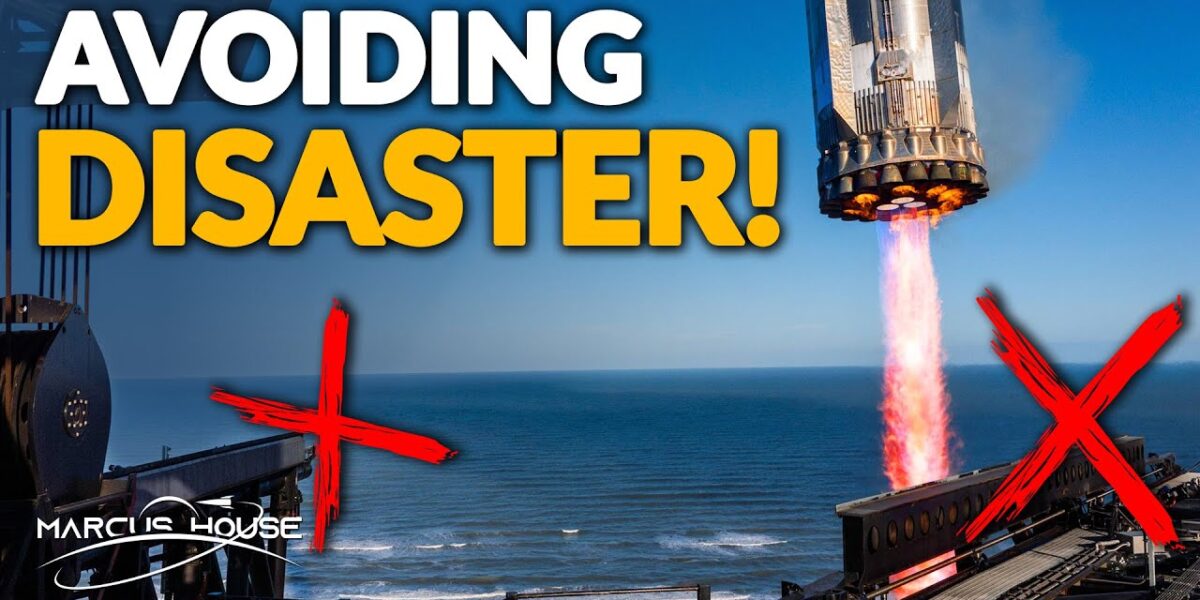
Starship Tower Catches Upgrades for Next-Gen Tests
SpaceX’s Starship program continues its rapid development with significant upgrades to its launch infrastructure. The Version 3 launch tower at Starbase, Texas, has seen the installation of its crucial Ship Quick Disconnect arm, a critical component for stacking and testing the Starship upper stage. This advancement signals progress toward the next phase of Starship testing, including integrated load tests and potential flights.
Key Infrastructure Enhancements at Starbase
The recent installation of the final section of the Ship Quick Disconnect arm marks a milestone for the Version 3 launch tower. This complex piece of hardware, designed to securely interface with the Starship upper stage, was lifted into place by SpaceX’s LR11000 crane. The arm itself, with its supporting structures for various supply lines, had been partially assembled and installed since November. This new, more refined version of the arm is a significant upgrade compared to earlier iterations.
In addition to the primary arm, the tower’s catch mechanisms have received substantial upgrades. New bumper sections, comprised of three steel panels, have been welded to the ends of the arms. This design aims to prevent the sharp truss structure at the arm’s end from directly impacting a vehicle during a catch, instead engaging the bumper first. This modification is a direct response to lessons learned and potential edge cases identified during previous testing. Furthermore, the tower arms have begun to move under their own power, thanks to newly installed, larger actuators, demonstrating their full range of motion.
Another notable addition is the return of the tri-vent system to Tower 2. This multi-opening vent, similar to those used in previous Starship propellant loading procedures, is now integrated into the new tower. The completion of these tower components, coupled with the ongoing assembly of the orbital launch mount and the installation of clamp arm doors, paints a picture of a launch complex nearing operational readiness.
Supporting Systems and Production Advancements
The supporting infrastructure at Starbase is also seeing rapid progress. The pump farm, previously incomplete, has been fully equipped with its final methane pump motor, enabling full operation on both sides. This is a precursor to anticipated ground equipment and propellant loading tests, pending successful testing of Booster 19.
Meanwhile, at the older Pad 1, demolition of the old pile cap is progressing faster than expected, revealing concrete and rebar piles that extend below the water table. This excavation is likely preparing the site for future modifications or new structures.
The Air Separation Unit (ASU) is also undergoing significant expansion. Hardware has been accumulating, particularly around the compressor. A large pile cap for heavy equipment, essential for the purification and liquefaction facilities, is nearing completion, with rebar cages and conduits installed. Anchor plates, suspected to be for cooling towers or storage tanks, are also in place, and the main pile cap has been poured. A new bunker unit, potentially for the ASU or other control systems, has also been staged nearby.
In the production realm, modifications to the cryo stand suggest potential delays for the Version 3 Ship 39 testing campaign, as rams and supports have been removed for significant upgrades. However, progress continues on the second static fire stand, with the top ring and leg pieces being welded and assembled. At the Starship factory, forward flaps and an aft flap for Ship 39 have been observed, indicating continued construction of new vehicles. The question remains whether Booster 19 or Ship 39 will be the first to roll out for testing.
Massey’s Test Site and Vehicle Development
At the Massey’s Test Site, the new truss structure surrounding the static fire stand has reached its suspected final height. A black walkway section, equipped with electrical conduit boxes and hydraulic lines, has been lifted into place, hinting at upcoming testing activities. The static fire stand itself has been repainted and appears to be nearing operational status, awaiting the installation of Raptor Vacuum Engine supports.
Preparations for compression testing of Booster 18.3 Test Tank are underway, with the hot stage truss being reinstalled. Hydraulic pistons are being fitted to pull down on the cap during testing, with ropes or rods expected to connect these to the cap soon. These developments underscore the continuous build-up of launch and vehicle infrastructure necessary for the next series of Starship flight tests, all focused on the Version 3 architecture.
Broader Space Exploration Context
The article also touches upon broader space industry news. SpaceX’s Starlink missions are back in full swing, with recent launches of Falcon 9 carrying batches of satellites. These missions highlight the ongoing cadence of orbital deployments and the reusability of Falcon 9 boosters.
In a concerning development, NASA has ordered an early return of four astronauts from the International Space Station (ISS) due to a medical situation experienced by one of the Crew-11 members. While the astronaut is stable, the decision was made out of caution due to the limited medical facilities on the station. This marks the first medical evacuation from the ISS in its history. NASA is also considering adjusting the Crew-12 mission timeline to facilitate the return and subsequent crew rotations.
On the budgetary front, NASA’s fiscal year 2026 budget has received a boost, with the Senate refusing proposed cuts. The agency is expected to receive approximately $24.4 billion, a slight decrease from the previous year but significantly higher than initial proposals that threatened substantial cuts to the science budget. While the Mars Sample Return mission faces uncertainty, funding has been allocated for “Mars Future Missions” to explore more cost-effective alternatives.
Looking ahead, the article mentions upcoming lunar missions, including NASA’s Artemis II mission, planned for February 6th, which will send astronauts around the Moon. Other lunar endeavors include the Blue Moon Mark 1 Pathfinder lander, Firefly Aerospace’s Blue Ghost Mission 2 targeting the Moon’s far side, Astrobotic’s Griffin-1 mission to the lunar south pole, and Intuitive Machines’ IM-3 mission. China’s Chang’e 7 mission is also slated for a lunar landing this year, indicating a busy period for lunar exploration.
Conclusion
The relentless pace of Starship development, coupled with advancements in supporting infrastructure and a stable outlook for NASA’s budget, points towards an exciting future for space exploration. The ongoing work at Starbase, the progress in vehicle production, and the diverse range of upcoming missions underscore the dynamic and ambitious nature of humanity’s push beyond Earth.
Source: SpaceX Added This Fail-Safe to the Starship Catch! (YouTube)

Related Articles
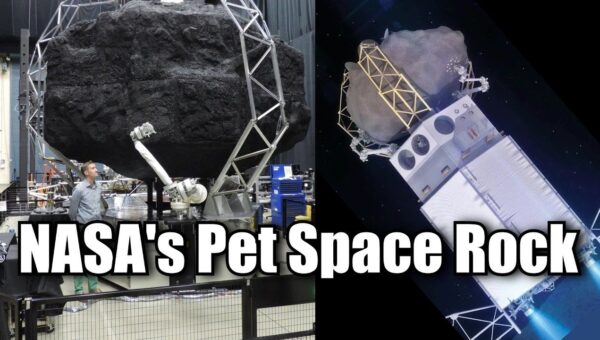
NASA’s Asteroid Mission: From Mars Dream to Lunar Gateway
NASA's ambitious Asteroid Redirect Mission (ARM), designed as a stepping stone to Mars, aimed to capture a small asteroid boulder and tow it to lunar orbit for astronaut testing. Though cancelled, its advanced propulsion and robotic technologies live on in NASA's Lunar Gateway and future deep space exploration plans.
NASA’s Evolving SLS Rocket Hints at New Upper Stage
NASA's Artemis program may be adopting a new upper stage for its Space Launch System (SLS) rocket, potentially utilizing the commercially available Centaur V. An updated infographic reveals design changes and hints at evolving mission strategies, including advanced lunar lander operations.


SpaceX Starship V3 Nears First Flight Amidst Major Artemis Shakeup
SpaceX eyes March for Starship V3's maiden flight as new testing reveals design improvements. Meanwhile, NASA's Artemis program faces delays and strategic shifts, with Artemis III repurposed as a LEO test mission.