Senator: Democrats Blocked Pay for Agents, Trump Stepped In
Senator Rick Scott criticizes Democrats for blocking Homeland Security funding, leading to TSA agents not being paid. President Trump used executive actions to ensure pay and prevent airport chaos. Scott proposes using reconciliation or eliminating the filibuster to pass essential funding.

Congress Fails to Fund Homeland Security, TSA Agents Face Shutdown Woes
A significant funding dispute is leaving crucial government agencies, including the Transportation Security Administration (TSA) and Immigration and Customs Enforcement (ICE), in limbo. While Congress grapples with its responsibilities, President Trump took executive action to address immediate concerns for TSA and ICE agents, ensuring they received paychecks and preventing widespread airport disruptions.
President Trump Steps In Amidst Congressional Stalemate
The shutdown has severely impacted government operations, notably causing long lines at airports as TSA agents, who were not being paid, faced financial hardship. President Trump intervened with executive actions that allowed ICE agents to fill in for TSA personnel and addressed the salary issue for affected workers. This move helped restore normal airport operations and ensured safety and security.
“Basically, Congress failed to do its job. Democrat Senators blocked it while they get paid they didn’t want TSA agents to get paid while the TSA agents make less than a third of what we make but Trump did it.”
Senator Rick Scott
Details of the Near-Deal and Its Shortcomings
In the early hours of Friday morning, a potential deal emerged between a group of Republican senators, including Senator Thune, and Democrats. The aim was to ensure Border Patrol and ICE agents could be paid. The proposed plan involved funding other agencies and then relying on a separate bill, referred to as the “big beautiful bill,” to cover the remaining agencies.
However, this approach deviated from standard government funding procedures. The issue, according to Senator Scott, began when Republicans allowed Democrats to secure their priorities, such as numerous earmarks, without first ensuring full funding for Homeland Security. This oversight left critical border security and law enforcement functions underfunded.
The Path Forward: Reconciliation or Filibuster Elimination
Senator Scott expressed that Democrats are unwilling to fully fund Homeland Security. He suggested two potential paths to resolve the funding crisis: eliminating the Senate filibuster or using the budget reconciliation process. Both methods would allow legislation to pass with a simple majority vote, requiring only 51 votes instead of the usual 60.
The reconciliation process, in particular, could be used to fund border security and ICE. Scott believes that if the focus remains solely on Homeland Security and the funding is approved for an extended period, such as 10 years, all 53 Republican senators would likely support it. He criticized the Democrats’ stance, stating they are not prioritizing the safety of Americans and are ignoring critical issues like border security and the impact of crime.
Concerns Over National Security and Border Protection
The senator highlighted the broader national security implications, especially with ongoing global conflicts and the presence of terrorist sympathizers. He pointed out the irony of TSA personnel, vital for national security, not being paid while senators continue to receive their salaries. Senator Scott has previously proposed a “no budget, no pay” bill, arguing that lawmakers should not be paid if they fail to pass a budget.
He emphasized the urgency of the situation, noting that further delays could lead to preventable security incidents. Senator Scott reiterated that returning to Congress is necessary, but meaningful action will only occur if Democrats agree to fund Homeland Security or if procedural rules are changed to allow for majority passage of essential funding bills.
Reconciliation’s Potential for Policy Changes
Regarding the use of reconciliation, Senator Scott explained that while policy changes cannot be directly included, incentives and penalties can be implemented. For instance, federal resources could be tied to states or cities adopting specific measures like voter ID laws. This approach could indirectly influence policy by allocating or withholding funds based on compliance.
The senator concluded by stressing the need to secure the border and elections, suggesting that the federal government should not fund sanctuary cities or states that do not comply with certain security measures. He believes there should be a political cost for Democrats whose actions, in his view, put Americans at risk.
Source: 'THEY DON'T CARE': Congress failed to do its job, GOP senator says (YouTube)

Related Articles


DOJ Settles Flynn Case, Faces Lawsuit Over ICE Evidence Block
The Justice Department has settled a $1.25 million claim with Michael Flynn, acknowledging his wrongful prosecution. Meanwhile, Minnesota is suing federal agencies, alleging they blocked evidence access in shooting investigations. The DOJ also admitted to using an incorrect policy that led to wrongful arrests at immigration courts.

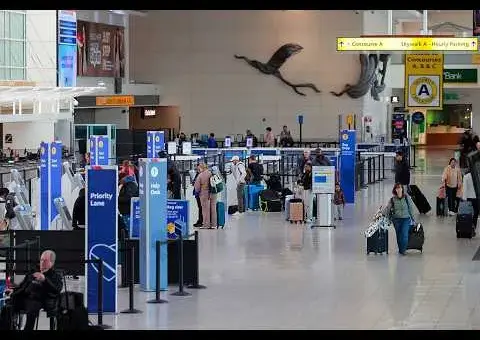
Trump’s Paycheck Fix Solves TSA Crisis, But Not the Root Cause
President Trump's executive order provided much-needed back pay for TSA officers during the government shutdown, easing airport lines. However, this fix is temporary, failing to address the deeper political deadlock in Congress over government funding. The crisis highlights the vulnerability of federal workers and raises questions about the future of airport security.


TMZ Catches Lawmakers on Vacation Amid Government Shutdown
TMZ is now publishing photos of lawmakers on vacation amid the ongoing government shutdown, aiming to pressure politicians to return to Washington. The outlet's executive producer stated they are channeling public anger over perceived inaction and blame-shifting by both parties.