Starship Pad 2 Ignites with Monster Deluge System Test
SpaceX has successfully conducted a full-scale deluge test on Starship's Launch Pad 2, showcasing its powerful water-cooling system. This milestone, alongside infrastructure upgrades and manufacturing progress, signals Starship's readiness for future launches. The article also covers updates on Artemis II, the Starliner program's "Type-A mishap" classification, and Rocket Lab's hypersonic mission.

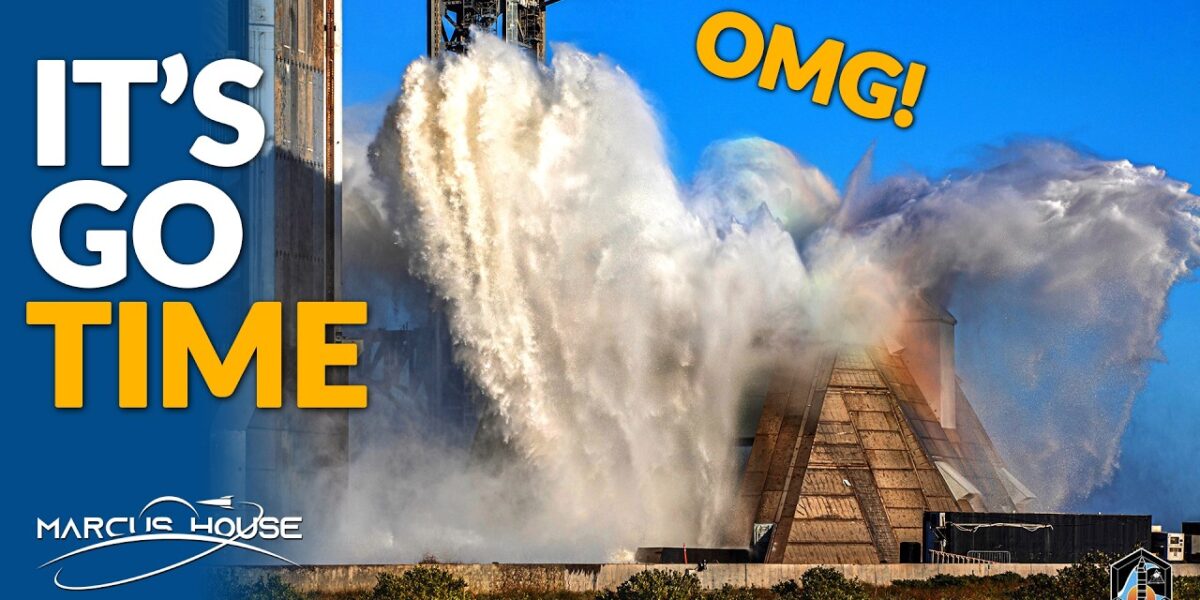
Starship Pad 2 Ignites with Monster Deluge System Test
The relentless pace of Starship development at SpaceX’s Starbase facility has reached a new milestone with the successful full-scale deluge test of Launch Pad 2. This critical test, long anticipated, signals the readiness of the pad for the monumental task of launching the 33-engine Raptor-powered Super Heavy booster, marking a significant step towards the rapid reusability envisioned for the Starship program.
Pad 2 Comes Alive with Water and Fire Suppression
The week saw a flurry of activity culminating in the activation of Pad 2’s comprehensive launch systems. Following the return of Booster 19 from its cryo-testing campaign and its placement on the engine installation stand, the operational status of Pad 2 became paramount. On Monday, the new launch mount began its rigorous testing, starting with the dramatic activation of the full deluge system. This system, designed to protect the pad from the immense heat and acoustic energy of a Starship launch, involves a colossal amount of water directed through a water-cooled top deck manifold and a substantial flame trench.
The testing commenced with gradual preparations. Scaffolding around the booster quick disconnect hoods was removed, followed by the stripping of exterior scaffolding. The booster transport stand returned to the site, likely for clearance checks with the tower arms. SpaceX personnel meticulously closed blast doors and began a series of slow extensions and retractions of the liquid oxygen and liquid methane quick disconnects, simulating the crucial moments before liftoff. During this, water began to trickle down the orbital launch mount, priming the manifold – a vital precursor to the full deluge test.
The detonation suppression system, previously tested, was fired again. Subsequently, the tower arms were raised to a height simulating a booster stacking event, then closed and raised further, showcasing the tower’s full vertical capability. Within the launch table, clamps designed to secure the Super Heavy booster were tested, closing one by one and then reopening in a simulated release sequence.
The climax arrived when the clamps were closed once more, all vehicles cleared from the pad, and the deluge system unleashed. The sheer power and pressure of the water, far exceeding previous systems at Pad 1, were awe-inspiring. This advanced water-cooled deluge system is engineered to safeguard the pad against erosion and damage, especially crucial for the ambitious Version 4 Starship designs and the goal of rapid reusability. The visual of this system in action, anticipating the steamy plume from 33 Raptor engines at liftoff, paints a vivid picture of the power that will soon be unleashed.
Pad 1 Upgrades and Infrastructure Expansion
The progress is not confined to Pad 2. Pad 1 is undergoing rapid upgrades to match its counterpart. Hundreds of concrete piles have been installed to support the foundation for a new flame trench, and sheet piles are now being laid. Expansion of the foundation at the base of the tower is also underway to accommodate larger infrastructure, mirroring Pad 2’s setup. Furthermore, the launch site is experiencing a significant expansion, with a new road, the D5 Entrance, being constructed to facilitate access for Starship and Super Heavy boosters to Pad 1. The tank farm is also being enlarged to handle increased propellant volumes for both pads, necessitating modifications to existing access roads.
Manufacturing and Testing Innovations
In the manufacturing and testing sphere, a new piece of hardware has been installed at the Sanchez area. This structure features six connection points for pistons, reminiscent of the ship thrust simulator stand used for cryogenic proofing. This suggests SpaceX may be streamlining testing processes by adopting similar designs across different test rigs, potentially involving Ship 39 for Flight 12.
Within the Starfactory, the B18.3 test tank’s upper half revealed new steel tabs welded between the trusses of its hot stage ring. These may offer added horizontal support or be related to upcoming tests. Meanwhile, Ship 40 for Flight 13 continues its assembly, with another section rolling into Megabay 2, leaving only two more sections to complete the stack.
A significant development is the SpaceX filing for a $14 million project named “Starship Park.” This 115,000-square-foot monument park with adjacent amenities is planned for an area where mobile homes were previously cleared. It could potentially house early Starship hardware like Booster 12 and Ship 20.
Starship in Florida and Other Space News
SpaceX is also making strides at Space Launch Complex 37 in Florida, where the first tower section for a new launch complex has been rolled out. Module number 6, which sits above the Ship’s Quick Disconnect arm, is one of nine sections that will comprise the tower. While tower stacking is still some time away, the sections are being prepared on-site, with plans for two towers at this complex.
Beyond Starship, the week saw several Falcon 9 launches, primarily carrying Starlink satellites. One launch from Vandenberg Space Force Base deployed 24 Starlinks, while two launches from the east coast each carried 29 satellites. Notably, one of these missions featured a first-stage landing near the Bahamas, a rare occurrence.
The Starlink constellation now boasts over 10 million subscribers globally, showcasing the rapid expansion of satellite internet services.
On the human spaceflight front, the Crew-12 mission successfully docked with the International Space Station (ISS), restoring its full seven-person crew. This follows an earlier medical emergency that necessitated an early return for Crew-11.
In lunar exploration news, Blue Origin’s Blue Moon Mk-1 lunar lander, named Endurance, has entered NASA’s Johnson Space Center’s Thermal Vacuum Chamber A for extensive testing. This massive chamber, previously used for Apollo spacecraft and the James Webb Space Telescope, is one of the few facilities capable of accommodating the large lander. The testing will simulate the extreme conditions of deep space and the lunar surface, a critical step for the lander’s mission.
Artemis II and Starliner Program Updates
The Artemis II mission continues its preparations. Following an earlier Wet Dress Rehearsal (WDR), NASA has been addressing leaks in the SLS rocket. A recent “confidence” test revealed a reduction in liquid hydrogen flow, which was traced to a faulty filter in the ground support equipment. NASA astronaut Jared has been providing updates, noting lower leak rates during the recent confidence testing. The long interval between Artemis I and Artemis II means less iterative testing compared to the rapid development cycle of Starship. NASA aims to improve this process for future Artemis missions, potentially utilizing test tanks similar to SpaceX’s approach.
A second WDR for Artemis II was conducted, encountering minor issues with ground communications and a brief pause due to a booster avionics voltage anomaly, both of which were resolved. The earliest realistic launch opportunity is now targeted for March 6th.
A significant development has emerged regarding the Boeing Starliner program. The Crew Flight Test-1 (CFT-1) mission has been officially classified as a “Type-A mishap,” the most serious category, indicating critical failures. NASA has yet to identify the precise technical root causes for the thruster and propulsion system anomalies. Starliner will not fly for NASA again until these issues are fully understood, addressed, and the propulsion system is qualified. A 311-page report detailing the investigation is public, with a congressional presentation scheduled. NASA Administrator Bill Nelson highlighted that the most troubling failure was not the hardware itself, but the decision-making and leadership, which could foster a culture incompatible with human spaceflight.
Rocket Lab’s Hypersonic Mission
Rocket Lab is preparing for its next mission for Australia, dubbed “That’s Not A Knife.” This mission will involve a hypersonic HASTE (Hypersonic Accelerator Suborbital Test Ejector) flight from Launch Complex 2 in Virginia. The payload includes DART AE, a scramjet-powered aircraft developed by Australian company Hypersonix, which will be deployed at approximately Mach 7 and utilizes hydrogen fuel. This mission is expected to be streamed live, offering a rare glimpse into hypersonic testing. Rocket Lab’s investment in HASTE aims to lower barriers and increase the reliability of commercial hypersonic test missions, providing clients with significant control over flight profiles up to Mach 20.
The rapid advancements across multiple launch vehicles and space programs underscore a dynamic and exciting era in space exploration, with Starship’s Pad 2 testing serving as a powerful symbol of this accelerated progress.
Source: SpaceX Just Unleashed Starship’s Monster Launch Pad (YouTube)

Related Articles

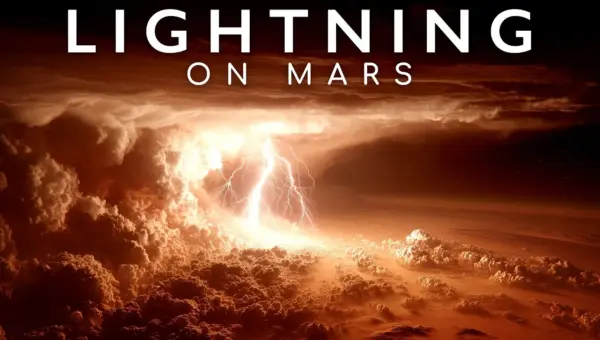
Mars Rover Detects Mysterious Lightning Signals
NASA's Perseverance rover has detected mysterious crackling sounds, providing the first tantalizing evidence of lightning on Mars. This discovery, along with a faint whistler wave detected by the MAVEN spacecraft, suggests that electrical discharges occur in Martian dust storms, impacting atmospheric chemistry and posing new challenges for future human exploration.


Artemis II: Humanity Reaches for the Moon Again
Artemis II marks humanity's return to lunar exploration, sparking public excitement and practical questions. The mission signifies progress and inspires future generations. It's a crucial step toward deeper space exploration.
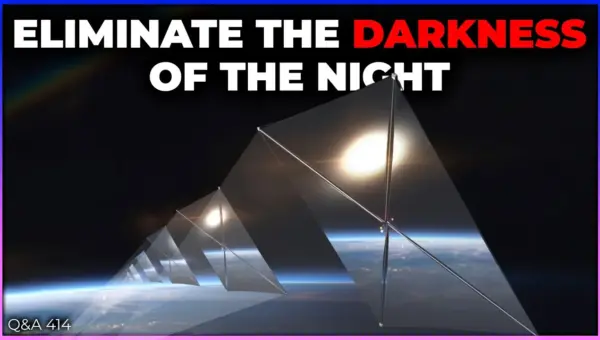
Orbital Mirrors Could Light Up Nights, Voyager’s Power Fades
Scientists explore using orbital mirrors to light up the night, while the aging Voyager probes near the end of their journey. The James Webb Space Telescope continues its search for habitable exoplanets, facing challenges in detecting atmospheres.