Supreme Court Weighs Radical Birthright Citizenship Challenge
The Supreme Court is reviewing a challenge to birthright citizenship, a principle rooted in the 14th Amendment. Legal experts widely dismiss the argument, brought forth by lawyer John Eastman, as "fringe" and contrary to constitutional text. The case raises concerns about potential xenophobic motives behind the legal challenge.

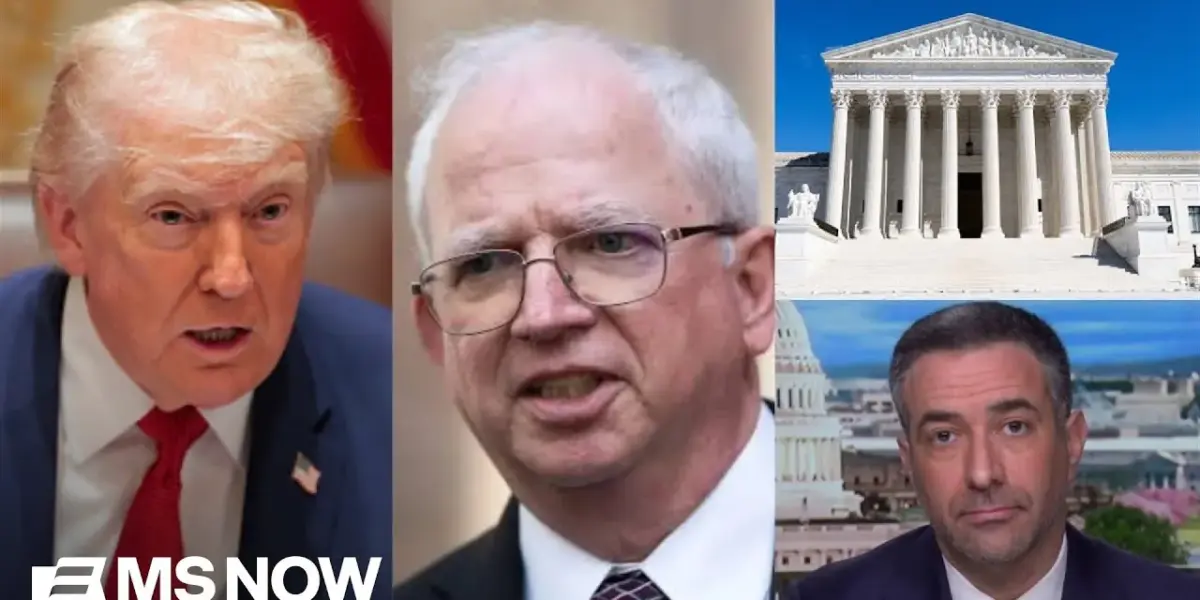
Court Hears Fringe Theory on Birthright Citizenship
The Supreme Court is set to hear a case challenging the long-standing principle of birthright citizenship in the United States. The legal argument, described as “completely fringe” by legal experts, questions the interpretation of the 14th Amendment, which states that all persons born or naturalized in the U.S. are citizens.
The Legal Basis: The 14th Amendment
The 14th Amendment, ratified after the Civil War, clearly states: “All persons born or naturalized in the U.S., and subject to the jurisdiction thereof, are citizens of the United States and of the State wherein they reside.” This language has historically been understood to grant citizenship to anyone born within U.S. borders, regardless of their parents’ immigration status.
John Eastman: The Architect of the Theory
The main proponent of the theory being considered is John Eastman, a lawyer previously associated with efforts to overturn the 2020 election results. Eastman has argued for years that children born in the U.S. to parents who are not permanent legal residents should not automatically be granted citizenship. This viewpoint directly contradicts the plain language of the 14th Amendment.
“All persons born here are citizens here. That’s what it says. You don’t need law school for this one.”
Bill Barr’s Doubts
Even former Attorney General Bill Barr, a conservative and loyalist to the Trump administration, has expressed skepticism about Eastman’s ideas. Barr reportedly cited Eastman’s theory on birthright citizenship as a reason he found Eastman not credible. Barr recounted a conversation where Eastman presented his idea, and Barr told him it was wrong.
This skepticism is notable, as Eastman was also involved in attempts to pressure Vice President Mike Pence to reject electoral votes on January 6, 2021. These actions ultimately led to Eastman and others facing disbarment proceedings, a severe consequence for any lawyer.
Legal Community’s Reaction
Legal analysts widely view the argument presented to the Supreme Court as having little to no merit. Andrew Weissmann, a former FBI general counsel and prosecutor, noted that the legal community largely expects a near-unanimous decision against the administration’s position. The fact that such a fringe argument has reached the Supreme Court is seen as a concerning indicator of the current legal and political climate.
“Every single judge, every single one that has had this issue, including judges appointed…” Weissmann stated, implying that the argument has been rejected by all lower courts. He added that the core idea is something a first-year law student would recognize as unlikely to succeed.
The Administration’s Stance
The current administration’s argument suggests that even if parents are in the U.S. legally, such as on green cards or as students, their children born here might not be citizens if the parents’ status is considered temporary. This interpretation goes beyond excluding children born to undocumented immigrants and extends to those born to lawful residents.
“It’s not just saying that if someone came into the country illegally and had a child here, that they shouldn’t have citizenship. Although the language of the Constitution is, they do. If you’re born here, you’re born here, period. It doesn’t matter how your parents got here,” explained Weissmann.
Potential Motives and Broader Implications
The ACLU has suggested that this legal challenge could be an effort to change the demographics of the U.S. and gain more racial control. While the legal outcome is widely expected to be a loss for the challengers, the act of pushing the argument itself is seen as signaling xenophobic and racist sentiments to appeal to a specific base.
Experts believe this push is contrary to the nation’s founding principles. Distinguishing between deporting criminals and denying citizenship to children born on U.S. soil to lawful residents is a critical difference. The argument is seen by some as echoing rhetoric that favors a specific ethnic or religious background, a stance that conflicts with the inclusive ideals the U.S. aims to represent.
What to Watch Next
All eyes are now on the Supreme Court’s decision. Legal observers will be watching closely to see if any justices deviate from the widely expected unanimous ruling. The case serves as a significant test of the Court’s commitment to established constitutional principles and may reveal deeper political leanings among its members.
Source: DOJ’s ‘RADICAL’ & ‘FRINGE' claim collides with Constitution in EPIC FACT-CHECK (Melber x Weissmann) (YouTube)

Related Articles
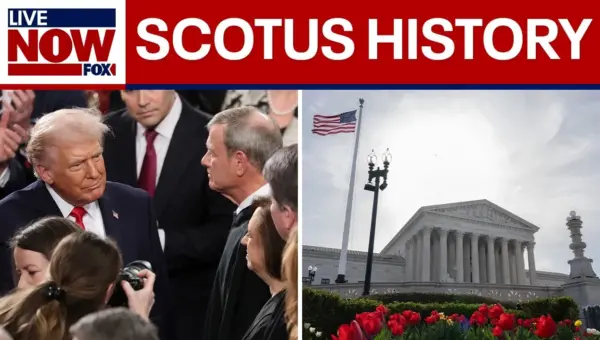
Trump Attends Supreme Court Birthright Citizenship Hearing
President Trump made an unprecedented appearance at the Supreme Court to hear arguments on his executive order challenging birthright citizenship. The case hinges on the interpretation of the 14th Amendment's Citizenship Clause. A ruling against birthright citizenship could have profound effects on millions of U.S.-born children of non-citizen parents.
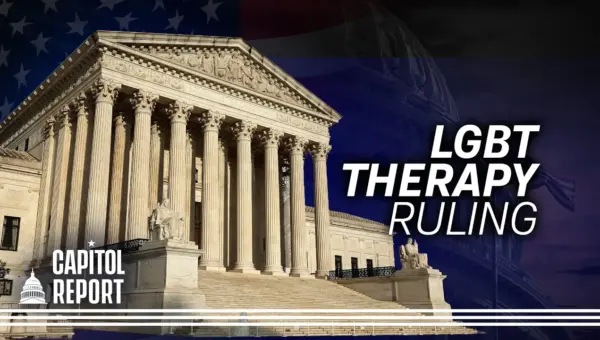
SCOTUS Shields Speech: Free Speech Wins, But Harm to Kids Unproven
The Supreme Court ruled 8-1 that states cannot ban therapists from discussing certain topics with clients, a victory for free speech advocates. The decision noted a lack of statistics proving harm to children undergoing such therapy, emphasizing First Amendment protections even on controversial subjects.
Trump’s Birthright Citizenship Order Faces Supreme Court Test
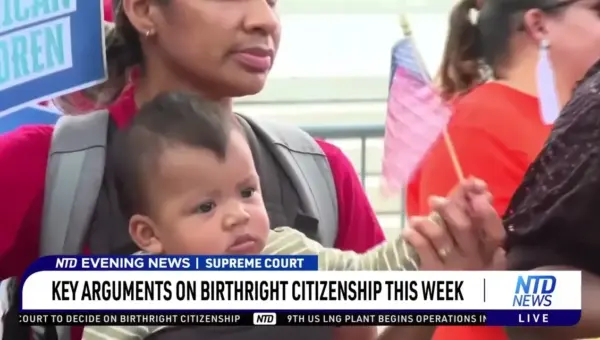
The Supreme Court is hearing arguments on President Trump's executive order aiming to restrict birthright citizenship. The case questions the long-standing interpretation of the 14th Amendment, which grants citizenship to nearly everyone born in the U.S. The administration argues this was not the original intent, while opponents fear a radical rewriting of constitutional law.