President Trump Discusses Iran, Supreme Court, and Voter ID
President Trump discussed the Iran conflict, asserting the U.S. will leave when Iran is no longer a nuclear threat. He also voiced strong opinions on upcoming Supreme Court arguments regarding birthright citizenship and advocated for stricter voter identification laws, criticizing media coverage of his administration.


President Trump Weighs In on International Relations and Domestic Policy
In a recent broadcast, President Donald Trump addressed a range of pressing issues, from the ongoing situation with Iran to critical upcoming Supreme Court cases and his administration’s stance on voter identification. His remarks, delivered with his characteristic directness, touched upon foreign policy challenges, domestic legal battles, and his vision for the nation.
Iran Conflict and International Diplomacy
President Trump expressed his view that Iran does not necessarily need to make a deal for the U.S. to end its operations, stating that Iran’s leaders are “much more accessible” with the current regime. He indicated that the U.S. will leave when Iran is no longer a threat for a prolonged period, particularly regarding nuclear weapons. “Whether we have a deal or not, it’s irrelevant now,” Trump stated, suggesting that Iran desires a deal more than the U.S. He also noted that Iran’s military capabilities have been significantly degraded, leaving them with little ability to retaliate. The President criticized the media, specifically mentioning The New York Times, for what he termed “fake news” and inaccurate reporting on the conflict and his administration’s successes.
Supreme Court Arguments on Birthright Citizenship
A significant portion of the President’s remarks focused on the upcoming Supreme Court hearing regarding his executive order on birthright citizenship. Trump argued that the original intent of birthright citizenship, enacted after the Civil War, was to protect the children of slaves, not to grant citizenship to the children of wealthy foreigners. He described the current situation as “the craziest thing I’ve ever seen,” where individuals allegedly profit from bringing people into the country to gain U.S. citizenship for their families. He expressed a belief that the court will rule in his favor, criticizing judges appointed by former Presidents Obama and Biden as being consistently against him, while suggesting Republican appointees are more honorable.
Voter Identification and Election Integrity
President Trump strongly advocated for voter identification laws, citing the Democratic National Convention’s requirement for identification to enter the arena as an example of its necessity. He contrasted this with what he sees as the Democratic Party’s opposition to voter ID, suggesting it’s because “they want to cheat.” He proposed including proof of citizenship and voter ID in election reform, alongside exceptions for military personnel and those who are ill or traveling for mail-in ballots. Trump also mentioned adding protections for women’s sports and prohibiting transgender participation in children’s activities as part of his administration’s agenda.
Presidential Library and Future Projects
The President also touched upon the development of the Trump Presidential Library, planned as a large skyscraper in Miami. He envisioned it as a library and museum, unlike what he described as the “unattractive” and over-budget Obama Presidential Center in Chicago. Trump suggested his library would likely be a hotel with a striking design, including a replica of Air Force One in the lobby.
Broader Implications and Media Criticism
Throughout his statements, President Trump reiterated his criticism of mainstream media outlets, claiming their circulation is declining due to their perceived dishonesty and bias. He asserted that despite receiving overwhelmingly negative press, his electoral victories were substantial, indicating that the public does not believe the media’s narrative. This sentiment, he argued, is a “very bad thing for our country.” The President concluded by emphasizing his administration’s strong policies, including a powerful military and economic growth, contrasting them with what he described as the failed policies of the Democrats.
Looking Ahead
With critical Supreme Court arguments on the horizon and ongoing international tensions, President Trump’s administration continues to navigate complex domestic and foreign policy challenges. His firm stance on issues like birthright citizenship and voter ID suggests these will remain central themes in the political discourse. The public’s trust in media and the effectiveness of his administration’s policies will likely be key factors in upcoming political developments.
Source: LIVE: NBC News NOW – March 31 (YouTube)

Related Articles
Trump’s War Funding Betrays American Needs
Massive war funding is being pushed despite Donald Trump's promises to avoid such conflicts. This comes as Americans face a severe affordability crisis, highlighting a stark choice between funding foreign wars and addressing urgent domestic needs like healthcare and education.
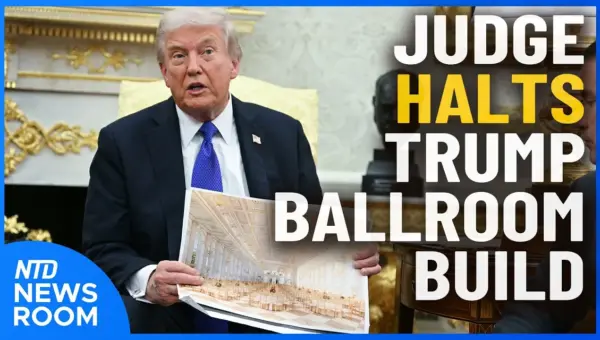
Europe Faces Energy Crisis as Trump Demands Self-Sufficiency
President Trump is pushing European allies to secure their own energy, potentially reshaping global markets. Meanwhile, TSA lines are shortening as agents receive paychecks amid a DHS shutdown, with lawmakers seeking ways to reopen the department.


Iran-Linked Militia Seizes US Journalist in Baghdad
American journalist Shelley Kittleson has been kidnapped in Baghdad by a group suspected of having ties to Iran-aligned militia Kata'ib Hezbollah. The incident highlights the dangerous environment for foreign nationals and journalists in Iraq and raises geopolitical tensions. U.S. authorities are working with Iraqi officials for her swift release.