Judge Halts Trump’s Ballroom: Power vs. Public Good
A federal judge has halted Donald Trump's $400 million White House ballroom project, ruling the president is not the owner of the property. The decision contrasts sharply with the economic struggles of average Americans, drawing criticism about misplaced priorities and the limits of executive power.


Judge Halts Trump’s Ballroom: Power vs. Public Good
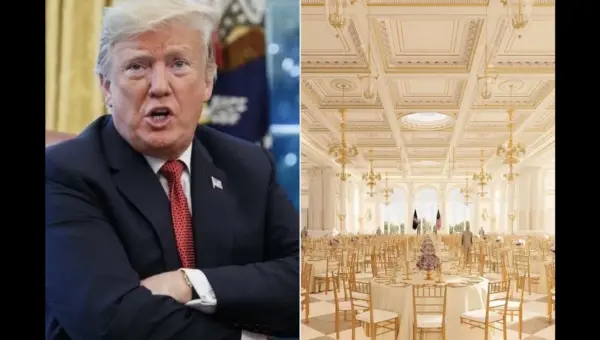
A federal judge has put a stop to Donald Trump’s ambitious plan to build a massive ballroom at the White House. This project, which involved tearing down the East Wing, was set to be a 90,000 square foot, $400 million structure funded by private donations. Judge Richard Leon, appointed by President George W. Bush, ruled that Trump, despite being president, does not own the White House and therefore lacks the authority to undertake such a project.
A Bold Project Meets a Legal Roadblock
The plan began a few months ago when the East Wing of the White House was demolished to make way for the new ballroom. Trump referred to the private donors as “patriots.” However, the transcript suggests a more forceful approach, claiming Trump “bullied” companies, colleges, and institutions into donating money. He allegedly threatened lawsuits and made life difficult for those who didn’t comply. Importantly, this project did not go through Congress for approval.
“He is not the owner of the White House. While Donald Trump temporarily can stay in the White House due to being the president, he is not the owner whatsoever.”
– Judge Richard Leon
Trump reportedly reacted to the judge’s decision with a furious post, defending his actions and his right to demolish the East Wing for the ballroom. This situation highlights a stark contrast between the struggles of average Americans and the concerns of the former president.
Contrasting Realities: Voters vs. The Ballroom
The analysis draws a sharp comparison between the daily hardships faced by many Americans and Trump’s current predicament. One voter from Florida described their struggles, including caring for a mother denied essential breathing medication. This individual admitted to not eating that week to afford doctor’s visits for his mom. When asked to describe their economic situation, the voter used the word “desolate.” This paints a picture of a dark and lonely reality for many.
Meanwhile, Donald Trump’s “struggle” is the inability to complete his $400 million ballroom due to a lack of legal authority. Another voter expressed shock and disappointment over rising gas prices, which have topped $4 per gallon nationally. They felt the person in the White House “does not care about the American people.” This sentiment is echoed by the judge’s ruling, suggesting Trump’s focus is not on public welfare.
Judicial Exasperation and Funding Schemes
Judge Leon also criticized Trump’s funding plan, calling it a “convoluted funding scheme” that used private donations. The judge’s reaction to one of Trump’s arguments was one of clear exasperation, reportedly exclaiming “Please!” This suggests the judge found the legal arguments unconvincing or even absurd. The legal arguments involved complex terms and interpretations of statutes, but the core issue remained Trump’s authority.
Trump’s own response, posted on Truth Social, included a lawsuit from the National Trust for Historic Preservation. He described them as a “radical left group” and claimed the ballroom was under budget, ahead of schedule, and at no cost to taxpayers. He also mentioned a separate project, the renovation of the former Kennedy Center into the “Trump Kennedy Center,” which he also claims is being handled efficiently.
Historical Context and Abuse of Power
The demolition of the East Wing and the construction of the ballroom without congressional approval raise questions about the executive branch’s power. Historically, major alterations to the White House have involved careful consideration and often congressional input. Trump’s approach appears to bypass these established norms, leading to legal challenges.
The National Trust for Historic Preservation’s lawsuit highlights concerns about the erosion of democratic processes. The transcript alleges that Trump used his influence to secure funds, suggesting an abuse of his presidential position. The court’s decision reinforces the idea that the president acts as a steward of national property, not its owner.
The President as Steward, Not Owner
The judge’s statement, “The president of the United States is the steward of the White House for future generations of first families. He is not, however, the owner,” is a critical point. This emphasizes the public trust associated with the presidency and the nation’s historic landmarks. The judge also pointed out that the “large hole beside the White House” is a problem of Trump’s own making, directly linking his actions to the current issue.
This situation is compared to ongoing international conflicts, suggesting a misplaced focus. While the world faces crises, Trump’s primary concern is reportedly his ballroom. The analysis concludes by highlighting Trump’s tendency to create problems and then struggle to find solutions, drawing parallels between the ballroom project and international disputes.
Why This Matters
This event is significant because it speaks to the limits of presidential power and the importance of checks and balances. The use of private funds for a presidential project, especially one involving the demolition of a historic part of the White House, raises ethical and legal questions. It highlights the tension between executive authority and the need for transparency and public accountability. The contrast drawn with the economic struggles of everyday Americans underscores a broader concern about priorities and the potential for the powerful to operate outside the norms that govern others.
Implications, Trends, and Future Outlook
The ruling sets a precedent for how future administrations might approach renovations or projects involving federal property. It reinforces the idea that even the president is subject to legal constraints and must adhere to established processes, particularly when dealing with public funds or historic sites. The use of private donations for such large-scale projects could become a trend, but this ruling suggests it will face significant legal scrutiny. The future outlook may involve more stringent oversight of executive actions and a renewed focus on congressional approval for major federal projects. This incident could also fuel ongoing debates about the balance of power between the executive branch and the judiciary.
Source: Trump FREAKS OUT as his BALLROOM GETS DESTROYED (YouTube)

Related Articles


Trump Attends ‘Chicago’ Opening: A Night of Politics and Performance
President Donald Trump and First Lady Melania Trump attended the opening night of the musical "Chicago" at the Trump International Hotel and Tower. This cultural outing occurred against a backdrop of ongoing political developments and public scrutiny.


Midterms to Test Trump’s Grip on GOP, Voters Show Discontent
The upcoming midterm elections are expected to be a significant test of former President Donald Trump's influence within the Republican party and the broader electorate. With low approval ratings and voter discontent over key policies, the elections could signal a shift in political power. Experts believe the midterms will be more than just a check on the current administration, reflecting deep dissatisfaction that could impact both the House and the Senate.
Judge Halts Trump’s Ballroom: A Clash Over Power and Priorities
A federal judge has halted President Trump's $400 million White House ballroom project, citing lack of legal authority. The decision sparks debate over presidential power, personal priorities, and the balance between ambition and public service.