Global Energy Shock Looms: Iran War Threatens Supply, Prices
A widening energy crisis, stemming from the conflict in the Middle East, threatens global economic stability. Economist Liam Halligan warns of potential price shocks, plastics shortages, and even future food insecurity due to disrupted oil, gas, and fertilizer supplies. The UK, as a net energy importer, faces particular vulnerability.

Global Energy Shock Looms: Iran War Threatens Supply, Prices
A growing energy crisis, fueled by the conflict in the Middle East, is poised to send shockwaves through the global economy, impacting everything from plastics to food production. Economist Liam Halligan warns that the world is entering a period of significant economic peril due to disruptions in oil and gas supplies.
Global Markets Feel the Pinch
While the conflict is centered in the Middle East, its effects are felt worldwide. The United States, now a major exporter of liquefied natural gas, sees its domestic fuel prices climb, nearing $4 a gallon. This rise in gas prices puts political pressure on leaders, as it directly affects consumers. However, the U.S. is in a stronger position to handle this shock than in past decades, thanks to its own significant oil and gas production following the shale revolution.
Unlike the 1973 oil crisis, when global demand was around 55 million barrels per day, today’s world consumes about 110 million barrels daily. This highlights the continued, vital importance of fossil fuels, which still make up 60-70% of primary energy use in many countries, including the UK. The current situation is far more complex than simply replacing one leader with another; Iran’s Revolutionary Guard actively opposes external influence, presenting a significant challenge.
Beyond Oil: Plastics, Fertilizers, and Food
The impact of the energy supply shock extends far beyond gasoline prices. Oil and gas are fundamental components in the creation of plastics and polymers. Crucially, natural gas is a key ingredient in producing fertilizers. As ships carrying these vital materials face delays or cancellations, the world could see a significant food shortage emerge in the future, further driving up inflation.
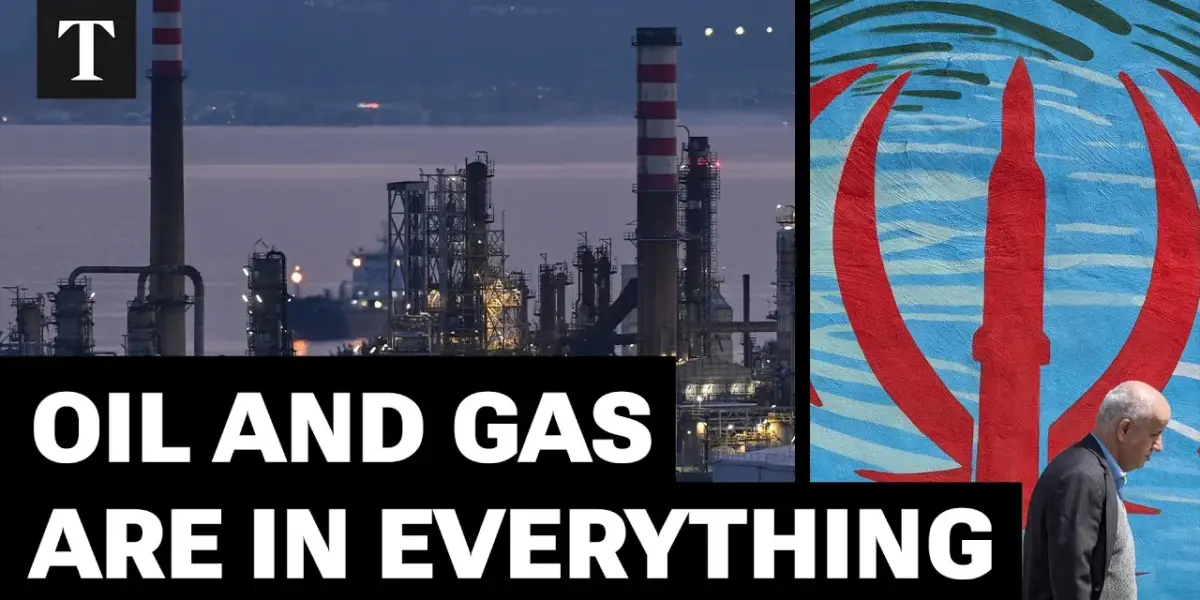
Halligan emphasizes that oil and gas are integral to nearly every aspect of modern life. He states, “oil and gas is in everything.” This truth, though perhaps unfashionable, is a fundamental reality of our current economic and industrial systems. The current disruptions are making this dependence acutely clear.
UK’s Vulnerability and Refining Woes
The United Kingdom, a net energy importer since 2005, is particularly vulnerable. The arrival of the last planned tanker of jet fuel from the Middle East this week signals a critical juncture. This situation is partly a result of past policy decisions that made much of the UK’s refining capacity economically unviable due to extensive regulations and net-zero policies.
The closure of major refineries, like Scotland’s largest, Grangemouth, has left the UK with insufficient domestic processing capabilities. This means the country is now exposed when basic energy provisions, such as diesel and jet fuel, become scarce. As a net importer facing an energy price shock, the UK risks significant losses in its balance of payments, trade position, and national wealth. There is even a risk of planned or unplanned shortages, leading to potential rationing.
The Debate Over North Sea Oil and Gas
The crisis has reignited debate about developing new oil and gas fields in the North Sea. While some advocate for immediate exploration and extraction to meet current needs, others point to the long-term goal of transitioning away from fossil fuels. Halligan, who personally supports weaning off fossil fuels, stresses the need for realism.
He argues that an overzealous approach to environmental policies, driven by ideology rather than practical needs, can have severe consequences. Causing power cuts or jeopardizing essential services like hospital operations can erode public support for environmental measures. He clarifies that electricity generation, often cited in renewable energy statistics, represents only about one-third of a country’s total energy consumption. Therefore, claims of high renewable energy usage can be misleading when considering overall energy needs.
Halligan suggests that blocking North Sea energy fields, like Jackdaw and Rosebank, might be politically untenable given the current circumstances. He notes that these fields could still offer significant resources, but their economic viability is often undermined by extremely high taxation rates, sometimes reaching 75-85%. While acknowledging that oil and gas companies should pay higher taxes due to the extraction of natural resources, excessive levies can render essential projects unfeasible.
Looking Ahead: Economic Stability and Energy Policy
The coming weeks and months will be critical as the full impact of the disrupted energy supply chain unfolds. Nations will face difficult choices regarding energy security, economic stability, and environmental policy. The global community must find a balance between immediate energy needs and long-term sustainability goals, navigating a complex geopolitical and economic landscape.
Source: Economist Breaks Down How The Iran War Affects Everything – Not Just Oil (YouTube)

Related Articles


Global Power Shift: US Dollar Faces New Challenges
Geopolitical tensions and economic headwinds are signaling a potential end to the U.S. dollar's global dominance. A developing alternative financial system involving Iran, Russia, and China could reshape international trade and investment.


Dem Hopeful’s Silence on Khamenei Death Sparks Outrage
A leaked audio recording reveals a Michigan Democratic Senate hopeful's alleged advice to stay silent on Ayatollah Khamenei's death, sparking outrage. The controversy occurs amid an internet blackout in Iran, hindering potential uprisings. The candidate's stance raises questions about political alignment and voter sympathy.

Crypto Rallies as War Fears Ease, Gas Prices Spike
Cryptocurrencies like Bitcoin and Ethereum saw gains as hopes rose for an end to the current Middle East conflict. However, rising gas prices to $4 per gallon and broader economic concerns continue to pressure markets. Investors are watching geopolitical shifts and inflation closely.