Trump’s Shifting War Aims Spark Allied Confusion
Conflicting messages from the Trump administration regarding its war aims in Iran have led to confusion among allies, according to a discussion featuring former campaign manager Rick Gates. Gates defended the evolving nature of objectives, but inconsistencies in stated goals, including the handling of Iran's nuclear program and the Strait of Hormuz, have raised concerns about the U.S. strategy.

Conflicting Signals Emerge on Iran Conflict Objectives
The United States’ strategy and objectives in a potential conflict with Iran are facing scrutiny, with allies expressing confusion over shifting war aims. President Trump’s administration has sent mixed messages regarding the goals of military action, leading to hesitancy among international partners to join a coalition. This uncertainty raises questions about the clarity of U.S. intentions and the potential for a unified global response.
Former Campaign Manager Defends Shifting Priorities
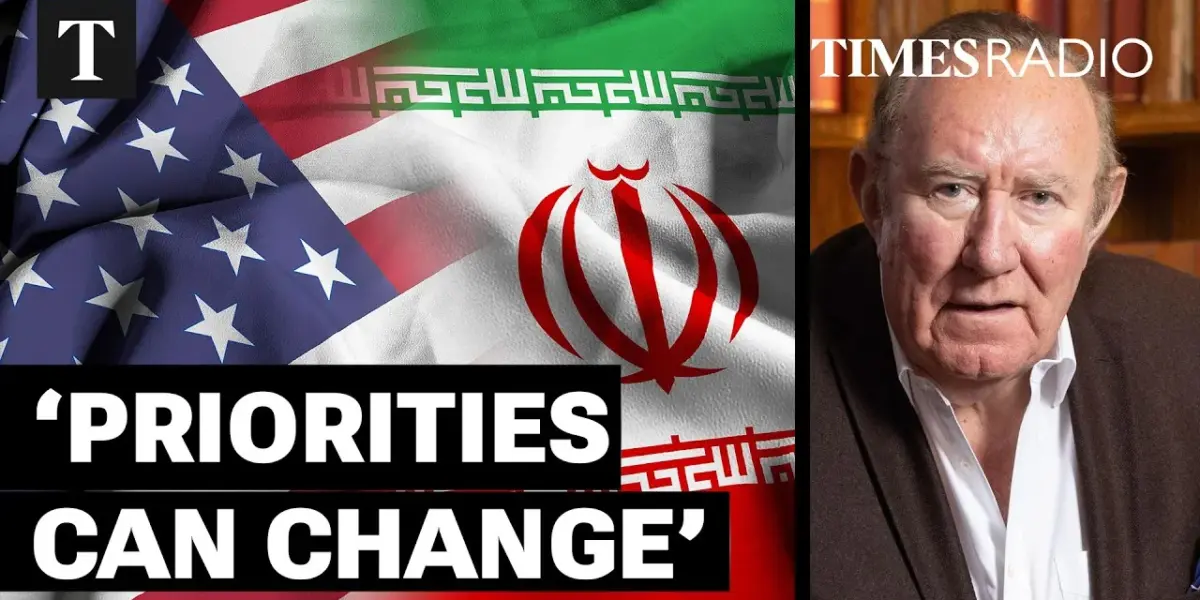
Rick Gates, former campaign manager for President Trump, defended the evolving nature of the administration’s war aims. He suggested that objectives can change as a situation develops, particularly as a “bigger ground game” is engaged. Gates stated that President Trump is balancing multiple factors and has a wide range of options. He also indicated that the President desires peace but believes Iran poses a global threat and that the U.S. must take a leadership role.
“The priorities can change in terms of what the objectives are as we’ve now engaged in a bigger ground game.”
Inconsistent Declarations Cause Concern
The transcript highlights a series of seemingly contradictory statements attributed to President Trump. At one moment, he suggests a positive relationship with elements within Iran, almost implying regime change has occurred, which is not the case. The next, he speaks of destroying not only Iran’s military assets but also its essential infrastructure like electricity and water supplies. This could disproportionately harm the Iranian people rather than the regime itself.
Further inconsistencies include the announcement of U.S. military deployments, followed by talk of declaring victory and leaving the Strait of Hormuz under Iranian control. Trump has also suggested the UK should take the lead in securing the vital waterway. While these actions could be intended to confuse adversaries, they are clearly causing confusion among America’s allies.
Allies Hesitant to Join Unclear Mission
The lack of clear, consistent war aims and an exit strategy has made allies reluctant to commit to military action. Gates acknowledged that the U.S. had hoped allies would step up, but many have not participated. He stated that if European allies are unwilling to join, the U.S. will continue to lead. However, he also noted that the President must consider domestic political realities, especially with midterm elections approaching, suggesting the American public would not tolerate a prolonged campaign.
Nuclear Capability: A Missing Piece in Public Aims?
A significant point of contention is the omission of Iran’s nuclear program from publicly stated war aims, despite its acknowledged threat. While Gates asserted that the President has mentioned this concern multiple times, he conceded that specific officials, like Marco Rubio when outlining war aims on television, did not include it. The transcript lists four initial war aims issued by the White House: destroying Iran’s ballistic missile capability, destroying its nuclear facilities, regime change, and ending support for Iranian proxies. The fact that not all of these were consistently reiterated by administration figures fuels the perception of strategic confusion.
Shifting Aims Amidst Evolving Conflict
Gates explained that as the conflict evolves, new objectives may emerge. He indicated that early in the war, the White House believed many objectives were achieved within the first week. However, as the situation has developed, the President and his administration are considering other goals. He stressed that President Trump believes he cannot wait for allies to come on board and will proceed with what he deems right, regardless of their participation.
Regime Change vs. Regime Collapse
The discussion also touched upon the concept of regime change. Gates clarified that the administration might refer to it as “regime collapse.” He explained that a core issue from the outset has been the Iranian leadership, the Islamic Revolutionary Guard Corps (IRGC), and the Supreme Leader, whom he described as thugs harming the Iranian people. He believes the slaughter of Iranians was a significant factor in the President’s decision to intervene. Therefore, if an opportunity arises to bring about a better government in Iran, it would be a desirable outcome.
Uncertainty Over Long-Term Goals
When pressed on whether President Trump would continue fighting until regime change is achieved or Iran’s nuclear capability is completely destroyed, Gates admitted that the ultimate decision rests with the President and will depend on ongoing negotiations and intelligence. He suggested that while publicly Iran denies negotiations are taking place, there is proof of behind-the-scenes discussions. Gates believes President Trump would not have paused intended actions without some form of progress being made.
A Complex and Evolving Situation
The situation remains complex, with differing interpretations of the administration’s strategy. While Gates presented a perspective defending the President’s actions and adaptability, the core issue of inconsistent messaging and its impact on international cooperation persists. The coming weeks will likely reveal more about the true strategic aims and the extent of global support for U.S. policy towards Iran.
Source: Trump's Iran War Aims Change Defended by Former Campaign Manager (YouTube)

Related Articles

US Allies Turn Away as America’s Global Role Falters
A perceived shift in U.S. foreign policy has unsettled allies, particularly in Europe, leading them to question American reliability. Aggressive actions in the Middle East and a transactional approach to energy markets are causing concern, pushing allies to seek alternative solutions and re-evaluate security commitments.


Gas Prices Surge Past $4 Amid Iran Tensions
Gas prices have surged past the $4 per gallon mark nationally, reaching their highest level in years amid escalating tensions and attacks in the Middle East. The conflict has also impacted oil prices, leading to higher transportation costs and affecting the stock market. Meanwhile, travelers are experiencing shorter lines at airports as TSA workers receive overdue paychecks, and NASA prepares for its historic Artemis II Moon mission.


US Adjusts War Aims, Seeks Iran Strait Deal Amid Shifting Strategy
US officials are reportedly shifting focus in the Iran conflict from regime change to reopening the Strait of Hormuz, driven by economic concerns like inflation. Analysts question the changing objectives, noting the administration's skill in framing outcomes as victories. Diplomatic talks are ongoing, suggesting a potential deal that could involve concessions in exchange for the strait's reopening.