US, China Race to Moon for Global Leadership, Resources
The US and China are in a heated race to return to the Moon, driven by a desire for global leadership and access to lunar resources. This competition extends to shaping future space governance, with differing visions for a commercially open versus state-controlled environment. The Moon is seen as a vital staging post for deeper space exploration, including missions to Mars.


Moon Race Heats Up: US and China Vie for Lunar Dominance
The United States and China are locked in a high-stakes competition to return to the Moon, a race driven by aspirations of global leadership, technological supremacy, and access to valuable lunar resources. NASA’s Artemis program aims to land astronauts on the lunar surface by 2028, but a recent safety advisory panel report suggests this timeline might be overly ambitious. This has intensified the pressure, as China has its own lunar landing plans set for 2030, potentially pushing the US to accelerate its own efforts.
Global Leadership and Soft Power at Stake
This lunar race is more than just a scientific endeavor; it’s a battle for global prestige and technological dominance. The nation that successfully establishes a presence on the Moon first will be seen, at least symbolically, as the leader in a critical technological race. This achievement carries significant propaganda value, capable of shaping international perceptions and national pride.
“It’s really become a race, but a race for what exactly? It’s about global leadership and this idea of soft power, like who is actually leading the kind of technological race,” explained DW News.
The psychological impact of either nation reaching the Moon first would be profound. For Americans, a Chinese landing could be a blow to national pride, while in Beijing, it would be a major propaganda victory, showcasing their growing technological prowess on the world stage.
Competing Visions for Space Governance
Beyond symbolic victories, the Moon race is also about shaping the future rules of space exploration and utilization. The US and China hold fundamentally different views on how space should be governed and exploited. The United States favors an open, commercially driven environment, encouraging private sector involvement and innovation. In contrast, China envisions a more state-controlled and less accessible domain.
This divergence stems from their distinct political systems and reflects a broader competition for influence in how international space activities will be conducted in the coming decades. The nation that takes the lead on the Moon could play a pivotal role in setting precedents and establishing the legal and operational frameworks for future space endeavors.
The Moon as a Staging Post for Deeper Space Exploration
The ultimate goal for both nations extends beyond simply planting a flag on the lunar surface. The Moon is viewed as a crucial stepping stone for deeper space exploration, particularly for missions to Mars. Its resources, such as water ice and minerals, could be vital for sustaining future off-world bases.
Lunar ice can be used to produce water, oxygen, and rocket fuel, significantly reducing the cost and complexity of launching missions from Earth. Furthermore, the Moon’s surface could serve as a platform for assembling larger spacecraft and conducting scientific research, acting as a vital logistical hub for humanity’s expansion into the solar system.
Artemis 2: A Step Towards Lunar and Martian Ambitions
NASA’s Artemis 2 mission, planned to orbit the Moon, is a critical early step in this grand strategy. While not a landing mission, it represents a vital test of the systems and capabilities needed for future lunar surface operations. Success in the Artemis program is seen as essential for the US to maintain its leadership in space and achieve its long-term goals of establishing a sustainable human presence on the Moon and eventually sending astronauts to Mars.
The competition between the US and China highlights the renewed global interest in lunar exploration. As both nations push forward with their ambitious plans, the coming years will be crucial in determining who leads the way in unlocking the Moon’s potential and shaping the future of humanity’s presence in space.
Source: Why are the US and China fighting for the moon? | DW News (YouTube)

Related Articles


Our Sun Might Be a Cosmic Anomaly
New research suggests our Sun, long considered a typical star, might be more unusual than previously thought. This finding impacts our understanding of life's prevalence in the universe and the search for habitable exoplanets.
NASA Rockets Toward Moon, Reigniting Space Race
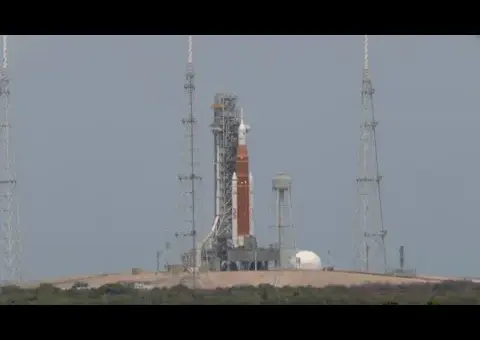
NASA's Artemis II mission is set to launch, sending a four-person crew on a 10-day journey around the Moon. This historic flight, over 50 years since the last lunar landing, aims to gather research for future exploration and potential resource discovery. The mission represents a significant step in humanity's return to deep space and could pave the way for a permanent lunar presence.
China Aiding Iran, Damaging US Jets: Expert Warns
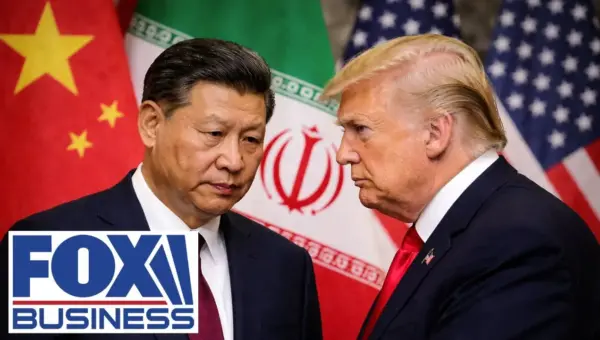
China is accused of providing intelligence to Iran, which may have led to the destruction of a $700 million U.S.-backed early warning jet. This accusation surfaces as President Trump prepares to meet with Chinese President Xi Jinping amidst rising geopolitical tensions.