UK Faces Iran Threat Alone? US Exit Could Leave Britain Exposed
A defense expert warns the UK could face Iranian threats without U.S. backing, as former President Trump reportedly considers ending conflict without securing the Strait of Hormuz. Iran has also threatened to target British assets, raising concerns about the UK's regional security and defense capabilities.

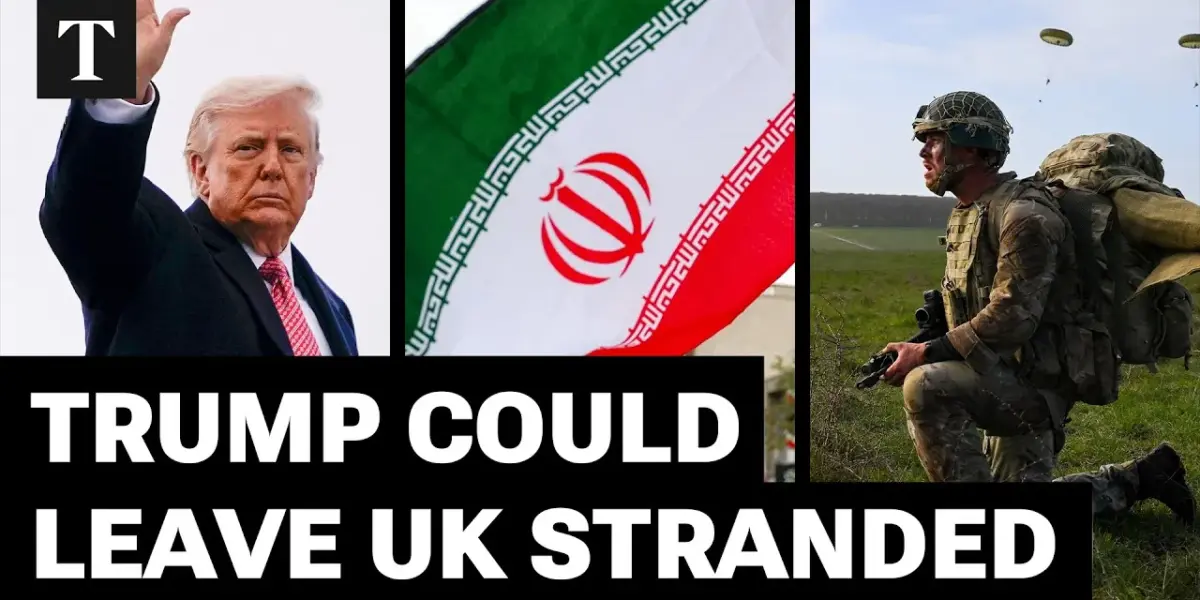
UK Faces Iran Threat Without US Backing, Expert Warns
Britain may be forced to confront potential Iranian military threats without American support, a defense expert has warned. This comes as former President Donald Trump reportedly suggested ending the current conflict without ensuring the free passage of oil through the Strait of Hormuz, a key global shipping route. The remarks, coupled with Iran’s own warnings about targeting British assets, paint a worrying picture for the UK’s security in the region.
Iran’s Warning to Britain
Iran’s ambassador to Britain recently stated that Iran is considering making British assets legitimate targets. This possibility depends on how the ongoing conflict develops. Currently, British military assets are actively involved in intercepting Iranian missiles aimed at targets of interest to the UK. While this is not an immediate threat, it serves as a clear warning about the potential for escalation.
Defense expert Dr. Patrick Bury explained Iran’s strategy. He believes Iran aims to keep Britain’s military in a defensive stance, preventing it from actively intervening to secure the Strait of Hormuz or launching attacks on Iran. The warning is seen as a way to reassert Iran’s capability to target British interests, primarily in the Middle East.
Britain’s Defense Capabilities Questioned
The question of whether the British military possesses sufficient capacity to defend its interests in the Gulf and other areas within range of Iranian attacks has been raised. While the UK is sending additional defense systems, such as the Sky Saber medium-range system and short-range missiles, the overall capacity is limited.
Dr. Bury noted that the number of active destroyers in the Royal Navy is low, currently at three. Although ships like HMS Dragon have been deployed with useful air defense systems, the UK’s capabilities are less extensive compared to other nations in the Gulf. Many of these countries possess advanced Patriot missile defense systems. The UK has historically not faced such a direct ballistic missile threat on its doorstep, leading to a public awakening about its potential vulnerability.
Trump’s Stance and Strategic Incoherence
A report in The Wall Street Journal revealed that former President Trump discussed ending the war without reopening the Strait of Hormuz. Dr. Bury described this approach as “strategic incoherence,” where “narcissism meets strategic reality.” He suggested that the initial aims of the conflict, which may have included regime change and addressing Iran’s nuclear program, have become muddled.
Dr. Bury pointed out that Iran’s geography allows it to exert significant influence globally. This is why, he argued, many previous U.S. presidents have avoided military conflict with Iran, despite pressure from Israel. The current situation leaves the UK and Europe uncertain about the end goal and exit strategy from the conflict.
He added that while Iran’s military has been weakened, the launches of ballistic missiles and drones are increasing. This rise is partly due to assistance from Russia and potentially China. This development makes the overall situation “not a great situation to put it mildly,” according to Dr. Bury.
Opening the Strait of Hormuz: A Difficult Task
The idea of a maritime operation to force open the Strait of Hormuz is seen as highly challenging. Dr. Bury explained that such an operation would likely require U.S. leadership and numerous U.S. vessels. Additionally, a significant international coalition would be needed.
He described the potential difficulties: forming a defensive line along Iran’s coast, where it can be easily targeted by cheap drones that can overwhelm expensive air defense systems. Escorting slow-moving, volatile cargo tankers with limited frigates and mine sweepers would be a risky endeavor. This is why many military planners are cautious about such an operation.
Historically, the U.S. undertook a similar operation in 1987-88 in the Persian Gulf against a lesser threat. This required immense resources and continuous air patrols. Even then, only about three to four vessels could be escorted per day, far fewer than the 135 that pass through when the strait is open. This suggests that reopening the strait through military means is not easily achievable.
Negotiation Over Force?
Given the difficulties of a military solution, Dr. Bury believes that reopening the Strait of Hormuz is more likely to happen through negotiations. He suggested that it might even involve paying Iran to allow ships to pass, especially if the current security situation, created by the U.S., becomes too difficult to exit.
This complex situation highlights the delicate balance of power in the region. The UK finds itself in a precarious position, potentially needing to rely on its own defenses if U.S. support wavers. The future of maritime security in the Strait of Hormuz hinges on diplomatic efforts and the willingness of regional and international powers to find a stable resolution.
Dr. Patrick Bury, a former British Army officer and security expert at the University of Bath, provided these insights during a recent discussion.
Source: UK May Be Forced To Face Iranian Strikes Without American Support | Defence Expert (YouTube)

Related Articles

US Pushes Iran Harder: Troops Ready, Bombs Falling
Defense Secretary Pete Hegseth revealed an escalation of U.S. military pressure on Iran, including troop visits and increased bombing campaigns. He highlighted the troops' desire to finish the mission and reported significant damage to Iranian morale and capabilities, while also noting ongoing diplomatic talks.


Iran Kidnaps Journalist; US Carrier Rushes to Region
An American journalist has been kidnapped in Iraq by Iranian-backed forces, prompting a U.S. military response that includes deploying another aircraft carrier to the region. The incident occurs amid escalating tensions, with ongoing strikes and Iran rejecting ceasefire calls, signaling a potentially volatile future.

Global Energy Shock Looms: Iran War Threatens Supply, Prices
A widening energy crisis, stemming from the conflict in the Middle East, threatens global economic stability. Economist Liam Halligan warns of potential price shocks, plastics shortages, and even future food insecurity due to disrupted oil, gas, and fertilizer supplies. The UK, as a net energy importer, faces particular vulnerability.