US Threatens Iran’s Infrastructure, Faces Diplomatic Backlash
U.S. President Trump has escalated rhetoric against Iran, threatening to destroy civilian infrastructure if a deal isn't reached, while Iran denies direct talks and calls proposals "unrealistic." Meanwhile, the Artemis II mission prepares for a historic lunar orbit, marking a new era of space exploration.


Middle East Tensions Escalate as War Enters Fifth Week
Overnight strikes continued in the Middle East as the conflict involving Iran entered its fifth week. President Trump posted on Monday that “great progress has been made” in negotiations. However, he simultaneously issued a stark warning: if a deal isn’t reached soon and the Strait of Hormuz doesn’t reopen, the U.S. would “blow up and completely obliterate all of their electrical generating plants, oil wells and Kharg Island and possibly their water desalination plants.” This statement, shared on his Truth Social platform, signals a significant escalation in rhetoric and potential actions.
Iran Rejects U.S. Peace Proposals, Denies Direct Talks
Iran has pushed back against President Trump’s portrayal of the situation, denying any direct negotiations with the United States. Iranian leaders have labeled the U.S. peace proposals as “excessive, unrealistic and unreasonable.” These conflicting messages come as Iran indicates readiness for a potential U.S. ground invasion. Earlier in the week, President Trump told the Financial Times he was considering seizing Kharg Island, a key facility responsible for 90% of Iran’s oil exports, to gain leverage.
“When we talk about Russia and Ukraine, for example, Russia regularly attacks Ukrainian energy installations and other civilian utilities. That is widely condemned as a war crime. And here we have the President of the United States threatening to do just that against Iran, hitting civilian targets in order to pressure the regime.”
NBC News correspondent Matt Bradley reported from Tel Aviv, Israel, highlighting the international condemnation such actions might face. Bradley noted that while Iran denies direct talks, it acknowledges indirect messages have been exchanged. Iran feels it holds the upper hand regarding the Strait of Hormuz, despite military setbacks. The mixed signals from both the U.S. and Iran are increasing regional concerns about the war’s direction and potential for further escalation.
Strikes Continue Amidst Military Developments
Overnight, both Israeli and American forces reportedly targeted sites across Iran. In Israel, there have been fewer Iranian counterattacks in recent days. The Israel Defense Forces (IDF) have observed a thinning out of Iranian missile salvos, meaning fewer missiles are fired per attack. While some minor injuries have occurred, Iran appears to be less effective in hitting targets within Israel.
IDF Suspends Soldiers After Alleged Assault on CNN Crew
In a separate development, the Israeli military has suspended a group of soldiers accused of assaulting and detaining a CNN crew. The incident occurred in the West Bank while the crew was reporting on Israeli settlers in an illegal outpost near a Palestinian village. The altercation resulted in a mild injury to CNN cameraman Jeremy Diamond. Human rights groups have long accused uniformed soldiers in the West Bank of acting as settlers themselves, using their positions to enable settler expansion and abuse Palestinians. The IDF’s swift suspension of the unit is seen as a significant consequence, though questions remain about accountability for similar incidents involving settlers and soldiers who harm Palestinians.
White House Defends Actions, Experts Question International Law
White House Press Secretary Karine Jean-Pierre stated that the administration and U.S. armed forces will always act within the law. She added that President Trump intends to move forward with Operation Epic Fury “unabated” and expects Iran to reach a deal. However, military and international law experts suggest that striking civilian water and energy infrastructure could violate international law. While targeting military assets used by Iran’s Revolutionary Guard Corps (IRGC) might be permissible, hitting desalination plants essential for the Iranian people could cause disproportionate harm and suffering, crossing legal boundaries.
Negotiations and Political Landscape
President Trump also reportedly confirmed in an interview with the New York Post that the U.S. is negotiating with Iran’s parliamentary speaker, Mohammad Bagher Ghalibaf. Ghalibaf, who has ties to the IRGC and the clerical establishment, is seen as a potential insider close to Ayatollah Mujtaba Khamenei. He has appeared pragmatic but also engaged in online messaging, seemingly taunting President Trump. Despite denials, indirect talks are ongoing, though significant gaps remain between the two sides. Meanwhile, U.S. gas prices have surpassed $4 per gallon for the first time since the war began, highlighting the direct impact on Americans. This economic pressure may motivate the President to find a resolution, potentially through military action to secure the Strait of Hormuz, such as seizing Kharg Island, if negotiations fail.
Public Opinion and Political Challenges
The war with Iran appears to be affecting President Trump’s approval ratings. A new poll from UMass Amherst shows his job performance rating at 33%, the lowest of his second term. Sixty-three percent of Americans polled believe he is handling the war poorly, with views sharply divided along party lines. Republicans largely approve, while independents and Democrats express strong disapproval. This trend, combined with declining approval on the economy and immigration, raises alarms for Republicans heading into the midterm elections. Democrats are reportedly gaining ground with regular voters, a crucial demographic for election success.
Scrutiny Over Online Prediction Markets
In Washington, over 40 lawmakers have signed a letter urging federal regulators to investigate online prediction markets. Concerns center on potential insider trading by federal employees, with wagers placed on platforms like Polymarket and Kalshi. Lawmakers cite suspicious trades linked to events like the death of Iran’s Supreme Leader or White House press conferences, questioning whether profits stem from luck or insider knowledge. The White House maintains that such activity is already prohibited and denies it is occurring among administration officials.
Government Shutdown and Homeland Security Funding
The partial government shutdown continues, impacting the Department of Homeland Security (DHS). The White House is calling for Congress to return early from recess to fully fund DHS. While TSA workers are receiving back pay, many other DHS employees, including those in the Coast Guard, FEMA, and the Secret Service, remain unpaid. This funding lapse hinders critical operations, including disaster response and preparation for the upcoming hurricane season. The Senate recently held a pro forma session where no business was conducted, and there is no indication of lawmakers returning early before their scheduled April 13th recess end.
Asylum Case Reviews to Resume, ICE Presence at Marine Graduations
The Trump administration plans to resume reviewing asylum cases that were paused following the November shooting of two National Guard members by an Afghan asylum seeker. Applications from 39 countries, including those covered by the previous travel ban, will remain paused, while others will proceed. In another controversial move, ICE agents are expected to be present at upcoming U.S. Marine Corps graduation ceremonies at Parris Island, South Carolina, to conduct ID checks, though arrests are not planned.
Artemis II Mission Prepares for Lunar Orbit
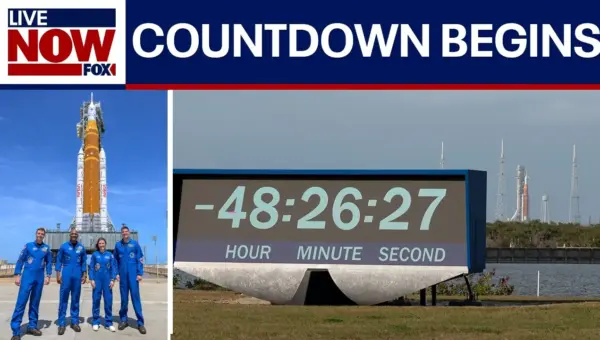
NASA’s Artemis II mission is set to launch tomorrow night, sending four astronauts on a ten-day journey around the Moon. This marks the first crewed voyage beyond Earth’s orbit since the Apollo 17 mission in 1972. The mission aims to test critical systems for future lunar exploration and establish a long-term human presence on the Moon. The Orion spacecraft, atop the massive Space Launch System rocket, is designed to travel further into space than any human has before. Scientists anticipate learning more about the Moon’s far side, which has a different geology and cratering history compared to the near side visible from Earth. The mission is considered a crucial step towards future lunar surface missions and potential long-term habitation.
Source: This Morning’s Top Headlines – March 31 | Morning News NOW (YouTube)

Related Articles

NASA’s Artemis 2 Mission: Astronauts Launch for Moon
NASA's Artemis 2 mission is set to launch, sending four astronauts on a historic journey around the moon. This marks humanity's first crewed voyage beyond Earth's orbit in over 50 years and is a crucial step towards establishing a long-term lunar presence and future Mars missions. The crew will test the Orion spacecraft's systems and conduct scientific observations during their 10-day mission.


Hungary-Russia Collusion Alleged in Bid to Lift Sanctions
A new report alleges that Hungary's foreign minister colluded with Russia's Sergey Lavrov to lift EU sanctions on Russian oligarchs and entities. Intercepted calls, authenticated by experts, suggest Budapest acted as a Kremlin agent. The revelations surface as Hungary heads into a critical election, raising concerns about Russian interference and the country's future within the EU.

US Strikes Iran, Escalates Nuclear Fight
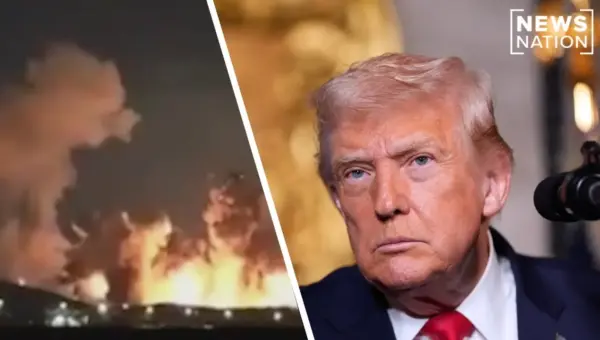
U.S. forces have reportedly struck a key Iranian city linked to its nuclear and missile programs, escalating tensions. President Trump's administration is increasing military pressure while also pursuing diplomatic talks, creating a complex geopolitical situation.