Hungary-Russia Collusion Alleged in Bid to Lift Sanctions
A new report alleges that Hungary's foreign minister colluded with Russia's Sergey Lavrov to lift EU sanctions on Russian oligarchs and entities. Intercepted calls, authenticated by experts, suggest Budapest acted as a Kremlin agent. The revelations surface as Hungary heads into a critical election, raising concerns about Russian interference and the country's future within the EU.

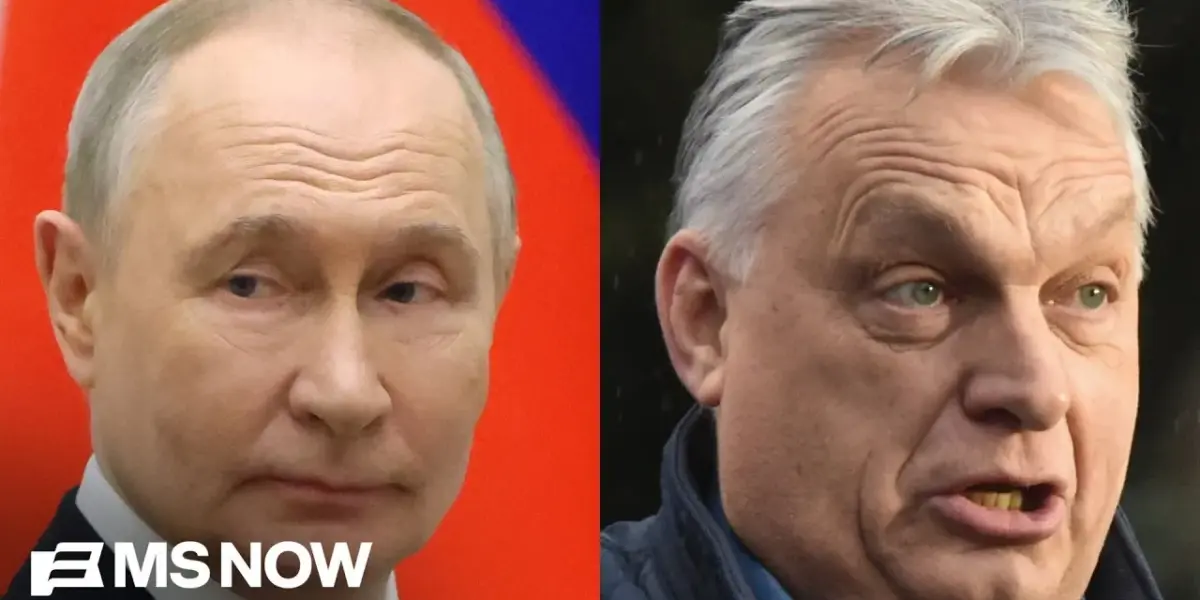
Hungary Accused of Colluding with Russia to Remove Sanctions
A new report reveals alleged collusion between Hungary’s government and Russia’s foreign minister, Sergey Lavrov, to lift European Union sanctions. The claims stem from intercepted phone calls, authenticated by forensic audio experts, suggesting a deep coordination between Budapest and Moscow. These revelations come at a critical time as Hungary faces an upcoming election and increasing scrutiny over its relationship with Russia.
Intercepted Calls Detail Sanctions Conspiracy
Insider editor Michael Weiss presented evidence of intercepted phone calls between Lavrov and Hungarian Foreign Minister Péter Szijjártó. The conversations allegedly show Szijjártó working with the Kremlin to remove EU sanctions. These sanctions targeted individuals like Russian oligarch Alisher Usmanov, his family members, and companies involved in Russia’s shadow oil tanker fleet. The EU also sought to sanction certain banks, which Hungary reportedly discussed lifting.
Weiss described the content of the transcripts as extraordinary, noting that beyond the verbatim conversations, audio recordings were also obtained. “Reading these transcripts, if you remove the names, it sounds like a case officer meaning Lavrov was running an agent, meaning the Hungarian,” one European intelligence officer commented. This suggests a power dynamic where Lavrov was directing Szijjártó’s actions.
Hungarian Foreign Minister Confirms Authenticity, Calls it ‘Nothing Burger’
Despite the serious nature of the allegations, Hungarian Foreign Minister Péter Szijjártó confirmed the authenticity of the calls on Twitter. However, he dismissed the report as a “nothing burger,” implying it was insignificant. This response contrasts sharply with the concerns raised by intelligence officials and the implications of the alleged collusion.
Allegations of Russian Interference in Hungarian Election
The report also touched upon alleged Russian suggestions for a staged assassination attempt on Hungarian Prime Minister Viktor Orbán. The goal, according to the report, would be to boost his standing ahead of the upcoming election. This alleged plot highlights the extent of Russian involvement and the stakes for Orbán, who is seeking re-election.
Orbán’s government has been described as deeply illiberal and is currently facing significant challenges. His party, Fidesz, is reportedly trailing by 20 points in the polls. Orbán’s campaign strategy appears to be heavily focused on portraying his opponent and Ukrainian President Zelenskyy as warmongers or agents, aiming to rally support through fear and nationalistic appeals.
Broader Geopolitical Implications and US Involvement
The alleged coordination between Russia and Hungary to re-elect Orbán is seen as part of a larger effort to promote pro-Russia, anti-Western leaders in Europe. Former U.S. Ambassador to China Nicholas Burns emphasized the strategic importance of the Hungarian election, comparing its significance to U.S. contests with China. He warned against the U.S. government appearing to support efforts to keep Orbán in power, especially given Hungary’s role in blocking aid to Ukraine.
Burns also criticized recent statements by former President Donald Trump regarding the Strait of Hormuz. Trump’s suggestion for nations to take oil by force if necessary was deemed “extraordinarily irresponsible” by Burns, who stressed the need for European allies and Gulf Arab states to cooperate in maintaining global oil supply routes. He argued that undermining allies is counterproductive when international cooperation is essential.
What’s Next for Hungary and the EU?
With the Hungarian election approaching on April 12th, the outcome remains uncertain, though polls suggest a potential loss for Orbán. If Orbán loses, questions linger about his actions in concert with Russia to potentially contest the results. Such a move could lead to Hungary’s expulsion from the European Union, further destabilizing the region and challenging the post-Cold War peace in Europe. The EU’s response to any attempts to undermine democratic processes will be closely watched.
Source: Hungary colluded with Russia to delist sanctioned oligarchs: Report (YouTube)

Related Articles
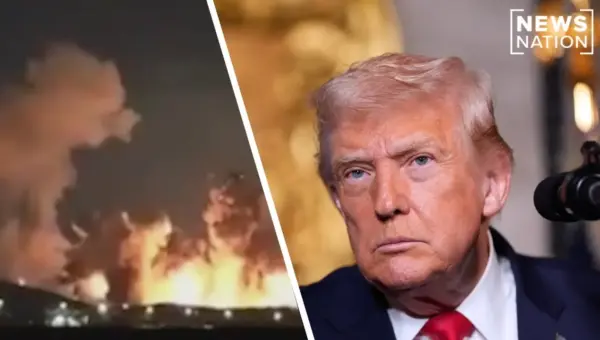
US Strikes Iran, Escalates Nuclear Fight
U.S. forces have reportedly struck a key Iranian city linked to its nuclear and missile programs, escalating tensions. President Trump's administration is increasing military pressure while also pursuing diplomatic talks, creating a complex geopolitical situation.

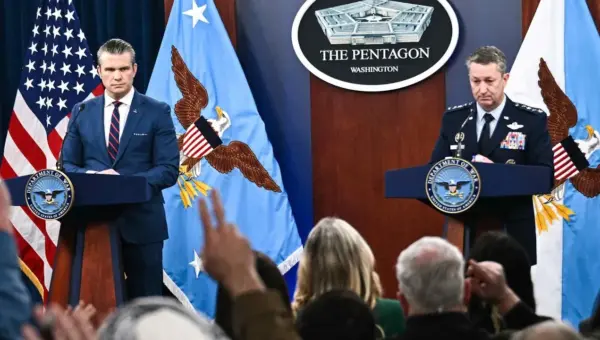
US Troops Show Unwavering Resolve in Fight Against Iran
U.S. troops on Operation Epic Fury exhibit remarkable unity, competence, and urgency in their mission against Iran. Facing challenges with innovation and determination, they prioritize finishing the fight for future generations. The operations aim to degrade Iran's military capabilities and prevent nuclear proliferation, signaling a decisive period ahead.
Gulf Allies Urge Trump to Continue Iran Conflict
U.S. allies in the Persian Gulf are urging President Trump to intensify military action against Iran, believing Tehran has not been sufficiently weakened. The ongoing conflict raises concerns about regional stability and global energy prices, while questions linger about the administration's long-term strategy.