Trump Faces ‘Irreversible Mistake’ in Iran Conflict
Experts warn President Trump could make an "irreversible mistake" in the Iran conflict, with few easy options for de-escalation. Potential strategies range from declaring victory to military action, each carrying significant risks. The situation also highlights the UK's diminishing global influence and domestic economic challenges.

Trump’s Iran Dilemma: A Narrow Path to Resolution
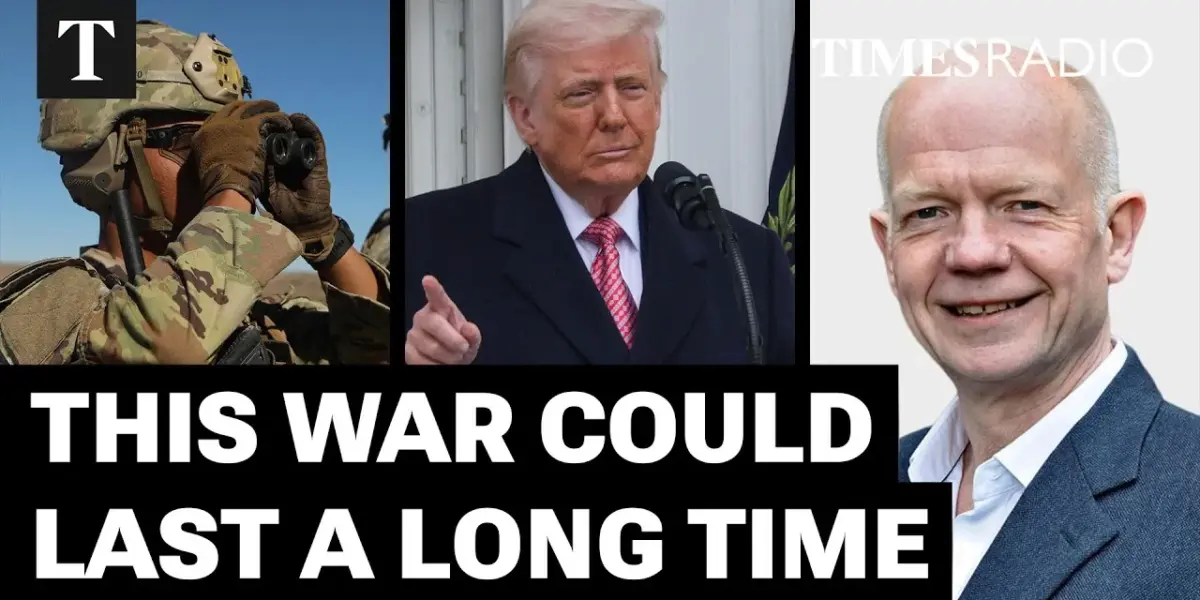
President Donald Trump faces a critical juncture in the ongoing conflict with Iran, with experts warning he could make an “irreversible mistake.” The situation is complex, offering few easy solutions for the U.S. leader. As the conflict deepens, the potential for escalation looms large, forcing difficult choices about how to achieve peace without triggering a wider war.
Potential Exit Strategies and Their Risks
William Hague, a commentator on international affairs, outlined three main ways the conflict could end. One option is for Trump to declare victory, citing success against Iran’s missile program and imposing a ceasefire. However, this approach leaves Iran in control of the Strait of Hormuz, a vital waterway for global oil transport. Another possibility is negotiation, but Hague views this as unlikely to succeed given the current hardline stance of the Iranian regime.
The third, and perhaps most dangerous, option involves deploying ground forces to disputed islands near the Strait of Hormuz. Hague cautioned in his writings that this move could escalate the conflict into a prolonged and larger war, calling it a potential “irreversible mistake.” He suggested that Trump, driven by frustration, might be tempted to seize these islands to gain control of the strait, though he admitted it’s impossible to know the President’s exact intentions.
“He doesn’t have good options. Um I think what do I think is the most likely I mean by a narrow margin I think he’s going to get very frustrated and um try to grab those little islands.”
The Challenge of Declaring Success
The pressure on Trump to present a successful outcome is immense. While he has a history of declaring victory regardless of the circumstances, the reality on the ground may prove otherwise. If oil prices remain high and a global recession looms, American voters may not perceive the conflict as a success, especially if Iran retains its nuclear capabilities.
Hague suggested that the best hope might be for Trump to declare a ceasefire now, contingent on the Strait of Hormuz being reopened. This would create a standoff, allowing for negotiations on other issues to follow. This staged approach, he argued, is a common and often effective method in ending wars and conducting diplomacy.
UK’s Position and Domestic Pressures
The conflict also puts British Prime Minister in a difficult position. His government has taken a stronger stance against Iran, potentially driven by domestic political considerations. However, if Trump withdraws and claims victory without a full resolution, the Prime Minister faces a challenge in justifying his actions, especially as the public grapples with rising living costs.
Kzia, another commentator, noted that while the Prime Minister might feel vindicated for not immediately aligning with Trump, the economic realities of high fuel prices would overshadow any political gains. She described the Prime Minister’s position as one of “irrelevance,” morally emboldened but domestically weakened. The potential for Trump to shift the burden of patrolling the Strait of Hormuz to Europe and Middle Eastern allies could also leave the UK facing increased defense costs without a clear resolution.
A Sense of Futility in Global Influence
There is a palpable sense of futility regarding the UK’s ability to influence such global events unilaterally. Kzia highlighted that the country’s small size and limited capacity to resolve international conflicts on its own are evident. The only effective path forward, she suggested, lies in cooperation with the United States, a path the UK has not fully followed this time.
William Hague agreed that the UK’s perceived “smallness” matters on the global stage. He pointed to the country’s dwindling influence and strained defenses as evidence of a longer-term trend. While acknowledging the UK’s significant role in rallying support and providing military aid for Ukraine, he stressed that influence diminishes the further away from home issues become.
“The further you get from home, the less that is. And um in the Middle East now, now that we have we haven’t we’ve withdrawn our mind sweepers. We didn’t have a ship on station in the Eastern Mediterranean when all this began.”
Rebuilding Defense and Future Challenges
Hague urged the UK to rebuild its defenses and reinvest in its global power, warning of significant challenges ahead if this does not happen. He suggested a re-evaluation of spending priorities, shifting focus from welfare to bolstering national power. The current situation, he concluded, leaves the UK in a precarious position, with its influence waning in critical regions like the Middle East.
Looking Ahead
The coming weeks will be crucial in determining President Trump’s next move in the Iran conflict. Whether he opts for a declaration of victory, further military action, or a diplomatic push will have significant implications for global stability and energy markets. For the UK, the focus remains on navigating domestic economic pressures while reassessing its role and capabilities on the international stage.
Source: Trump Could be Making An 'Irreversible Mistake' In Iran | William Hague (YouTube)

Related Articles
US Weighs Iran Strategy: Hormuz Strait’s Fate Uncertain
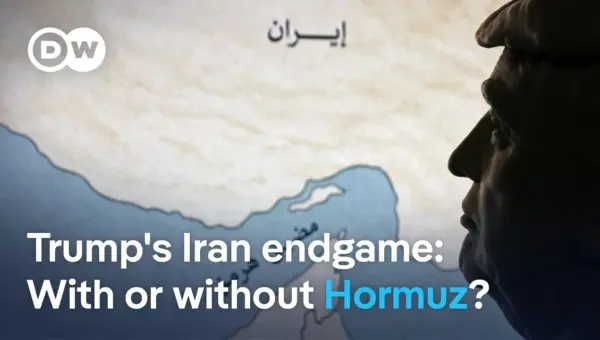
The United States is reportedly reconsidering its strategy in the Iran conflict, potentially willing to end hostilities even if the Strait of Hormuz remains closed. This critical oil choke point's closure has trapped thousands of vessels, causing global economic disruption and raising questions about U.S. war objectives. Military action remains a strong possibility to reopen the vital waterway.

Hegseth Undermines Trump’s War Plans Daily
Pete Hegseth, Trump's Secretary of Defense, is reportedly undermining the former president's stated war plans with Iran. Conflicting timelines, shifting objectives, and ethical questions surrounding financial dealings create significant uncertainty. This situation highlights the challenges of clear communication and strategic consistency in national security.
Oil Shocks Fuel Recession Fears, Markets Wobble
Soaring oil prices are rattling global markets, pushing major indices toward correction territory and sparking fears of a recession. Experts warn that prolonged energy shocks, particularly concerning the Strait of Hormuz, could severely impact economic growth. Investors are advised to maintain diversified portfolios and cash buffers.