Netanyahu: Israel ‘Halfway’ Through Iran War Missions
Israeli Prime Minister Benjamin Netanyahu announced Israel is past the halfway point in its military missions against Iran, citing significant degradation of Iran's capabilities. Meanwhile, U.S. policy appears confused, with conflicting threats and potential ground operations discussed. A controversial new Israeli law allowing executions for Palestinians convicted of terror offenses also draws criticism.

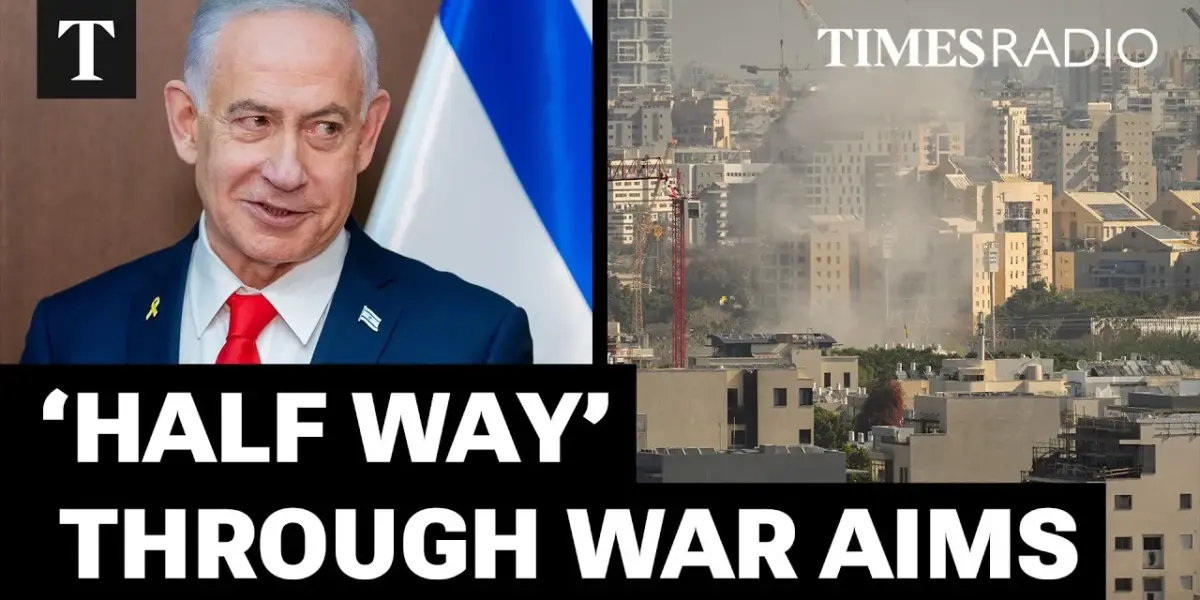
Netanyahu: Israel ‘Halfway’ Through Iran War Missions
Israeli Prime Minister Benjamin Netanyahu has stated that Israel is past the halfway point in its military missions against Iran. Speaking to the American broadcaster Newsmax, Netanyahu indicated that the operations have significantly degraded Iran’s capabilities, including its industrial base and nuclear program. However, he declined to put a specific timeline on the overall conflict, emphasizing the number of missions completed rather than the duration.
Israel Assesses Progress in Iran Operations
According to Israeli sources, the initial targets set for the operations in Iran have largely been met. These sources suggest that the military effort, which has lasted for approximately five weeks, has achieved its primary objectives. “We’ve achieved a lot of things. A lot of things. We really degraded this regime. Really hit them very hard,” Netanyahu told Newsmax, detailing the impact on Iran’s military and leadership.
The operations reportedly targeted and eliminated thousands of Iranian Revolutionary Guard Corps (IRGC) members and leaders. Additionally, significant damage was inflicted upon Iran’s arms industry and its nuclear program infrastructure. “[We] really knocked out a good chunk of their… arms industry. Just the whole industrial base wiping out all you know just plants entire plants and of the nuclear program itself,” Netanyahu explained. While acknowledging the substantial progress, he stressed that the conflict is ongoing and unpredictable in its final stages.
US Policy on Iran Appears Confused
Meanwhile, the United States’ stance on the conflict appears to be shifting, with conflicting signals emerging from top officials. Former President Donald Trump made a public statement threatening to destroy Iran’s energy grid and water supplies if the Strait of Hormuz was not reopened. However, reports later suggested he was willing to conclude the conflict even without the strait being cleared.
Administration officials told The Wall Street Journal that Trump conveyed these remarks to close aides. This apparent contradiction has led to confusion about the U.S. objectives. As one analyst noted, Trump’s statements suggested a willingness to “destroy a bunch of stuff and go home,” which leaves the Strait of Hormuz closed and does not necessarily end Iranian attacks on regional targets.
Further complicating the U.S. position, reports indicate plans for significant troop deployments and potential island seizures in the Persian Gulf, including islands near the Strait of Hormuz and Abu Musa. These actions suggest a possible larger ground operation, which would require substantial U.S. investment in troops and defenses.
Legality and Ethics of US Actions Questioned
The legality and ethical implications of potential U.S. actions, such as destroying civilian infrastructure like desalination plants and power grids, have been raised. Experts in international law suggest that targeting civilian infrastructure without clear military benefit is illegal and may violate humanitarian principles.
“I think almost every interpretation of international law would say that you can’t do that,” stated journalist Ari Kova. “You can’t destroy civilian infrastructure for no obvious military benefit just because… for revenge or or in a tantrum.” Such actions could also harm the Iranian population, contradicting stated U.S. goals of supporting the Iranian people against their regime.
Israel’s Stance on Iran and Lebanon
Israel’s approach to the conflict appears more focused on long-term containment rather than immediate regime change or widespread destruction of civilian infrastructure. While hoping that damage to Iran’s control systems might eventually lead to internal change, Israel’s primary concern is preventing Iran from rebuilding its military capabilities over time. “Israel’s concern is that that if we don’t stop them, they’re going to rebuild eventually,” Kova explained.
The situation in Lebanon is described as substantially more complicated, with the Israeli public being told that involvement there could take months. The prospect of removing the entire civilian population from Lebanon is considered a difficult and complex undertaking.
Controversial New Israeli Law on Executions
Separately, a new law passed in Israel allows for the execution by hanging of Palestinians convicted of killing Israelis in terror acts. This law specifically excludes Jewish Israelis who kill Palestinians in similar circumstances, sparking significant controversy.
Historically, Israel has rarely used the death penalty. The new legislation is seen as a response to concerns that convicted terrorists are released in prisoner exchanges. However, the law’s discriminatory nature, applying only to Palestinians, has led to criticism. “Now obviously a death penalty that only applies to Palestinians and to not to Jews is not okay. It’s racist,” Kova commented, suggesting the Israeli Supreme Court might ultimately strike down the law.
Source: Israel Is Half Way Through Iran War ‘Missions’ Says Netanyahu (YouTube)

Related Articles


Iran’s Strategy: Humiliate the West, Cause Global Pain
Iran's leaders are reportedly using energy and fertilizer shortages to inflict global pain and humiliate the West. This strategy could lead to a harsh winter for Europe and food crises worldwide. The situation raises concerns about potential military escalation.


US Troops Show ‘Urgency’ in Middle East Fight
U.S. troops in Operation Epic Fury are demonstrating "wartime speed" and a powerful sense of mission focus, according to a recent Pentagon visit. Service members expressed a strong desire to finish the fight quickly for future generations, requesting more resources for operations rather than personal comforts. The ongoing pressure aims to compel Iran to negotiate, with continued military action planned if diplomacy fails.

Pentagon Updates Operation Epic Fury: Troops Focused on Mission Success
Pentagon officials provided an update on Operation Epic Fury, highlighting the strong morale and mission focus of U.S. troops. The operation aims to counter Iran's military threats, with a particular emphasis on preventing it from acquiring nuclear weapons. Officials detailed successful strikes against Iran's missile capabilities and industrial base, while also acknowledging the crucial role of the American defense workforce.