Protest Tactics Fuel Election Battles, Divide Parties
Protests, some marred by violence, are igniting fierce debate within the Democratic Party. As election season heats up, strategists grapple with distancing themselves from radical elements while trying to energize their base. The core question is whether these movements help or hurt their chances at the ballot box.

Protest Tactics Fuel Election Battles, Divide Parties
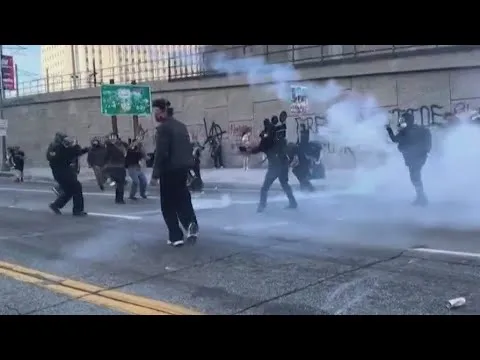
Recent protests, some marked by violence, are becoming a major point of discussion in the upcoming elections. These events, organized under banners like ‘No Kings,’ are forcing political parties to confront uncomfortable alliances and define their stances. The debate centers on whether these protests help or hurt the Democratic Party’s electoral chances and what role violence plays in shaping public opinion.
Protests Spark Debate on Violence and Political Strategy
The weekend saw protests in several cities, with some escalating into disorder. Organizers, however, stress that the core of these movements is nonviolent. Despite these assurances, concerns about violence and the presence of extremist symbols, such as communist flags, persist. This has led to questions about whether mainstream Democratic politicians can distance themselves effectively from the more radical elements within these movements.
Shifting Political Fortunes and Shifting Tactics
One perspective suggests that these rallies, despite their controversial aspects, are having an impact on the election. The number of participants has reportedly grown, and some analysts believe this correlates with an increase in the Democrats’ chances of winning back control of Congress. Simultaneously, former President Donald Trump’s approval ratings have seen a decline. This viewpoint argues that the focus on violence and radicalism is a tactic to distract from broader political issues.
“The reason that you want to focus on the violence is because again, when Democrats have competed statewide in Virginia in New Jersey, they’re not talking about Hamas. They’re actually distancing themselves from it. They’re talking about very moderate programs.”
Accusations of Foreign Influence and Radicalization
Counterarguments highlight the concern that these protests are being influenced by foreign actors. Some believe that wealthy individuals from outside the U.S. are funding movements aimed at disrupting American democracy. This perspective suggests that the Democratic Party is willingly accepting this support, even when it involves groups that openly support foreign adversaries. The presence of flags and symbols associated with communist regimes or terrorist organizations like Hamas is seen as evidence of this radicalization.
Historical Echoes and Election Year Strategies
The discussions draw parallels to past events, like the riots in the summer of 2020, which caused significant damage and loss of life. Critics point out that similar groups seem to reappear, changing their names to suit the political climate. This pattern raises questions about whether these movements are genuinely grassroots or strategically manipulated to push the Democratic Party further left. The concern is that this radicalization could alienate moderate voters, particularly in swing states.
Economic Woes and Voter Discontent
Beyond the protest rhetoric, underlying economic issues are also influencing voter sentiment. High prices and dissatisfaction with current policies are major concerns for many Americans. Some believe that voters are seeing through the political noise and are more focused on practical matters affecting their daily lives. This viewpoint suggests that the focus on radical elements in protests is a losing strategy for Democrats, as voters are becoming increasingly turned off by such extremism.
Partisan Divide on Protest Messaging
The political strategists on both sides acknowledge the challenge of managing public perception. Democrats face the difficult task of appealing to their base, which may include more radical elements, while also attracting moderate voters. Republicans, on the other hand, see an opportunity in highlighting the controversial aspects of these protests, believing it will resonate with voters who are uncomfortable with extremism. The debate over whether to condemn or embrace certain protest elements highlights a deep division within the American political landscape.
Regional Shifts and Electoral Performance
The conversation touches on recent electoral results, such as in Virginia and New Jersey. While these are considered reliably Democratic states, the outcomes are being analyzed for broader trends. The difficulty for Republicans to win in traditionally Democratic areas like Miami is also noted, suggesting that political landscapes can shift. The overall sentiment is that controlling the narrative around protests and their associated ideologies is crucial for electoral success in the upcoming elections.
Global Impact: Elections as a Battleground for Ideologies
This ongoing debate underscores how domestic political movements and protests are increasingly intertwined with international ideologies. The accusations of foreign influence and the display of international symbols during protests highlight a global dimension to American politics. The way these issues are handled by both parties will not only shape the outcome of U.S. elections but also send signals about America’s stance on global issues and its internal political stability.
Source: Are ‘No Kings’ protests accomplishing their main objective anymore? | Katie Pavlich Tonight (YouTube)

Related Articles
Trump’s Iran War: Shifting Goals and Public Outcry
Millions protested President Trump's policies as his Iran conflict enters its second month. Conflicting messages on potential deals and threats, along with shifting war aims, have fueled public outcry and congressional concern. The rising cost of the war and its potential impact on domestic programs are key issues as the midterm elections approach.


Protesters Rally Against Trump, Citing War and Economic Woes
Thousands rallied in "No Kings" protests nationwide, expressing deep dissatisfaction with Donald Trump's policies. The demonstrations, fueled by concerns over foreign wars and economic hardship, marked a unique protest against an individual leader. Many protesters, including veterans of past movements, felt compelled to voice their opposition to what they see as a betrayal of campaign promises and a threat to the nation's direction.

Millions Protest Trump Amidst War and Corruption Probe
Millions protested nationwide against President Trump over the weekend, with significant turnout in red states. Concerns are rising over potential corruption in detention facility contracts and the administration's challenge to birthright citizenship at the Supreme Court.