Scientists Urge Open Minds on UFOs Amid Religious Speculation
Physicist Avi Loeb advocates for evidence-based investigation into unidentified aerial phenomena (UAP), urging the public to move beyond religious speculation like 'demons.' He highlights scientific efforts to analyze potential advanced technologies and stresses the importance of open-mindedness in our search for knowledge about the universe.

Scientists Urge Open Minds on UFOs Amid Religious Speculation
The debate over unidentified aerial phenomena (UAP), commonly known as UFOs, has taken a turn, with some public figures linking these mysterious objects to religious concepts like ‘demons.’ This has prompted scientists to push for a more evidence-based approach, urging the public and policymakers to remain open-minded and gather more data before jumping to conclusions.
Science vs. Speculation on Unidentified Objects
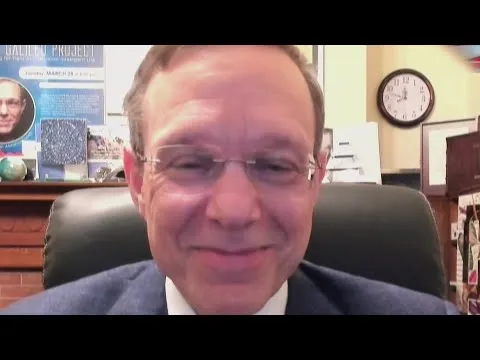
Professor Avi Loeb, a physicist, is at the forefront of this discussion. He emphasizes that while many people have theories, especially when governments cannot explain what these objects are, the key is to collect more evidence. Loeb believes that science and religion can coexist, noting that our understanding of the universe, like the Big Bang theory, has evolved. He suggests that instead of seeing conflict, we should focus on what evidence can guide us to understand these phenomena.
Interpreting the Unknown: Demons or Data?
The idea of extraterrestrial beings or advanced technology being interpreted through a religious lens, such as Senator JD Vance’s suggestion that aliens might be ‘demons,’ is a point Loeb finds concerning. While he acknowledges that people might interpret strange events based on their existing beliefs, he stresses that framing these unknown phenomena as inherently evil, like ‘demons,’ is a leap. This narrative, often seen in popular culture, can overshadow the scientific pursuit of understanding.
A Scientific Approach to the Cosmos
Loeb’s own work involves using advanced tools like machine learning and artificial intelligence to analyze data, including potential signs of advanced technologies. He looks for ‘outliers’ that might indicate something beyond our current understanding. He proposes viewing potential extraterrestrial visitors not through the lens of good versus evil, but as opportunities to learn. Our planet has existed for billions of years, but our scientific understanding of technology is relatively new. Loeb suggests that encounters with advanced civilizations could offer invaluable knowledge.
The Mystery of IM1 and Meteorite Fragments
A recent example Loeb highlights involves an object designated IM1. He theorizes that this object, which entered Earth’s atmosphere, could have released fragments. Reports from the Galileo Project and the American Astronomical Society have indeed noted a surge in meteor sightings in recent months, particularly in the first quarter of 2026. Loeb suggests that the fragmentation of IM1, possibly due to its high speed and unique composition, could be a reason for this increase. He has written about this possibility, explaining how such an object could break apart and leave debris.
Open Minds and the Search for Knowledge
The crucial question is whether these fragments come from technologically advanced probes or are simply natural space rocks. Loeb argues that even if the fragments are guided by technology, we should be open to the possibility. He believes we might not be at the top of the food chain in the Milky Way galaxy. Learning from beings from other parts of the galaxy could be incredibly beneficial.
Religion’s Place in a Universe of Possibility
Loeb also touches on how discoveries about extraterrestrial life might affect religious beliefs. He uses a personal analogy: having a second child did not diminish the love or importance of his first child. Similarly, discovering other intelligent life might not lessen the significance of human existence or existing religious frameworks. Instead, it could broaden our understanding and perspective, much like the Templeton Foundation, which supports research at the intersection of science and religion, is exploring.
Global Impact: Why This Reshapes the World Order
The ongoing discussion about UAP is more than just a curiosity; it touches on fundamental questions about our place in the universe. If advanced, non-human technology is confirmed, it could challenge existing geopolitical power structures, scientific paradigms, and religious doctrines. Nations might race to understand or even replicate such technology, leading to new forms of international cooperation or conflict. The economic implications, from resource control to technological advancement, could be immense. Historically, major discoveries have reshaped societies. The potential confirmation of extraterrestrial intelligence would be one of the most significant discoveries in human history, forcing a global re-evaluation of what we know and who we are.
Future Scenarios
Several future scenarios are possible. One is that further investigation will reveal the UAP to be natural phenomena or human-made technology, satisfying scientific curiosity without fundamentally altering our worldview. Another scenario is the confirmation of extraterrestrial technology, which could lead to a period of global unity as humanity confronts its place in a larger cosmic community, or conversely, to heightened tensions as nations vie for technological advantage. A third possibility is that the mystery remains unsolved, continuing to fuel speculation and debate for years to come.
Source: Avi Loeb reacts to JD Vance believing aliens are actually 'demons' | Jesse Weber Live (YouTube)

Related Articles

Missing UFO Files Spark Government Transparency Fears
Millions of UAP files temporarily vanished from a private archive, raising concerns about government transparency. While recovered thanks to backups, the unexplained deletion and server activity fuel speculation about data security and disclosure efforts.

Objects in Orbit Hint at Pre-Human Intelligence
New scientific papers suggest artificial objects orbited Earth before human satellites, hinting at non-human intelligence. Declassified CIA documents also reveal serious investigation into psychic abilities via Project Stargate. These developments challenge our understanding of history and the universe.


CIA’s Top Spy Joins GM, Fuels UAP Program Ties
Former CIA UAP analyst Dr. Kit Green's move to General Motors raises questions about potential government program ties. Green led the CIA's "weird desk" analyzing anomalous aerospace reports before joining GM in senior technology roles. This connection, alongside Hughes Corporation's covert history, suggests a deeper engagement with UAP.