Trump’s Iran War: Shifting Goals and Public Outcry
Millions protested President Trump's policies as his Iran conflict enters its second month. Conflicting messages on potential deals and threats, along with shifting war aims, have fueled public outcry and congressional concern. The rising cost of the war and its potential impact on domestic programs are key issues as the midterm elections approach.

Millions Protest Trump Policies as Iran Conflict Escalates
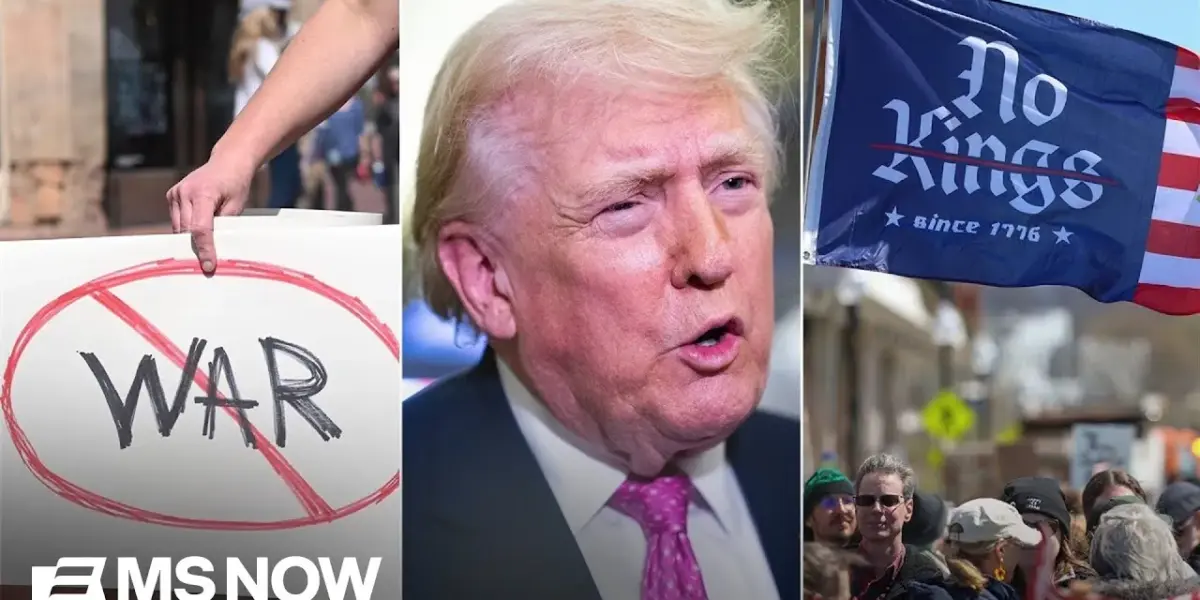
Millions of Americans took to the streets nationwide this past weekend, protesting President Donald Trump’s policies. Organizers reported that approximately 8 million people participated in the “No Kings Protests” across all 50 states. This massive turnout means more than one in every 50 Americans joined the demonstrations. Notably, two-thirds of those who signed up to protest live in suburban, small-town, or rural areas. This marks a significant increase, with a 40% rise in participation since the last “No Kings” protest.
The public’s dissatisfaction with Trump is also reflected in recent polling. A new University of Massachusetts Amherst poll shows Trump’s approval rating at an all-time low of 33%. This widespread discontent comes as President Trump’s military engagement in Iran enters its second month.
Conflicting Messages on Iran Deal and Threats
President Trump has sent mixed signals regarding the conflict with Iran. On social media, he expressed optimism about reaching a deal with a “new and more reasonable regime” in Iran, claiming significant progress. However, he also issued stern warnings, stating that if a deal is not reached, the U.S. will “immediately” destroy Iran’s power plants, oil wells, and possibly water desalinization plants. This threat highlights the tension between diplomatic efforts and military action.
Trump’s comments about a “new regime” in Iran have caused confusion. He explained his perspective by stating that the previous regimes were “decimated” and “destroyed,” with subsequent ones being “mostly dead.” He considers this a form of regime change, noting that the current leadership has been “very reasonable.” However, The New York Times reports that Iran’s clerical and military establishment remains firmly in control, with hard-line factions potentially emerging stronger. This discrepancy underscores the difficulty in understanding the administration’s stated goals.
Shifting War Aims and Potential Ground Operations
The reasons behind the airstrikes and the actual war aims in Iran have been subject to constant change, making it difficult to follow the administration’s strategy. Reports indicate that the Pentagon is preparing for potential ground operations in Iran, which could last for weeks. The Wall Street Journal also reported that President Trump is considering a military operation to retrieve hundreds of pounds of uranium from the country.
These potential actions contradict some of Trump’s recent statements, where he has tried to distance the U.S. from the problems in the Strait of Hormuz. He has suggested that countries like Japan and China, which rely on the strait for oil, should be more involved. This attempt to shift blame comes after U.S. attacks created disruptions in the strait, a problem the U.S. has struggled to resolve. Oil prices have risen significantly, with regular gas reaching $3.99 a gallon and U.S. oil prices exceeding $100 a barrel for the first time in nearly four years.
Congressional Concerns and War Funding Debates
The shifting narrative has also created divisions within Congress. While most Republicans previously voted against restricting U.S. powers in Iran, some conservative Republicans, like Eli Crane of Arizona, are now raising concerns. As a veteran, Crane has stated that U.S. “boots on the ground” in Iran could be an issue for conservatives who supported Trump’s “America First” agenda. These lawmakers are beginning to question the administration’s intentions, even though they largely supported the initial mission described as non-proliferation.
Susan Glasser, a staff writer for The New Yorker, noted the confusion stemming from conflicting statements, even from within the administration. She pointed out that President Trump’s threats to destroy civilian infrastructure in Iran could be considered war crimes, similar to actions taken by Russia in Ukraine. She also highlighted that Secretary of State Antony Blinken has often presented a different, more grounded perspective than the President.
Luke Broadwater, White House correspondent for The New York Times, commented on the inconsistency of Trump’s statements. He suggested that the President is trying to avoid responsibility for the problems in the Strait of Hormuz. Broadwater also noted that while Republicans have generally supported the administration’s actions, the potential for ground operations and the associated costs could lead to a breakout from some lawmakers.
Future of the Conflict and Public Accountability
The administration appears sensitive to the timeline initially set for the Iran conflict, which was four to six weeks. With the war now at 30 days, the prospect of ground troops would significantly extend this timeline. The cost in terms of lives and resources for stationing additional troops in the region is a major concern.
Furthermore, there are reports that Republicans are considering healthcare cuts to fund the war in Iran, which is already costing billions. This move is seen as a way to offset war expenses, as passing a separate supplemental funding package might be difficult. The upcoming midterm elections are seen as a crucial opportunity for the American people to have a say on the war, especially since Congress has not formally authorized the conflict. The lack of congressional authorization raises questions about accountability and the separation of powers.
The situation in Iran remains complex, with shifting objectives, potential escalation, and significant domestic implications. As the conflict progresses, the public and lawmakers will be closely watching for clarity on the administration’s strategy and its long-term consequences.
Source: 'Shifting goalposts': Does Trump know what he wants in Iran? (YouTube)

Related Articles

MAGA Movement’s Grip: Echoes of January 6th Persist
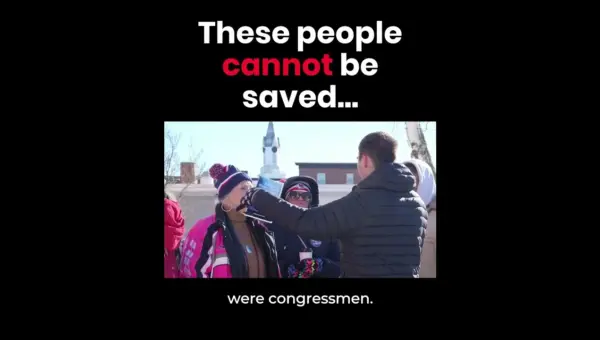
Audio from January 6th reveals a disturbing justification for the actions of Ashli Babbitt, highlighting the persistent and troubling narratives within parts of the MAGA movement. This mindset continues to pose challenges to democratic norms.

Middle East Conflict Sends Gas Prices Soaring Past $4
The national average gas price has surpassed $4 per gallon for the first time since 2022, driven by escalating conflict in the Middle East. Recent attacks on oil tankers and military strikes have heightened fears of energy supply disruptions, impacting consumers globally.

Netanyahu: Israel ‘Halfway’ Through Iran War Missions
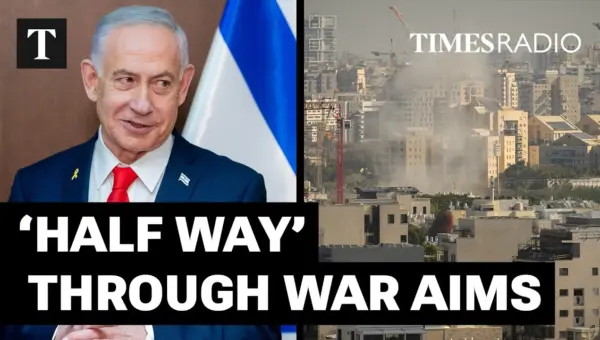
Israeli Prime Minister Benjamin Netanyahu announced Israel is past the halfway point in its military missions against Iran, citing significant degradation of Iran's capabilities. Meanwhile, U.S. policy appears confused, with conflicting threats and potential ground operations discussed. A controversial new Israeli law allowing executions for Palestinians convicted of terror offenses also draws criticism.