Trump’s Iran Policy: Bombing Threats vs. Deal Hopes
President Trump's administration is sending mixed signals on Iran, threatening military action while also suggesting a peace deal is near. The article explores these conflicting messages, the historical context of Trump's "take the oil" stance, and potential military operations. It also touches on the upcoming NASA Artemis 2 moon mission and the growing concerns around artificial intelligence.


Mixed Signals on Iran: Escalation and Diplomacy Collide
President Trump’s administration is sending conflicting messages regarding Iran, simultaneously threatening to bomb civilian infrastructure while also suggesting a deal to end the conflict is close. This complex situation unfolds as both the U.S. and Iran continue to engage in attacks, raising concerns about further escalation in the Middle East.
Long History of “Taking the Oil”
A recently resurfaced clip from a 1987 interview with Barbara Walters reveals President Trump’s long-standing stance on Iran’s oil resources. In the interview, he suggested that if Iran attacks the U.S., America should “go in and grab one of their big oil installations.” This idea of seizing oil from Middle Eastern countries has been a consistent theme in Trump’s public career, predating his presidency by nearly four decades. Senior White House correspondent Garrett Hake noted that this concept is as central to Trump’s thinking about governance and diplomacy as trade tariffs, calling it foundational.
Rhetoric vs. Reality: White House Stance
The current U.S. troop presence in the Middle East is significant, with over 50,000 American troops stationed in the region and an additional 3,500 arriving recently. Despite this buildup, President Trump has repeatedly claimed progress in negotiations. However, the White House has also issued severe threats, including bombing power plants and water desalinization facilities, actions that could be considered war crimes under international law. When pressed on these threats, White House Press Secretary Caroline Levit stated that the president has made it clear to the Iranian regime that their best move is to make a deal, or face the consequences of U.S. military capabilities.
“The president has made it quite clear to the Iranian regime at this moment in time… that their best move is to make a deal or else the United States armed forces has capabilities beyond their wildest imagination. And the president is not afraid to use them.”
Ukraine Conflict’s Shadow Over Middle East Tensions
The ongoing conflict in Ukraine also appears to have connections to the situation in the Middle East. Ukrainian President Volodymyr Zelenskyy has been visiting Gulf countries to promote Ukrainian-built anti-drone defenses. This move highlights the complex web of international relations, as Russia has previously used Iranian-built drones to attack Ukraine. Now, Iran is reportedly using similar drones against Gulf countries, and Zelenskyy suggests that Russia may be sharing information with Iran, potentially to divert American attention from Ukraine.
The Nuclear Question: Operation Epic Fury and Uranium Seizure
The Trump administration has stated that Operation Epic Fury is partly aimed at addressing Iran’s nuclear weapons program. Reports suggest the president is considering a military operation to extract approximately 1,000 pounds of 60% enriched uranium if found. This hypothetical mission, dubbed “Operation Epic Fury,” would involve a complex and dangerous operation deep within Iran. Military analysts describe the potential challenges, including locating buried uranium, dealing with collapsed tunnels from previous bombings, and the risk of attacks from Iranian forces. The extraction would require heavy equipment, specialized personnel trained in handling nuclear material, and significant logistical support, all while operating in a hostile environment.
Artemis 2 Mission: A Leap Towards Lunar Exploration
Beyond geopolitical tensions, the broadcast also highlighted NASA’s upcoming Artemis 2 mission. This mission will send four astronauts on a 10-day journey around the moon and back, marking the first human voyage into deep space since the Apollo missions of the 1970s. The crew will travel further than any humans have before, reaching an estimated 280,000 miles from Earth. This mission is seen as a crucial step toward future lunar landings and potentially establishing a human presence on the moon, paving the way for eventual missions to Mars.
The Rise of Artificial Intelligence: A New Frontier
The program also touched upon the rapidly advancing field of artificial intelligence. Several key figures involved in AI development have expressed concerns about the future they are helping to create. In a new documentary, some architects of AI discuss the existential risks associated with advanced AI systems. They warn of potential consequences ranging from the collapse of humanity to its abrupt extermination. One expert described himself as an “apocalyptist” while raising young children, highlighting the struggle to maintain optimism in the face of potentially world-altering technological advancements. The discussion underscores the profound societal questions raised by AI and the uncertainty surrounding its ultimate impact.
Source: Stay Tuned NOW Streaming Behind The Scenes! – March 30 (YouTube)

Related Articles


Gulf Allies Urge Trump to Continue Iran Conflict
U.S. allies in the Persian Gulf are urging President Trump to intensify military action against Iran, believing Tehran has not been sufficiently weakened. The ongoing conflict raises concerns about regional stability and global energy prices, while questions linger about the administration's long-term strategy.
US Weighs Troop Deployment Amid Iran Deal Push
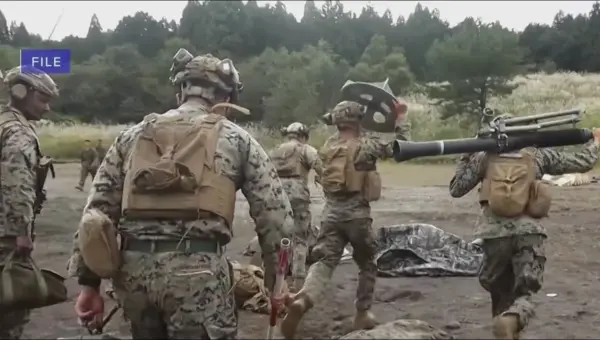
The U.S. is considering deploying ground troops to Iran while simultaneously pushing for a diplomatic deal to reopen the Strait of Hormuz. Air strikes are ongoing as President Trump increases pressure on Iran.

Trump Weighs War Crime Threat Over Iran Strait
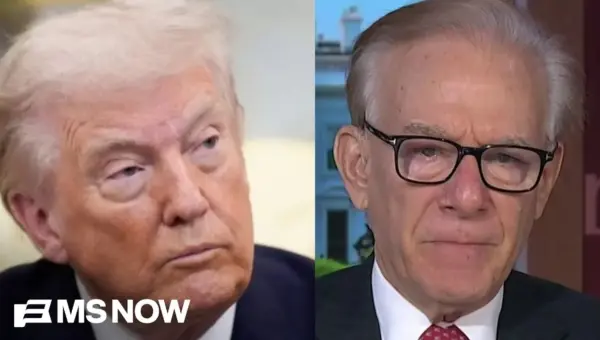
President Trump is reportedly willing to accept the continued closure of the Strait of Hormuz, despite earlier threats, signaling a shift in U.S. demands. This comes as gas prices surge and markets react negatively to the ongoing conflict. Conflicting messages from within the administration fuel confusion about the war's objectives and exit strategy.