China’s New Voice: How a Detained Yale Grad Now Shapes US Discourse
A Canadian-Chinese YouTuber, Professor Jang, has rapidly gained traction in American discourse by predicting geopolitical events and criticizing the West. His rise, however, raises questions about his background and Beijing's sophisticated new strategy for influencing foreign opinion.

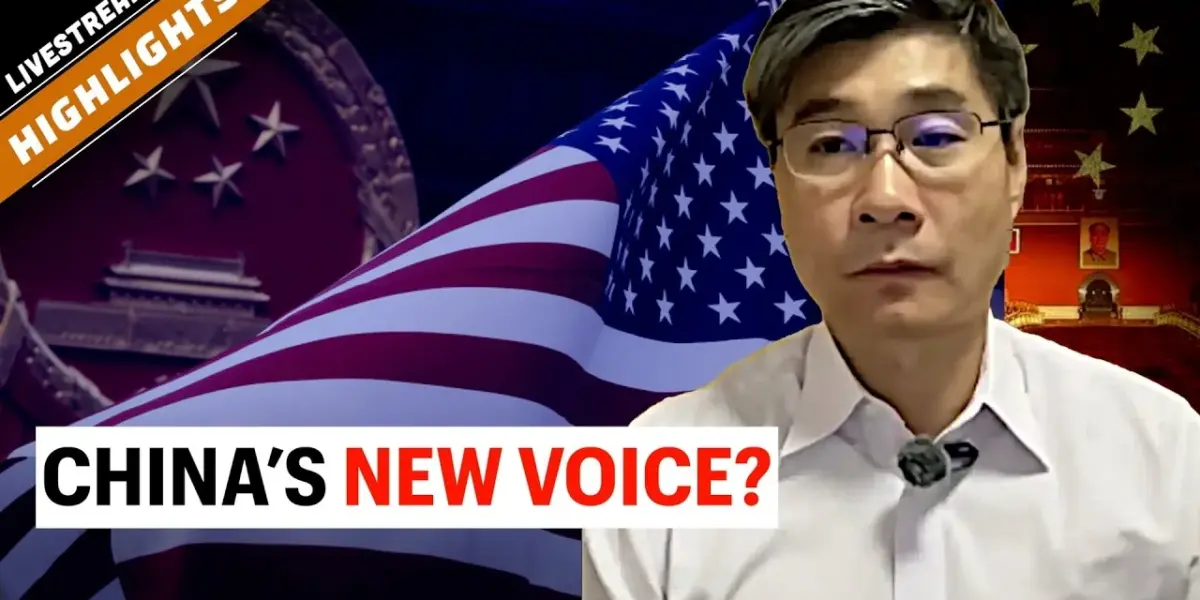
China’s New Voice: How a Detained Yale Grad Now Shapes US Discourse
A Canadian-Chinese YouTuber, known as Professor Jang, has recently surged in popularity across American media. His appearances on platforms like Tucker Carlson’s show and independent news outlets have garnered millions of views in just a few days. This sudden prominence, however, is not by chance. It represents a calculated strategy to influence American public opinion.
Not Really a Professor, But a Powerful Messenger
Despite the title “Professor,” Jang is not an academic in the traditional sense. He has a background in education in China, working in administrative roles at government-owned institutions. Currently, he teaches at a private high school in Beijing and operates a YouTube channel from within China. This setup allows him to reach a global audience, especially in the United States.
A Viral Prediction Sets the Stage
Jang’s rise to prominence was significantly boosted by a classroom video he posted on May 29, 2024. In it, he made three bold predictions: Donald Trump would win the 2024 US election, the US would go to war with Iran after Trump’s victory, and the US would ultimately lose that war. With the first two predictions seemingly coming true, Western audiences began calling him “China’s Nostradamus.”
His analysis of a potential US-Iran conflict is compelling to some. He describes it as a prolonged war of attrition. Iran, using proxy forces like the Houthis, Hezbollah, and Hamas, could employ low-cost drones to counter expensive US defense systems. This creates what he calls a “cost of symmetry.” He argues the US could get trapped in a long, draining conflict, drawing parallels to the Russia-Ukraine war. He even points to potential vulnerabilities like desalination plants in the Gulf and suggests the US national debt is nearing a breaking point.
Tapping into Existing Concerns
The reason these ideas resonate so strongly is that they tap into existing fears and concerns. They appeal to American audiences, particularly right-wing isolationists and those skeptical of the financial system. Jang is not just offering analysis; he is reinforcing a narrative. This narrative suggests the US is weakening, its system is unstable, and its global dominance is ending. It tells people what they are already inclined to believe.
A Foundation of Conspiracy?
However, a closer look at Jang’s arguments reveals a troubling foundation. His content often blends in various conspiracy theories. These include claims about Israel controlling the US government, the “Greater Israel” plan, secret societies like the Illuminati and Freemasons, and even the “great replacement theory.” Taken together, these ideas promote a single message: America and the West are in decline. This aligns perfectly with a narrative Beijing has promoted for years – that the East is rising while the West is falling.
Questions Arise for the Chinese Diaspora
The situation raises serious questions, especially for the Chinese diaspora living outside China. How can a Canadian educator openly teach in China while being so outspoken on Western media? How can he operate a YouTube channel, a platform banned in China, from Beijing using a VPN under strict internet controls? These questions lead to a deeper inquiry into his true identity and motivations.
A Past Marked by Detention and a Shift in Stance
Jang was born in China in 1976 and moved to Canada at age six. He graduated from Yale University in 1999 with a degree in English literature. After college, he briefly worked as a journalist in China. In 2002, while reporting on protests, he was detained by Chinese police for 48 hours and then deported. This experience, he later wrote, was what saved him, crediting the power of a free press and America’s media for teaching debate through facts and logic.
Yet, just one year later, he returned to China. From that point on, his relationship with Chinese authorities seemed to improve. By 2014, Chinese media openly praised him as an educator, an act that typically requires official approval. During his time in China, he published content critical of the system. In 2010, he analyzed academic fraud in China, linking it to the Communist Party’s control over universities. In 2015, he spoke to the Wall Street Journal about China’s education policy, viewing it as a tool of political soft power to prevent elite populations from drifting toward Western systems.
In a 2017 op-ed for CNN, he described his 2002 detention and praised American media’s role in fostering debate and strengthening the nation. He contrasted this with China’s state-controlled media, which he said enabled corruption and weakened the nation’s moral foundation.
A Stark Contrast to Today’s Rhetoric
The contrast between his earlier views and his current stance is striking. In recent years, Jang has become a vocal critic of the US and the Western system. He remains largely silent on China’s domestic issues, such as youth unemployment, the real estate crisis, and the lack of free speech. This shift is significant.
The Power of a “Bridge”
The key question is how someone with a history of anti-China reporting can run a large overseas media presence from Beijing without interference. One explanation is an “accommodation” – a deal. Jang acts as an effective external communicator for Beijing. He possesses the ideal credentials: a Chinese background, fluent English, a Yale education, and even a history of detention in China, which lends him credibility in the West. He serves as a perfect bridge between Chinese narratives and Western audiences.
A Strategic Shift in Messaging
His rise in the US is likely not a coincidence. It reflects a combination of personal branding, targeted audience selection, and Beijing’s need for emotionally resonant narratives. The real change is not just in what he says, but in what he no longer says. The transformation from a Yale graduate who once praised free speech to a commentator sharply criticizing the West while ignoring domestic issues at home is central.
Beijing is moving beyond the aggressive “wolf warrior” style of communication. They are now employing Western-educated, globally fluent communicators who can enter foreign discourse and shape it from within. Reports suggest even Chinese President Xi Jinping recognizes that the old messaging isn’t working. He has reportedly tasked officials to develop strategies to soften the tone and build a new generation of more credible, relatable voices.
Why This Matters
This shift in communication strategy is crucial. It means China’s influence operations are becoming more sophisticated and potentially more effective. Instead of relying on overt propaganda, they are using individuals who appear independent and credible to Western audiences. Figures like Professor Jang, with their Western credentials and seemingly critical past, can deliver messages that align with Beijing’s interests in a way that resonates more deeply. This approach challenges the West’s ability to discern genuine analysis from strategically placed narratives.
Future Outlook
The future likely holds more such communicators. As China continues to refine its global messaging, we can expect to see more individuals with similar backgrounds emerge. They will likely present a more nuanced, yet still strategically aligned, narrative. The challenge for Western media and audiences will be to critically evaluate these voices, understanding the context and potential motivations behind their messages. It is less about whether Jang is a spy and more about the effectiveness of his role as an independent-seeming voice delivering messages that serve Beijing’s broader agenda.
Source: Why This English Speaking Influencer Is Suddenly Everywhere (YouTube)

Related Articles
Gulf Allies Urge Trump to Continue Iran Conflict
U.S. allies in the Persian Gulf are urging President Trump to intensify military action against Iran, believing Tehran has not been sufficiently weakened. The ongoing conflict raises concerns about regional stability and global energy prices, while questions linger about the administration's long-term strategy.


MAGA Movement’s Grip: Echoes of January 6th Persist
Audio from January 6th reveals a disturbing justification for the actions of Ashli Babbitt, highlighting the persistent and troubling narratives within parts of the MAGA movement. This mindset continues to pose challenges to democratic norms.

Middle East Conflict Sends Gas Prices Soaring Past $4
The national average gas price has surpassed $4 per gallon for the first time since 2022, driven by escalating conflict in the Middle East. Recent attacks on oil tankers and military strikes have heightened fears of energy supply disruptions, impacting consumers globally.