Iran War Fuels Market Volatility; Oil Prices Surge
The ongoing war with Iran has created significant economic uncertainty, leading to volatile markets and surging oil prices. Despite claims of progress in negotiations, escalation continues, raising concerns about global supply chains and inflation. Analysts warn of potential oil price spikes and supply shortages, creating a complex dilemma for policymakers.


Iran Conflict Creates Economic Uncertainty
One month into the war with Iran, there is no clear end in sight. Two different strategies are playing out: one on the battlefield and another at the negotiating table. President Trump claims progress is being made in talks, but Iran denies this. Meanwhile, the U.S. continues to increase its military presence in the region, with the USS Tripoli arriving with over 3,500 troops. President Trump has warned that if a deal to reopen the Strait of Hormuz isn’t reached soon, Iran’s energy and water systems could become his next military target.
Conflicting Signals on Escalation and Negotiation
President Trump is sending mixed messages, simultaneously threatening escalation while talking up the possibility of a negotiated ceasefire. He tells reporters that negotiations with Iran are going well, suggesting a new, more responsible leadership is in charge. However, he also notes an increasing number of U.S. troops in the region, including special forces and an amphibious assault group. The President has even discussed the potential of putting American troops on the ground on Harg Island, a key location for Iran’s oil exports. It’s important to note that the regime in charge is the same one that was in power before the war began, with the son of the former Supreme Leader now leading the country.
Stalled Talks and Iranian Leverage
Despite the President’s claims of successful talks, there is no indication of real progress. Pakistan is emerging as a potential mediator, offering its capital as a venue for discussions. However, it remains unclear who is negotiating on the Iranian side, and no talks are currently scheduled. The speaker of the Iranian parliament has become the public face of the regime, as the new Supreme Leader has remained out of sight. The Iranians appear to believe that time is on their side. They know that as the war continues, President Trump faces growing domestic political pressure due to sagging markets and rising oil prices. This situation gives Iran leverage, suggesting they are in no rush to reach a deal.
Global Economic Impact and Rising Oil Prices
The war’s ripple effects are being felt globally. Wall Street has experienced a rough few weeks, with major stock indices falling into correction territory. Oil prices have jumped significantly, with Brent crude reaching $150 a barrel. Analysts are surprised that prices aren’t even higher, given the damage to energy infrastructure in Iran and the region. Qatar, for example, expects a liquefied natural gas facility to take up to five years to repair. Some experts warn that oil prices could potentially rise to nearly $200 a barrel, a level not seen since the 2008 financial crisis. Such a surge could lead to a 1970s-style oil supply crunch, potentially causing gas shortages.
Federal Reserve Faces Economic Dilemma
The rising cost of oil presents a significant challenge for the Federal Reserve. Higher oil and jet fuel prices are expected to increase inflation, potentially forcing the Fed to raise interest rates. This could lead to higher mortgage rates, further impacting consumers. The Fed is in a difficult position, as its decisions on interest rates cannot address the underlying issue of oil supply disruptions. Gas prices are already at their highest point since 2022, and the full impact on other consumer goods may take months to materialize. The disruption to fertilizer supplies, also affected by the Strait of Hormuz blockade, could impact crop yields and prices later in the year.
Geopolitical Tensions and Shifting Alliances
The conflict also involves other global players. Russia is seen as a beneficiary, with higher oil prices providing funds for its war machine. Ukrainian President Volodymyr Zelenskyy expressed concern that crucial missile interceptors needed for Ukraine might be diverted to the Middle East. He also stated that Russia is sharing intelligence with Iran, aiding in targeting U.S. forces. For instance, Russia reportedly provided satellite images of a U.S. air base in Saudi Arabia days before an Iranian attack.
Gulf States’ Divergent Views
Opinions among Gulf states regarding the war’s outcome are mixed. While some, like Qatar, desire a swift end to the conflict to resume liquefied natural gas exports, others, notably Saudi Arabia, advocate for a prolonged war to degrade Iran’s military capabilities. The primary concern for most Gulf nations is avoiding chaos, refugee crises, and power vacuums within Iran.
Looking Ahead
The coming weeks will be critical in determining the trajectory of both the conflict and its economic consequences. Investors and the public will be watching closely for any signs of a de-escalation or a shift in diplomatic efforts. The Federal Reserve’s response to persistent inflation and the potential impact on consumer spending will also be closely monitored as the situation unfolds.
Source: Escalation vs. Negotiation in Iran; Wall Street Prices in the War | March 30 (YouTube)

Related Articles

Gulf Allies Urge Trump to Continue Iran Conflict
U.S. allies in the Persian Gulf are urging President Trump to intensify military action against Iran, believing Tehran has not been sufficiently weakened. The ongoing conflict raises concerns about regional stability and global energy prices, while questions linger about the administration's long-term strategy.


Middle East Conflict Sends Gas Prices Soaring Past $4
The national average gas price has surpassed $4 per gallon for the first time since 2022, driven by escalating conflict in the Middle East. Recent attacks on oil tankers and military strikes have heightened fears of energy supply disruptions, impacting consumers globally.
US Weighs Troop Deployment Amid Iran Deal Push
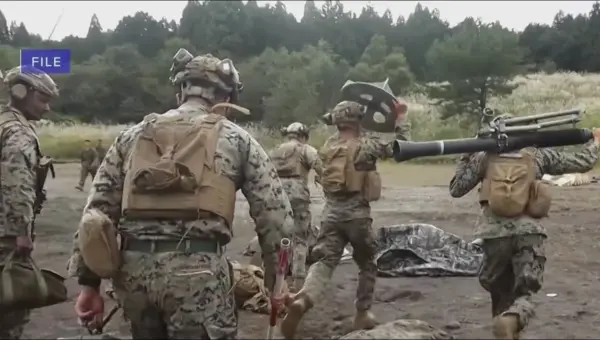
The U.S. is considering deploying ground troops to Iran while simultaneously pushing for a diplomatic deal to reopen the Strait of Hormuz. Air strikes are ongoing as President Trump increases pressure on Iran.