Trump Mulls Iran Uranium Raid: Experts Warn of High Risks
President Trump is reportedly considering a risky military operation to seize Iranian uranium, a move experts warn is highly dangerous and potentially unfeasible. The operation could face strong resistance from Iran and trigger significant casualties, while also raising questions about the administration's reliance on expert advice versus ideological drivers.

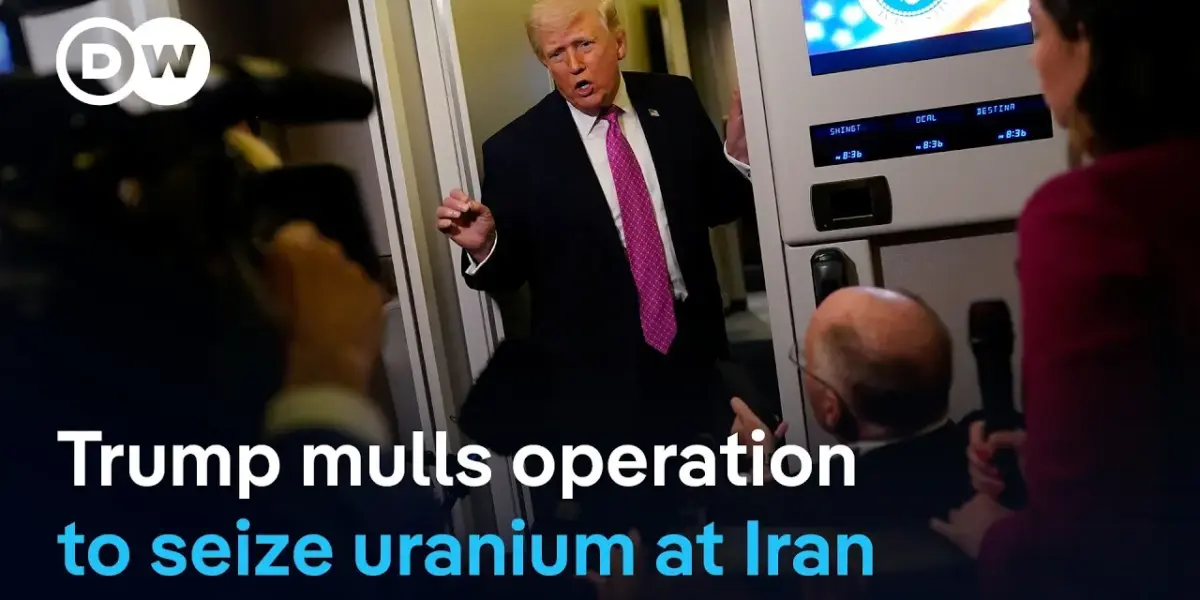
US Considers Military Strike on Iranian Uranium Sites
President Trump is reportedly considering a bold military operation targeting Iran’s nuclear program, aiming to seize approximately 400 kilograms, or about 1,000 pounds, of uranium. This potential action, reported by The Wall Street Journal citing U.S. officials, follows earlier strikes by the U.S. and Israel on three Iranian nuclear sites last June. While President Trump initially claimed these sites were destroyed, a later assessment from the Pentagon contradicted this assertion. Experts believe the uranium in question is located at two of these targeted facilities.
Operation’s Extreme Difficulty and Unpredictability
The prospect of such a military mission raises serious questions about its feasibility and potential consequences. According to H.J. Helier, an expert on geopolitics and security at the Royal United Services Institute for Defense and Security Studies, the operation would require highly trained elite forces. These soldiers would need to operate in a war zone to remove radioactive material, making it potentially the most challenging operation ever ordered by President Trump.
Helier stated, “Anything’s possible. That’s not the issue. The issue is how likely it is, what risks there are.” He described the undertaking as “very dangerous.” However, he cautioned that the Trump administration might still pursue it, noting their history of unpredictable actions and a tendency to disregard expert advice, even within the U.S. government. Helier highlighted a significant shift between Trump’s first and second terms, suggesting that in the first term, policy processes and expert input had more influence. He believes this influence is now much more limited, leading to decisions that may not align with expert analysis.
Iran’s Expected Response and Internal Dynamics
If the U.S. were to launch such an operation, Helier anticipates a strong reaction from Iran. “I think the Iranians would fight back quite strongly,” he predicted. While Iran might not be able to repel the U.S. forces entirely, he expects them to inflict significant casualties. Such an event could also serve to rally domestic support for the Iranian regime, a tactic often used in times of conflict.
However, Helier also pointed out the complex internal situation within Iran. He emphasized that the Iranian regime is deeply unpopular among its own people. Despite this, he noted that widespread protests have not materialized, not due to increased regime popularity, but because citizens fear government crackdowns and the potential for state fragmentation and chaos. This caution among the population, Helier explained, means that a lack of mass street protests does not indicate public approval of the government.
Broader Strategic Considerations and Miscalculations
The discussion also touched upon other potential U.S. actions, such as a move against Kar Island, a key hub for Iran’s oil exports. Helier acknowledged that various strategic options have been considered but noted that no decisive actions have been taken yet. He suggested that President Trump might change his mind multiple times before committing to a specific course of action.
Helier expressed doubt about the likelihood of some of these proposed operations, not due to a lack of signals, but because he believes the White House is not making decisions based on sound analysis. He cited past miscalculations by the administration, such as underestimating the challenges at the Strait of Hormuz and the unlikelihood of achieving regime change through protests or a negotiated deal with a new administration. These past errors, he argued, demonstrate a failure to heed expert advice, even from within Washington itself. Helier characterized the approach as “very ideologically driven” and heavily influenced by lobbying from Israel and its allies.
Intelligence vs. Presidential Decision-Making
Regarding the accuracy of intelligence, Helier suggested that the problem wasn’t necessarily bad intelligence but rather how that intelligence was relayed and received. He believes U.S. agencies likely had the same information as others: that the Iranian regime is brutal and unpopular, but also highly resilient. Iran’s command structures are designed with multiple succession plans, ensuring the state’s continuity even if top officials are removed.
Helier explained that Iran’s system is built for resilience, with succession plans extending several levels deep. “So the question isn’t about intelligence. It’s about people actually relaying this to the president and to a very small group around him and being very clear about what that intelligence actually says and them being listened to.” This points to a potential disconnect between factual intelligence and the decision-making process at the highest levels of the U.S. government.
Looking Ahead
The possibility of a U.S. military operation in Iran remains a significant point of concern. The effectiveness of such a mission, Iran’s response, and the potential for unintended consequences are all critical factors that will shape future developments. The administration’s willingness to rely on expert analysis versus ideological drivers will be crucial in determining the path forward, with the region’s stability hanging in the balance.
Source: What reaction is to be expected from Iran if this were in fact attempted? | DW News (YouTube)

Related Articles

Gulf Allies Urge Trump to Continue Iran Conflict
U.S. allies in the Persian Gulf are urging President Trump to intensify military action against Iran, believing Tehran has not been sufficiently weakened. The ongoing conflict raises concerns about regional stability and global energy prices, while questions linger about the administration's long-term strategy.

Middle East Conflict Sends Gas Prices Soaring Past $4
The national average gas price has surpassed $4 per gallon for the first time since 2022, driven by escalating conflict in the Middle East. Recent attacks on oil tankers and military strikes have heightened fears of energy supply disruptions, impacting consumers globally.
US Weighs Troop Deployment Amid Iran Deal Push
The U.S. is considering deploying ground troops to Iran while simultaneously pushing for a diplomatic deal to reopen the Strait of Hormuz. Air strikes are ongoing as President Trump increases pressure on Iran.