Trump’s Iran Threats Spark War Crime Accusations
Former President Trump's threats to strike Iran's energy and water infrastructure have drawn sharp criticism, with experts calling them potential war crimes. Analysts express deep concern over the administration's strategic planning and the impact of the President's unpredictable statements on national security and international relations.

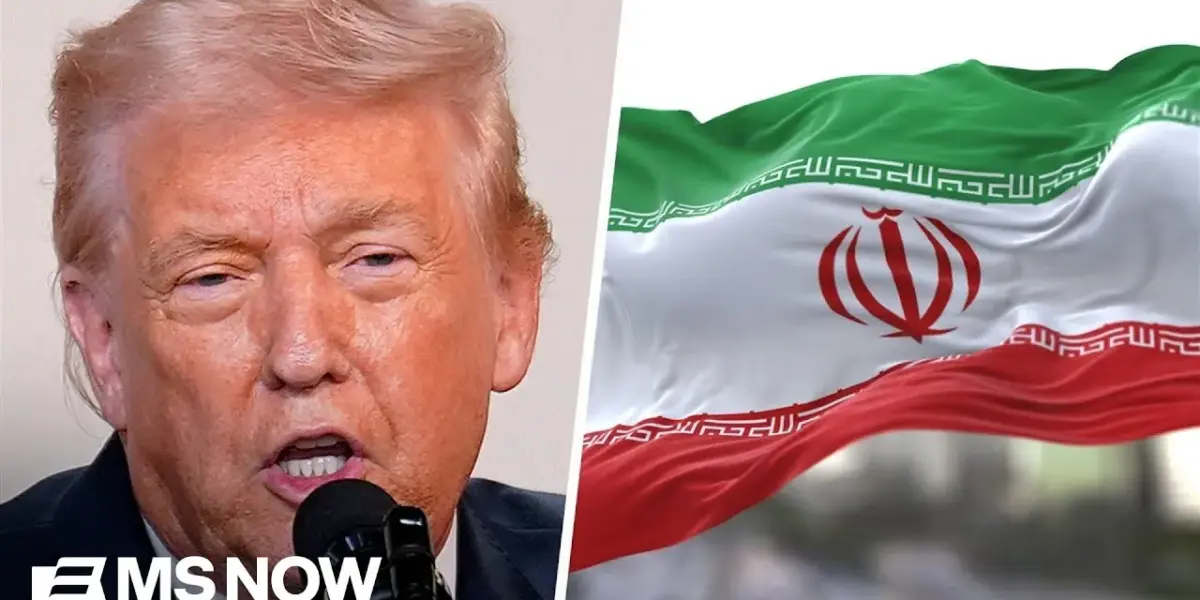
Trump’s Iran Threats Spark War Crime Accusations
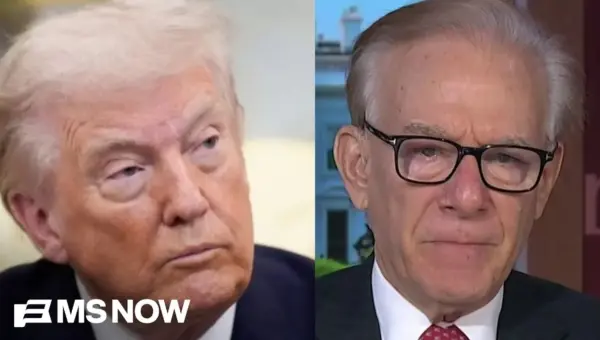
Former President Donald Trump’s recent statements threatening to strike Iran’s energy and water infrastructure have ignited a firestorm of criticism, with national security experts and political analysts labeling the remarks as potential war crimes and raising serious concerns about the administration’s strategic planning and decision-making process.
During a recent White House press briefing, attempts were made to defend the President’s remarks, but the core message from the panel of experts was clear: Trump’s unpredictable and often impulsive statements create deep uncertainty for allies and American officials alike, leaving many unsure of the nation’s direction in foreign policy.
Experts Condemn ‘War Crime’ Threats
David Rode, a senior national security reporter, stated unequivocally that threatening to destroy all of Iran’s energy plants constitutes a war crime. He explained that while targeting energy infrastructure can be permissible under certain conditions, striking every plant, especially those serving civilian populations, crosses a legal and ethical line.
The situation escalates further with the mention of targeting water desalination plants. Joel Rubin, a former Deputy Assistant Secretary of State, highlighted the critical importance of these plants in the region. He warned that such an attack would represent an incredibly dangerous escalation, as many major countries in the Middle East rely on them for survival. The fear is that this could trigger a tit-for-tat conflict, leading to widespread evacuations and a severe lack of drinking water for millions.
“That, too, is a war crime,” Rubin asserted, underscoring the gravity of the potential consequences.
Unpredictability as Strategy?
Peter Baker, Chief White House Correspondent for The New York Times, described Trump’s communication style as contradictory and often inconsistent. He noted that the administration’s strategy seems to rely on uncertainty, suggesting that nobody can be entirely sure of Trump’s next move. While this unpredictability might offer some strategic advantage by keeping adversaries guessing, it also raises questions about whether the President himself fully understands his own plans.
Baker elaborated that Trump’s decisions often appear to be conditioned on the impulse of the moment, influenced by what he sees on television or hears from recent conversations. This approach, he believes, is a major concern for both allies and many American officials who are uncertain about the trajectory of U.S. foreign policy.
Limits of Air Power and Strategic Depth
Tom Nichols, a staff writer at The Atlantic, questioned the effectiveness of air operations in achieving broader strategic goals like regime change or preventing Iran from acquiring nuclear weapons. He pointed out that intelligence suggests only about a third of Iran’s missile capacity and drone capabilities have been destroyed. Many drones, particularly the long-range Shaheed models, remain in Iran’s arsenal, with a significant portion possibly hidden or buried.
Nichols argued that this situation highlights the limits of air power and, more critically, the limits of Donald Trump’s strategic thinking. He suggested that the belief that simply bombarding Iran will lead to a new regime is flawed and that this approach is unlikely to succeed, especially after a month of operations. The threat of war crimes, he added, is unlikely to deter Iran and may even be perceived by them as an acceptance of civilian casualties.
Concerns Over Expertise and Planning
A significant point of discussion revolved around the availability of expertise within the government to inform strategic decisions. Joel Rubin expressed concern that many experienced individuals, particularly in the energy sector of the State Department, were dismissed last year. This loss of expertise, he fears, could hinder the administration’s ability to formulate and execute effective policy.
The question of whether experts were consulted and their advice heeded was raised. Rubin stated that while the White House ultimately decides policy, it relies on government agencies to assess feasibility and predict potential responses from adversaries, including actions in the Strait of Hormuz, activation of terrorist networks, or ballistic missile launches. He questioned if these assessments were properly considered, especially given the potential for improvisation and a lack of deep strategic planning.
A Non-Functioning National Security Council?
Tom Nichols offered a stark assessment of the current national security apparatus. He described the situation as dealing with an “emotionally unstable and cognitively impaired president” whose briefings consist of short video clips of explosions, rather than comprehensive strategic discussions. Nichols believes this is not how a commander-in-chief should be briefed.
Furthermore, Nichols suggested that even if individuals weren’t fired, they have been sidelined or silenced. He concluded that the United States essentially lacks a functioning National Security Council. He pointed to the Pentagon being led by an “unqualified person” and a part-time Secretary of State, describing the overall system as a “rattletrap” of improvisation driven by the President’s immediate reactions rather than a coherent plan.
Political Calculations Amidst Crisis
Peter Baker addressed the political considerations within the White House. He acknowledged that the administration is aware of the political risks associated with escalating tensions with Iran, especially given already poor approval ratings and a precarious majority in the House. The hope within the White House, Baker noted, is that any conflict resolution will lead to a swift return to normalcy, with falling gas prices and stabilized inflation, allowing the President to claim victory.
However, Baker also highlighted a concerning pattern: individuals around the President are often reluctant to present him with unfavorable information. Instead, they tend to focus on poll data that might be selectively useful, such as approval ratings among Republicans, while ignoring broader public sentiment. This creates an environment where the President receives limited and potentially skewed information, and advisors fear repercussions if they deliver unwelcome news.
Looking Ahead
As the situation with Iran remains volatile, the focus will be on whether the administration can move beyond reactive improvisation towards a more coherent and strategically sound foreign policy. The effectiveness of current military actions, the potential for diplomatic breakthroughs, and the impact on domestic politics will be key factors to watch in the coming weeks and months.
Source: 'That's a war crime': Reaction to Trump saying he'll strike Iran's energy plants (YouTube)

Related Articles

Gulf Allies Urge Trump to Continue Iran Conflict
U.S. allies in the Persian Gulf are urging President Trump to intensify military action against Iran, believing Tehran has not been sufficiently weakened. The ongoing conflict raises concerns about regional stability and global energy prices, while questions linger about the administration's long-term strategy.
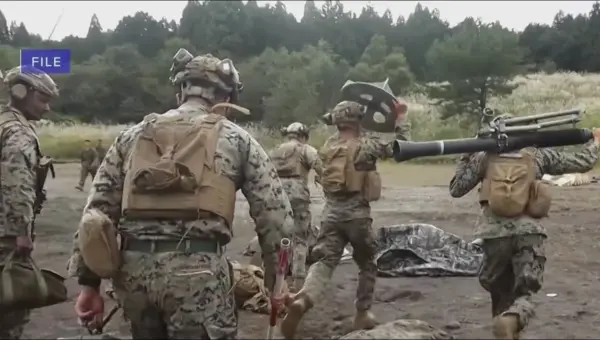
US Weighs Troop Deployment Amid Iran Deal Push
The U.S. is considering deploying ground troops to Iran while simultaneously pushing for a diplomatic deal to reopen the Strait of Hormuz. Air strikes are ongoing as President Trump increases pressure on Iran.
Trump Weighs War Crime Threat Over Iran Strait
President Trump is reportedly willing to accept the continued closure of the Strait of Hormuz, despite earlier threats, signaling a shift in U.S. demands. This comes as gas prices surge and markets react negatively to the ongoing conflict. Conflicting messages from within the administration fuel confusion about the war's objectives and exit strategy.