US Troop Buildup Falls Short of Iran Invasion Needs
Despite President Trump's strong rhetoric, US troop numbers in the Middle East are deemed insufficient for a large-scale invasion of Iran. Military experts highlight concerns about complex operations and the potential for significant casualties. The situation remains tense, with ongoing negotiations and potential economic fallout from disruptions to oil markets.


US Military Operations Against Iran Under Scrutiny Amidst Rhetoric
Amidst escalating tensions and strong rhetoric from President Trump regarding potential military action against Iran, a closer look at US troop deployments reveals significant gaps for any large-scale ground invasion. While the President has made bold statements on social media, military experts suggest the current troop presence in the region is insufficient for complex operations like seizing nuclear materials or occupying key islands.
Limited Options for Ground Operations
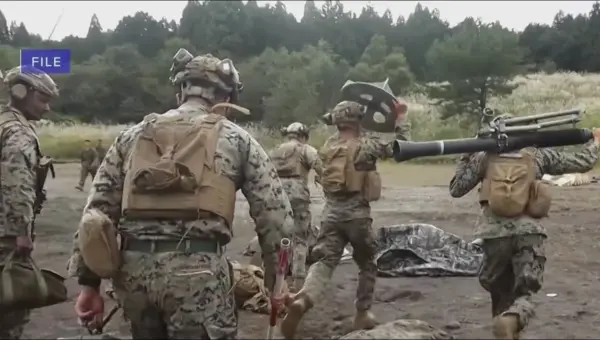
Reports indicate that the number of US Marines and special operators moved into the region is not enough for an extended ground invasion. There is speculation about potential raids, possibly involving the 82nd Airborne, to secure Iran’s highly enriched uranium. However, this uranium is believed to be stored in tunnels at the Isfahan complex. Such an operation would be highly complex and could require US forces to remain on the ground for an extended period, potentially up to a week or more. Military planners express concerns that this could lead to dangerous ambushes or the area being mined by Iranian forces.
Island Seizure Unlikely in Near Term
Talk has also surfaced about taking strategic islands like Car Island or Larak Island, which are located near the Strait of Hormuz. The 31st Marine Expeditionary Unit, consisting of about 3,500 sailors and Marines, has arrived in the Arabian Sea. Despite their presence, they have not crossed the Strait of Hormuz. There is currently no evidence suggesting they are positioned to seize these islands in the immediate future. This suggests that the current military movements are more likely part of a pressure campaign to support ongoing, albeit difficult, negotiations.
Negotiations and Economic Ramifications
White House officials have indicated that negotiations with possible Iranian leaders are taking place in Pakistan. These talks aim to de-escalate the situation. However, past negotiations have shown little goodwill or trust between the two sides. If these talks fail, the President has stated that military options would be considered. The closure of the Strait of Hormuz, whether intentional by Iran or a consequence of conflict, poses a significant threat to the global economy. Oil experts warn that even a few weeks of closure could lead to dangerous territory for global markets, impacting everything from fertilizer prices, which affect food supplies, to crude oil exports.
Broader Economic Impact and Market Volatility
The disruption of oil flow is a major concern. The Houthis in the Red Sea could potentially interfere with oil shipments, further exacerbating the situation. Saudi Arabia’s East-West pipeline, which moves about 7 million barrels of oil daily, could be at risk. This growing instability has already led to rising oil prices, which are expected to have a significant lag effect on the world economy. Stock markets have shown volatility, reacting to President Trump’s social media posts, but investors appear to be taking a more cautious approach as they assess the actual military capabilities and the true state of negotiations.
Strategic Posturing and Military Actions
The President’s social media posts, often released shortly before market closures, appear to be a form of public posturing. These posts sometimes suggest imminent conflict or progress in negotiations, aiming to influence market stability. Meanwhile, the US military is systematically working to disable Iran’s ballistic missile capabilities, with reports of significant progress. However, the core challenge remains: opening the Strait of Hormuz and securing nuclear materials will likely require either successful negotiations or a significant commitment of ground forces, potentially leading to substantial casualties. The critical question is whether the President is prepared to accept such risks.
Looking Ahead
The coming weeks will be crucial in determining the trajectory of the situation. All eyes will be on the ongoing negotiations and whether a diplomatic solution can be reached to prevent further escalation. The economic consequences of any prolonged disruption to oil supplies will also be closely watched, as will the US military’s continued efforts to degrade Iran’s missile capabilities. The ultimate decision on deploying ground forces, with its inherent risks, remains a significant point of uncertainty.
Source: Iran war: Trump threatens to 'obliterate' Iran's infrastructure in Truth Social post (YouTube)

Related Articles


Gulf Allies Urge Trump to Continue Iran Conflict
U.S. allies in the Persian Gulf are urging President Trump to intensify military action against Iran, believing Tehran has not been sufficiently weakened. The ongoing conflict raises concerns about regional stability and global energy prices, while questions linger about the administration's long-term strategy.

Middle East Conflict Sends Gas Prices Soaring Past $4
The national average gas price has surpassed $4 per gallon for the first time since 2022, driven by escalating conflict in the Middle East. Recent attacks on oil tankers and military strikes have heightened fears of energy supply disruptions, impacting consumers globally.
US Weighs Troop Deployment Amid Iran Deal Push
The U.S. is considering deploying ground troops to Iran while simultaneously pushing for a diplomatic deal to reopen the Strait of Hormuz. Air strikes are ongoing as President Trump increases pressure on Iran.