Trump’s Iran Threats Spark War Crime Concerns
President Trump's recent suggestion to destroy Iranian infrastructure has sparked debate over potential war crimes. Critics cite international law and past civilian casualties, while supporters frame it as a strong warning. This exchange highlights concerns about military actions and civilian safety.


Trump’s Iran Threats Spark War Crime Concerns
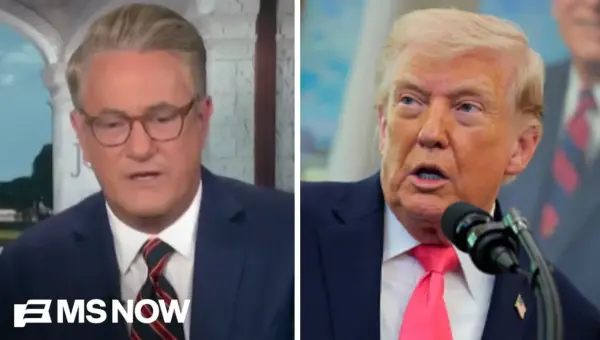
President Trump recently posted a message that raised serious questions about international law and military actions. He suggested that if the U.S. were to withdraw from Iran, the U.S. military might destroy Iran’s electric power plants, oil wells, and possibly all of its water desalination facilities. This idea has led to discussions about whether such actions could be considered war crimes.
International Law and Civilian Infrastructure
Striking civilian infrastructure, like power plants or water facilities, is generally not allowed under international law. These are the kinds of places that ordinary people rely on for daily life. The U.S. administration has also stated that the U.S. does not target civilians. This creates a conflict between the President’s stated intentions and established legal and ethical standards.
“Striking civilian infrastructure like that is generally prohibited. Why is the president threatening what would amount to potentially a war crime with the U.S. military?”
The Administration’s Stance
Karoline Leavitt, a representative, explained the President’s message as a clear warning to the Iranian regime. She stated that the best option for Iran is to make a deal. Otherwise, the United States armed forces have capabilities that are beyond imagination, and the President is prepared to use them. She pushed back against the idea that the President’s words were a direct threat of war crimes, suggesting that those asking the question might be influenced by outside experts.
Concerns About Civilian Casualties
However, critics point to events that have already occurred as reasons for concern. They mentioned that during the early stages of the conflict, a girls’ school was hit on the first day, resulting in the deaths of 160 Iranian schoolgirls. The conflict is only about a month old, yet headlines continue to emerge, such as a UN peacekeeper being killed and another seriously injured in a blast in South Lebanon. These incidents fuel worries about the impact on civilians.
The Role of Experts
The exchange highlighted a disagreement over the role of experts. Leavitt suggested that those questioning the President’s threats might have experts feeding them information. On the other hand, the questioner defended the use of experts, asking what is wrong with experts who are pointing out potential war crimes and calling for investigations into what is happening. This debate touches on who should interpret international law and military actions.
Why This Matters
This situation matters because it involves the potential use of military power and its consequences. International law exists to protect civilians and prevent unnecessary suffering during conflicts. When leaders make statements that seem to go against these laws, it raises alarms. It prompts important questions about accountability and the rules of engagement in modern warfare. The U.S., as a global power, plays a significant role in upholding international norms. Therefore, its actions and statements carry substantial weight.
Historical Context and Background
The U.S. and Iran have a complex and often tense relationship. This history includes periods of cooperation and significant conflict. The current situation is influenced by decades of political developments, including the 1979 Iranian Revolution and subsequent sanctions. Understanding this background helps explain the current geopolitical dynamics and the sensitivity surrounding any military threats or actions between the two nations. Past incidents and rhetoric often shape current perceptions and reactions.
Implications and Future Outlook
The implications of such rhetoric are far-reaching. It can escalate tensions and increase the risk of misunderstanding or accidental conflict. For the Iranian people, it raises fears about their safety and the security of their essential infrastructure. Internationally, it could strain diplomatic relationships and challenge existing frameworks for peace and security. The future outlook depends on de-escalation and adherence to international legal standards. Diplomacy and clear communication are crucial to prevent missteps.
Trends in Modern Warfare
This discussion also reflects broader trends in modern warfare. The lines between military targets and civilian infrastructure can become blurred, especially in densely populated areas or when critical services are intertwined with military objectives. The use of rhetoric that seems to disregard civilian safety is a concerning trend. It highlights the ongoing challenge of ensuring that military actions are conducted ethically and legally, even in times of heightened tension. The international community continues to grapple with how to enforce these rules effectively.
Source: Karoline Leavitt gets Confronted on Trump War Crime Threat #politics #fyp #New (YouTube)

Related Articles

Gulf Allies Urge Trump to Continue Iran Conflict
U.S. allies in the Persian Gulf are urging President Trump to intensify military action against Iran, believing Tehran has not been sufficiently weakened. The ongoing conflict raises concerns about regional stability and global energy prices, while questions linger about the administration's long-term strategy.
US Weighs Troop Deployment Amid Iran Deal Push
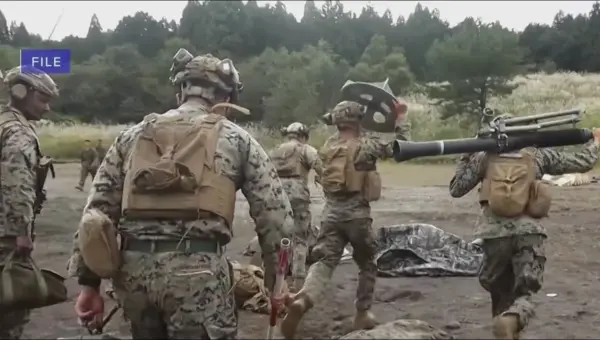
The U.S. is considering deploying ground troops to Iran while simultaneously pushing for a diplomatic deal to reopen the Strait of Hormuz. Air strikes are ongoing as President Trump increases pressure on Iran.
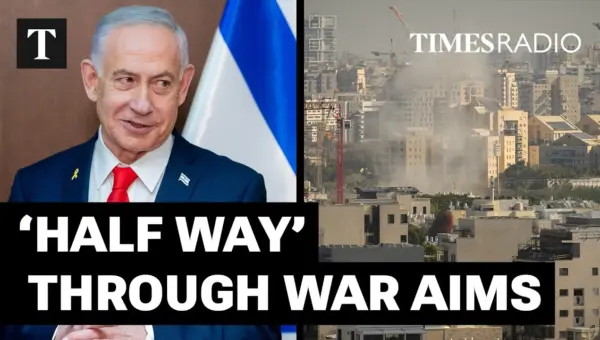
Netanyahu: Israel ‘Halfway’ Through Iran War Missions
Israeli Prime Minister Benjamin Netanyahu announced Israel is past the halfway point in its military missions against Iran, citing significant degradation of Iran's capabilities. Meanwhile, U.S. policy appears confused, with conflicting threats and potential ground operations discussed. A controversial new Israeli law allowing executions for Palestinians convicted of terror offenses also draws criticism.