Trump’s Nuclear Threat Echoes; DHS Funding Crisis
President Trump has issued a stern warning to Iran, threatening to obliterate its energy infrastructure if peace talks fail. Meanwhile, a prolonged government shutdown continues to disrupt the Department of Homeland Security, causing chaos at airports and highlighting political divisions in Washington.

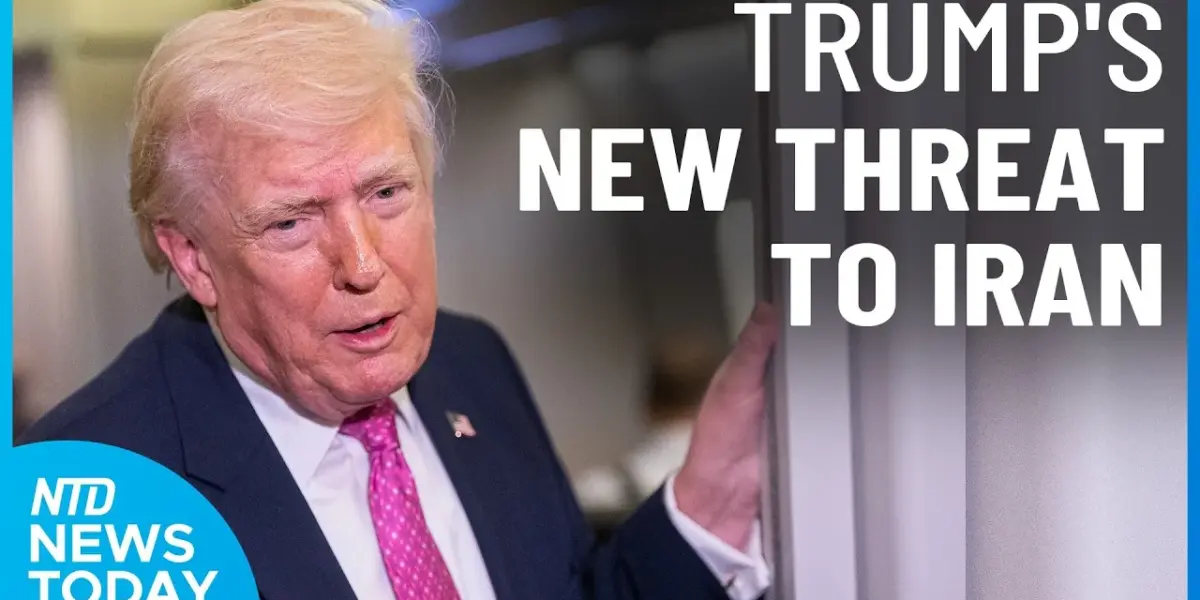
Trump’s Stark Iran Warning: Obliterating Energy Sites
President Trump has issued a severe warning to Iran, threatening to completely destroy its energy infrastructure if the country rejects peace talks or fails to reopen the vital Strait of Hormuz. This strong statement comes as the United States deploys additional troops to the Middle East, signaling a tense geopolitical situation.
Trump took to social media to outline the potential consequences, stating that if a deal isn’t reached soon or the Strait of Hormuz isn’t immediately open for business, the U.S. would respond by “blowing up and completely obliterating all of their electric generating plants, oil wells and Car Island.” This warning follows a weekend statement where the President noted Iran had shown a positive gesture by allowing 20 oil tankers to pass through the Strait.
Despite these threats, the President also indicated that diplomatic efforts are progressing, describing discussions with a “new and more reasonable regime” in Iran. He mentioned that “great progress is happening” in negotiations.
Shifting Alliances and Internal Pressures in Iran
Political analyst Babak Shakarabi offered insight into the complex dynamics at play. He suggested that U.S. political and military objectives might differ, with Israel aiming for the complete downfall of the current Iranian regime. Shakarabi believes the U.S. is using political pressure to encourage a regime change that would result in a government more favorable to American interests, particularly regarding nuclear ambitions and missile programs.
He highlighted the role of the Iranian people, who have shown a strong desire for change and integration into the international community. Shakarabi pointed to Prince Reza Pahlavi as a figure representing this potential new era for Iran. The analyst noted that President Trump might be using military power to expedite a resolution, allowing him to refocus on other global challenges like China.
Regarding the potential impact of an attack on Iran’s infrastructure, Shakarabi expressed concern. He stated that such an action would likely paralyze the regime and could lead to an uprising. However, rebuilding the damaged infrastructure would take a very long time, causing immense suffering for the Iranian people. He warned that this could risk turning a population friendly to the West against the U.S. if the regime’s propaganda about America as the enemy starts to resonate due to the hardship.
Shakarabi also raised concerns about the long-term consequences, including economic struggles for any new government, the potential for sectarian conflict, and mass migration. He also pointed to the risk of trained regime forces, like the IRGC, becoming proxies for other powers if they face economic hardship, drawing parallels to situations in Libya and Iraq.
The DHS Funding Stalemate and Airport Chaos
Meanwhile, the partial government shutdown, now the longest in U.S. history, continues to impact the Department of Homeland Security (DHS). Lawmakers have left Washington D.C. without reaching a breakthrough on funding, leading to divisions between the House and Senate.
The shutdown has caused significant disruptions, particularly at airports. TSA agents, who have gone without pay for weeks, have faced financial strain, leading to staffing shortages and long security lines. While President Trump signed an executive order allowing TSA agents to be paid, it could take time for the money to reach them, and thousands have already called out or quit.
Immigration and Customs Enforcement (ICE) agents have been deployed to assist at airports, a move supported by the White House as a way to maintain safety and ease lines. However, the core disagreement revolves around ICE policies, with Democrats seeking changes and Republicans defending current practices, such as the use of agent masks and judicial warrant requirements.
The House has proposed a short-term funding measure for the entire DHS, but Senate Democrats have rejected it, leading to an impasse. Some are now calling for new Senate leadership to break the deadlock.
Broader Political Developments
Beyond the immediate crises, President Trump has been pushing for the “Save America Act,” which would require proof of citizenship and ID for federal elections. He argues this is essential to prevent cheating, while critics worry it could disenfranchise eligible voters.
The President has also renewed his calls to end the Senate filibuster, believing it obstructs the passage of important legislation. The Supreme Court is set to hear arguments on birthright citizenship, a policy President Trump has sought to challenge.
In other news, the Treasury Department is targeting fraud in government healthcare programs, and the White House has launched a new app to provide direct news from the administration to the public.
Why This Matters
The escalating tensions with Iran, coupled with the threat of military action against its energy infrastructure, highlight the precarious state of international relations. President Trump’s dual approach of diplomatic engagement and severe military threats creates a volatile environment. The potential destruction of Iran’s energy sector could have far-reaching economic and humanitarian consequences, not only for Iran but also for global energy markets.
The ongoing DHS funding lapse and its impact on TSA operations underscore the real-world effects of political gridlock. Long airport security lines and staffing shortages create frustration for travelers and raise concerns about national security. The disagreement over ICE policies reveals deeper ideological divides within the government regarding immigration enforcement.
The push for stricter voting laws and the debate over birthright citizenship point to significant policy discussions that could shape the future of American democracy and its immigration system. These issues, alongside the complex situation in Iran, demonstrate the multifaceted challenges facing the nation, both domestically and on the global stage.
Looking Ahead
The coming days will be critical in determining the path forward with Iran. Whether diplomatic channels can de-escalate the situation or if military options will be pursued remains uncertain. The effectiveness of the U.S. deployment of troops and the response from regional players will also be closely watched.
Domestically, the resolution of the DHS funding crisis is paramount to restoring normal operations at airports and ensuring the stability of essential government services. The political maneuvering in Congress will continue to shape these outcomes.
Furthermore, the ongoing debates surrounding election integrity and immigration policy suggest that these will remain central themes in the political discourse, potentially influencing future elections and legislative actions.
Source: Trump Threatens to ‘Obliterate’ Iran’s Energy Sites; DHS Funding Lapse | NTD News Today (March 30) (YouTube)

Related Articles

Gulf Allies Urge Trump to Continue Iran Conflict
U.S. allies in the Persian Gulf are urging President Trump to intensify military action against Iran, believing Tehran has not been sufficiently weakened. The ongoing conflict raises concerns about regional stability and global energy prices, while questions linger about the administration's long-term strategy.


Middle East Conflict Sends Gas Prices Soaring Past $4
The national average gas price has surpassed $4 per gallon for the first time since 2022, driven by escalating conflict in the Middle East. Recent attacks on oil tankers and military strikes have heightened fears of energy supply disruptions, impacting consumers globally.
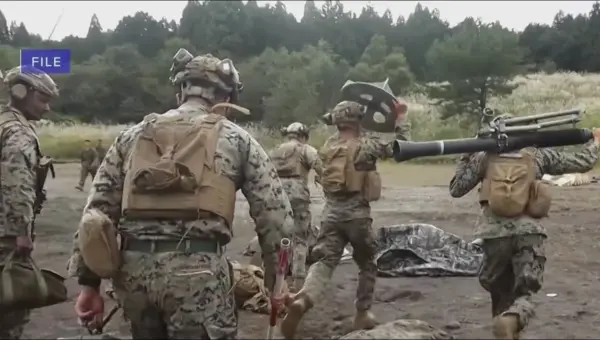
US Weighs Troop Deployment Amid Iran Deal Push
The U.S. is considering deploying ground troops to Iran while simultaneously pushing for a diplomatic deal to reopen the Strait of Hormuz. Air strikes are ongoing as President Trump increases pressure on Iran.