Trump’s Iran Policy Fuels Escalation, Not Peace
A former Iran nuclear deal negotiator warns that President Trump's approach is fueling escalation rather than peace, potentially making Iran more likely to pursue nuclear weapons. Alan Eyre argues that claims of successful negotiations are mischaracterizations, and increased military action will likely lead to reciprocal escalation.

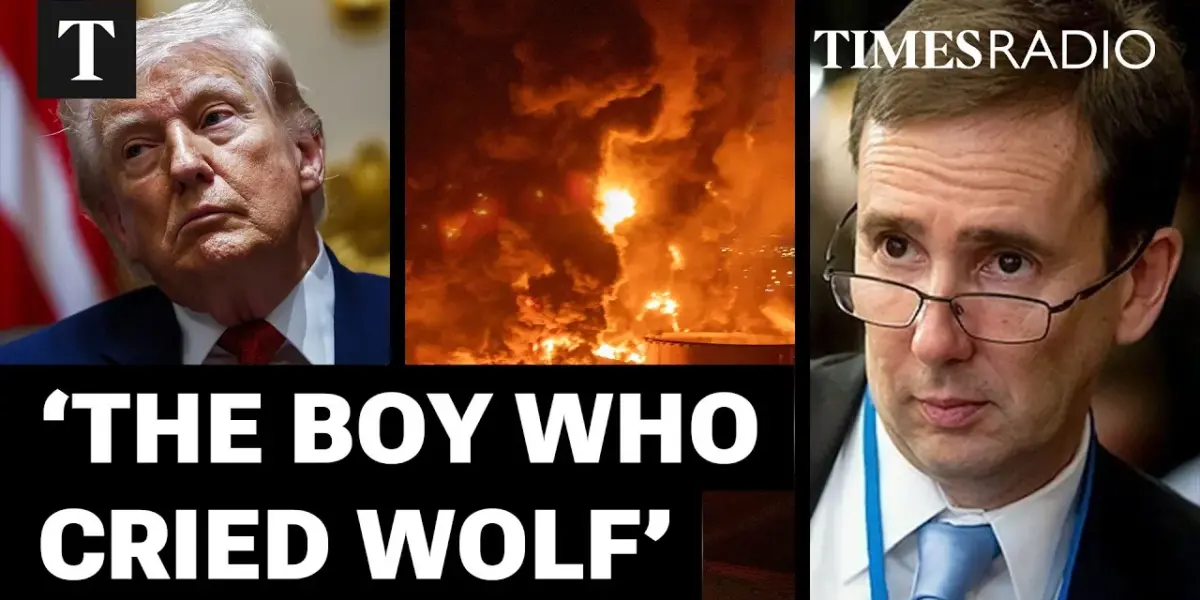
Expert Warns Trump Approach May Trigger Wider Conflict
Washington D.C. – Amidst escalating tensions in the Middle East, a leading diplomat and former Iran nuclear deal negotiator has warned that President Trump’s strategy is pushing the region closer to war, not peace. Alan Eyre, a distinguished diplomatic fellow at the Middle East Institute and former member of the U.S. negotiating team for the Iran nuclear deal, stated that the administration’s public statements are misleading. He argues that despite claims of progress, the prevailing dynamic is one of increasing escalation, with thousands of U.S. special forces now deployed in the region.
Challenging the “Stupid Deal” Narrative
President Trump has repeatedly labeled the 2015 Iran nuclear deal, officially known as the Joint Comprehensive Plan of Action (JCPOA), as “stupid” and a pathway for Iran to develop nuclear weapons. Eyre strongly disagrees with this assessment. “It was a deal that dealt with the threat of Iran building a nuclear weapon,” he explained. “It wasn’t perfect, but when both sides walk away from a negotiation unhappy, you know, you’ve got a good deal.”
Eyre highlighted the deal’s key provisions: limitations on Iran’s uranium enrichment capabilities, restrictions on the types of centrifuges used, and crucially, enhanced visibility and verification of Iran’s nuclear program. “It gave us very good visibility into what Iran was doing with its nuclear program and heightened verification,” he said. He believes this was a far better outcome than the current situation after the U.S. unilaterally withdrew from the agreement.
Inspections and International Oversight
Critics of the JCPOA often point to a clause allowing up to 24 days’ notice before inspections of nuclear sites, arguing this provided Iran time to conceal evidence. Eyre countered this by emphasizing the role of the International Atomic Energy Agency (IAEA), the body responsible for nuclear safeguards under the Non-Proliferation Treaty (NPT). “The IAEA sets the type of inspection. They have unannounced inspections. They have cameras full-time at all the relevant nuclear facilities,” Eyre noted. He confirmed that during the JCPOA, the IAEA was satisfied with the level of visibility and verification in place.
The comparison to North Korea, which also pursued nuclear ambitions after striking deals, was dismissed by Eyre as apples and oranges. “North Korea was never a member of the NPT. As far as I know, the IAEA never had ongoing access,” he stated. The core issue, according to Eyre, is timing. Waiting too long to address a country’s nuclear program means dealing with established capabilities rather than just intentions. The U.S. waited until Iran had developed uranium enrichment capabilities, leaving only the option to modify intentions, not permanently negate the capability.
No Real Negotiations, Only Mischaracterizations
Eyre expressed skepticism about claims of ongoing negotiations between the U.S. and Iran, even in the lead-up to recent military actions. He described the interactions as intermittent discussions through third parties, like the Omanis, but not serious, sustained negotiations. “Neither side really committed to serious sustained negotiations,” Eyre said. He believes that despite President Trump’s social media posts suggesting productive talks, no actual negotiations are occurring.
Messages are being passed through intermediaries, but the demands from both sides have become even more extreme since the latest conflict. “The two minimal conditions of each side, the two maximalist demands have gotten even farther apart since the war,” Eyre explained. He characterized the administration’s portrayal of ongoing negotiations as a misrepresentation of the truth. “I think President Trump is saying this. He on the one hand, if you look at his latest social message, he wants to calm the markets… but he also wants to threaten Iran.”
Escalation Cycle and Market Fears
Eyre warned that the administration’s strategy of increasing military action against Iran is likely to provoke reciprocal escalation, rather than compliance. “The miscalculation that President Trump, the administration is making here is that if you increase kinetic action on Iran, they’re not going to back down. They’re just going to reciprocally escalate in turn on targets in the Gulf,” he stated. He likened the administration’s reassurances to the fable of the boy who cried wolf, suggesting markets might eventually become immune to such statements.
The prevailing dynamic, Eyre reiterated, is increased destabilization. The deployment of troops and talk of seizing nuclear materials contribute to this. He fears escalation in the short and medium term, including the potential for the Strait of Hormuz to be closed or controlled by Iran. “The central dynamic here is increased destabilization and the Strait of Hormuz staying closed or at least controlled by Iran for the short term,” he observed.
Turbocharged Intent: Nuclear Ambitions
Looking at the longer term, Eyre believes the current actions are making Iran more likely to pursue nuclear weapons. While the U.S. has degraded Iran’s ability to project power externally, this very act has “turbocharged their intent.” He explained that Iran, fearing future attacks, will likely seek to reconstitute its strategic deterrence once the conflict ends. “That could well include actually going forward in building a nuclear weapon, which is something they haven’t tried to do up until the current moment,” Eyre warned.
Setting Back Democracy and Finding a Way Forward
The possibility of a more enlightened and less threatening regime in Iran, one that treats its people better and improves regional relations, seems distant. Eyre argued that the U.S. actions, including the killing of leaders, have paradoxically put a more hardline, militarized, and radicalized regime in power. “We have, I think, set back the cause of democracy and the Iranian people getting their well-earned rights in Iran for who knows how long,” he lamented.
When asked for advice on how to proceed, Eyre stressed that there are no easy solutions, only the “least bad option.” He believes the damage done will have long-lasting consequences. His primary recommendation is for the United States to cease its military actions and pressure allies, like Israel, to do the same. “Declare victory, say we’ve destroyed Iran’s ability to project power and then move on to something else,” Eyre urged. He noted that President Trump himself reportedly seems eager to move past the conflict, making “declare victory and just stop” his advice to the U.S. government.
Source: Donald Trump’s Iran Approach ‘More Likely To Escalate’ War | Alan Eyre (YouTube)

Related Articles
Oil Shocks Fuel Recession Fears, Markets Wobble
Soaring oil prices are rattling global markets, pushing major indices toward correction territory and sparking fears of a recession. Experts warn that prolonged energy shocks, particularly concerning the Strait of Hormuz, could severely impact economic growth. Investors are advised to maintain diversified portfolios and cash buffers.

US Strikes Iran’s Secret Sites, Threatening Strait of Hormuz Control
The United States has launched significant strikes against secret Iranian facilities, utilizing advanced bombers and electronic warfare aircraft. Despite these attacks, Iran continues its aggression, and concerns are rising over control of the vital Strait of Hormuz, a crucial waterway for global oil transport.
Trump’s World Order Collapse Sparks Global Chaos
Donald Trump's foreign policy decisions have shattered the post-WWII global security framework, leading to international distrust and economic instability. Allies question U.S. reliability as conflicts escalate and trade disputes arise, impacting global markets and national security.