Tesla Model S Battery Loses Significant Range After 4 Years
A four-year-old Tesla Model S Plaid has lost a significant portion of its battery capacity, resulting in a substantial reduction in driving range. The owner's testing revealed a nearly 28% decrease in usable energy, impacting the car's long-term practicality.

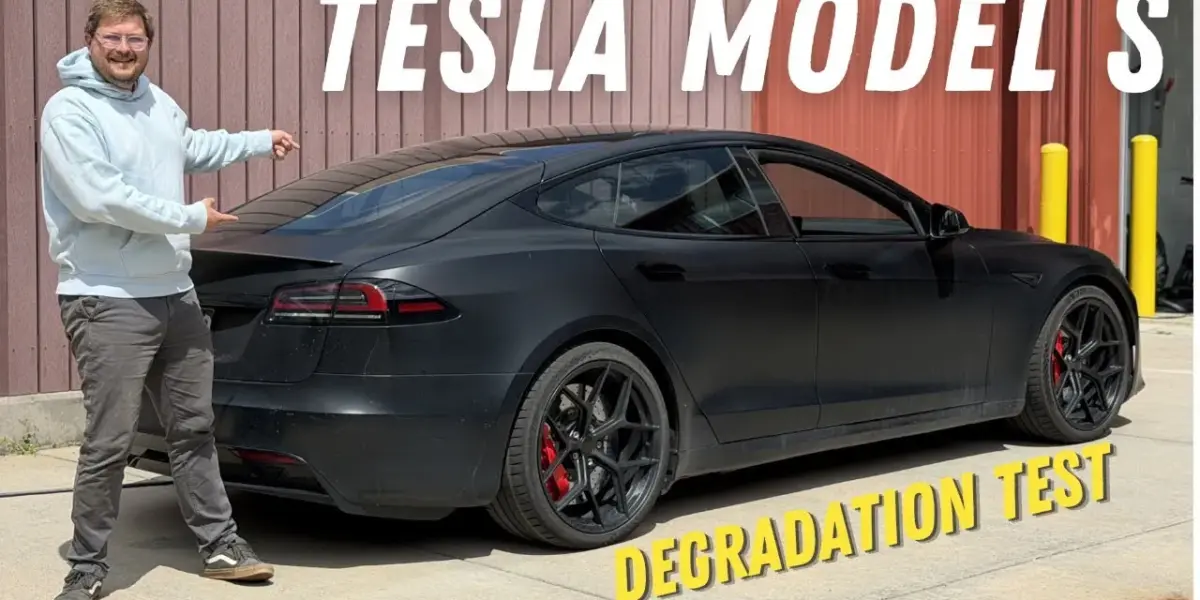
Tesla Model S Battery Loses Significant Range After 4 Years
After four years of ownership and 60,000 miles, a Tesla Model S Plaid has shown a noticeable drop in its battery capacity, meaning less range for everyday driving. This video dives into how much capacity has faded and what that means for EV owners.
The Downside of EV Ownership: Battery Degradation
One of the unique challenges with electric cars is battery degradation, often called capacity fade. Unlike a gas tank that stays the same size, an EV battery’s ability to store energy slowly decreases with every mile driven and every charge cycle. This means that over time, your electric car will simply not be able to travel as far on a full charge as it could when it was new.
This is a natural process for all batteries, but how much it affects a car depends on many factors, including battery chemistry, charging habits, and climate. For this report, we’re looking specifically at a 2022 Tesla Model S Plaid, a high-performance electric sedan.
Understanding Capacity Fade
The Tesla Model S Plaid in question uses NCA (Nickel Cobalt Aluminum) battery cells. While these cells offer great energy density, they can be more prone to degradation compared to other chemistries like NCM (Nickel Cobalt Manganese) used in some other Tesla models. The owner notes that their Model 3, using NCM cells, lost about 10-11% capacity over 100,000 miles, which is considered more typical.
Several factors contribute to how quickly a battery loses capacity:
- Charging Habits: Regularly charging to 100% and letting the car sit at that high state of charge, especially in hot weather, is very hard on the battery.
- Temperature: Extreme heat and cold can accelerate battery aging.
- Charging Speed: While frequent DC fast charging (like Supercharging) doesn’t seem to significantly harm battery longevity at a fleet level, a mix of charging methods is generally recommended.
- Driving Style: Aggressive driving and frequent track use can also impact battery health over time.
The owner of this Model S has tried to mitigate these effects. The car is typically stored in a temperature-controlled garage at a 50% state of charge when not in use. However, when driven, it’s often used for longer road trips, involving a significant amount of DC fast charging.
Testing the Model S Battery Health
To measure the capacity loss, a specific testing method was used. First, the car was charged to 100% while ensuring the battery was warm for optimal discharge. Then, the car was driven until it completely shut down, meaning it could not move anymore. This method provides a clear measurement from full charge to zero usable energy, avoiding guesswork about internal battery buffers.
The original usable capacity of this Model S battery pack when new was estimated to be around 99 kilowatt-hours (kWh). Tesla’s stated gross capacity is 101.3 kWh, but a portion of this is reserved as a buffer.
The Results: What’s the Verdict?
After driving approximately 220 miles on a mix of highway and back roads in fair weather conditions, the car reached a very low state of charge. The total energy pulled from the battery during this drive, from 100% down to the point where it could no longer drive, was measured at approximately 71.6 kWh.
This indicates a significant loss of usable capacity. Comparing this to the original 99 kWh, the battery has lost roughly 27.4% of its capacity. This is considerably higher than the degradation seen in other Tesla models like the Model 3.
The owner noted that the car’s estimated range was significantly lower than expected, struggling to achieve 200 miles on a round trip that previously seemed easily manageable. This loss is also exacerbated by the fact that the car is now running on aftermarket wheels, which are less aerodynamic than the original wheels, further reducing efficiency.
Who is this for?
This information is crucial for current and potential Tesla Model S owners, especially those considering older models or those who drive their cars extensively. While battery degradation is a known factor, the extent of loss in this particular Model S highlights the importance of understanding battery chemistry and charging habits.
For buyers looking at used Tesla Model S vehicles, this data suggests that older models, particularly those with NCA battery cells, might have significantly reduced range compared to their original specifications. It also raises questions about the long-term durability of the Plaid model’s battery pack.
Value Proposition
The Tesla Model S Plaid is a premium electric vehicle known for its blistering acceleration and luxury features. However, with a substantial loss in battery capacity after only four years and 60,000 miles, the value proposition for long-term ownership is impacted. A car that originally offered well over 300 miles of range might now struggle to reach 250 miles, requiring more frequent charging stops on longer journeys.
While the owner has found the Model 3 to be a more durable and cost-effective option in their fleet, the Model S Plaid’s performance and range degradation raise concerns. This could be a factor for those considering replacing their current EV or buying a used Model S. The owner even mused about replacing the Model S with a Cadillac CT5-V, a gasoline-powered performance sedan, indicating a potential shift in priorities due to the EV’s limitations.
Final Thoughts
The findings from this Model S capacity test serve as a stark reminder that battery health is a critical aspect of EV ownership. While EVs offer numerous benefits, understanding and managing battery degradation is key to maximizing their utility and value over time. For owners experiencing similar issues, consulting Tesla service and exploring battery health diagnostics is recommended.
Source: Electric Cars Lose Range Every Day! My Tesla Model S 4 Year Battery Capacity Update (YouTube)

Related Articles


Insane Tesla Model S Deals: 200K Miles for $9K, Ludicrous for $12K!
Two 2019 Tesla Model S sedans, one with 200,000 miles and FSD for $9,000, and a Performance model with Ludicrous Plus for $12,000, are redefining used EV value. These high-mileage Teslas offer incredible performance and features at a fraction of their original cost.


Tesla Model Y Gains Range With Spare Tire Swap
A new spare tire kit for the Tesla Model Y from Modern Spare not only provides crucial peace of mind but also delivers an unexpected efficiency boost. Testing revealed nearly a 10% improvement in range when using the skinny spare tires, making it a valuable addition for road-tripping EV owners.


BMW i3 Sedan Arrives with 440 Miles of Range
BMW's new i3 sedan is set to redefine electric range with an estimated 440 miles on a single charge. Built on the Neue Klasse platform, this sedan boasts a massive battery, rapid charging, and strong performance, aiming to compete directly with rivals like the Tesla Model 3.