Trump’s ‘Delusion’: Experts Slam Iran Oil Seizure Talk
President Trump's claims of negotiating with a new Iranian regime and potentially seizing oil have been met with skepticism by experts. Analysts warn that these ideas are delusional and could lead to catastrophic regional conflict and a surge in oil prices. The strategy of escalating to de-escalate is seen as a dangerous path mirroring past U.S. foreign policy failures.

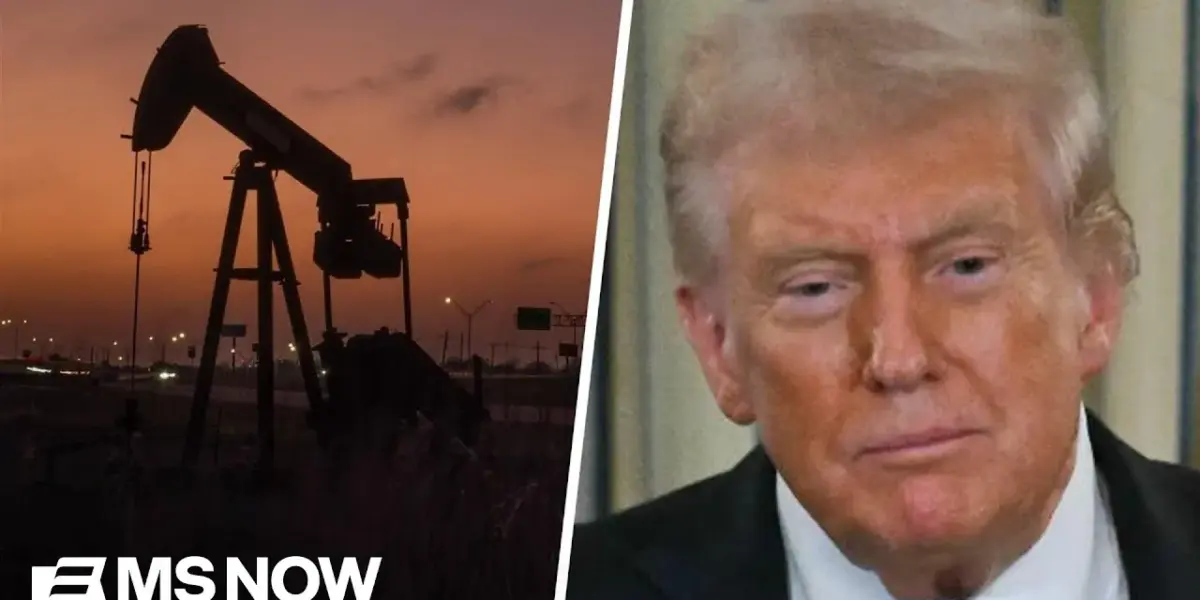
Trump Claims Iran Oil Seizure Discussions, Experts Skeptical
President Donald Trump has stated the U.S. is in serious talks with a “new and more reasonable regime” in Iran, even suggesting the U.S. could seize the country’s oil. However, experts and analysts are expressing strong doubts about these claims, calling the idea of seizing Iranian oil a “delusion” and highlighting the potential for catastrophic consequences.
Unclear Negotiation Partners and Tactics
Details surrounding these alleged negotiations remain scarce. While Pakistan is reportedly acting as an intermediary between Washington and Tehran, the identity of the “new regime” Trump refers to is unclear. Many of Iran’s political and military leaders have been killed in the ongoing conflict, raising questions about who Trump envisions as negotiating partners.
Secretary of State Mike Pompeo was pressed on this issue, stating he could not disclose the individuals involved for their safety. He acknowledged potential internal “fractures” within Iran and expressed hope that “people in Iran who now, given everything that’s happened, are willing to move in a different direction for their country” could be influential. However, he stressed the need to verify if these individuals are in power and have the ability to make concessions.
Legal and Humanitarian Concerns Over Bombing Threats
Adding to the complexity, Trump has threatened large-scale bombing of Iranian energy and other infrastructure to support these negotiations. Experts in international humanitarian law generally consider such attacks on civilian infrastructure to be unlawful. The consensus among these experts suggests that these threats, if carried out, would violate international law.
The Iranian Foreign Ministry has issued a statement harshly rejecting any notion of negotiating with the United States in good faith. A spokesperson stated that Iran has “experience in flesh and blood” and characterized past negotiations as a “betrayal.” This refers to previous instances where Iran was bombed by Israel and the U.S. during ongoing talks regarding its nuclear and ballistic missile programs.
Seizing Oil: An Unrealistic and Dangerous Proposition
Nicholas Kristof, a columnist for The New York Times, described Trump’s comments about seizing Iranian oil as underscoring the “delusion” of the administration’s approach. Kristof explained that seizing Iranian oil would be incredibly difficult and likely result in significant American troop losses.
“It’s not going to be able to seize Iranian oil. It’s not going to be able to take that. I mean, I don’t look at it could take Harg Island. But it would be incredibly difficult to hold it. It would lose a lot of American troops along the way.”
Furthermore, Kristof warned that an Iranian response could involve attacks on oil and gas infrastructure, as well as desalination plants, leading to a regional disaster and soaring oil prices. Even attempting to seize oil tankers outside the Strait of Hormuz would likely cause Iran to halt all oil shipments, driving prices up dramatically.
Shifting Power Dynamics and Misinterpretations
Kristof also pointed out that Trump’s assertion of regime change in Iran might be based on a misinterpretation. Instead of a more moderate government, the current situation could be leading to a more hardline, militaristic regime aligned with the Islamic Revolutionary Guard Corps (IRGC), making concessions less likely.
Strait of Hormuz Control and “Strait of Trump”
Richard Stengel, former Undersecretary of State, addressed Trump’s claim that Iran would allow 20 oil ships through the Strait of Hormuz as a sign of respect. Stengel likened this to a king demanding deference, suggesting it highlights Iran’s continued control over traffic in the vital waterway.
Trump’s rhetoric has also extended to renaming the Strait of Hormuz the “Strait of Trump.” He posted on Truth Social, threatening to “blow up and completely obliterate all of their democratic plants, oil wells and Karg Island and again possibly all desalination plants” if the strait is not “immediately open for business.”
Escalation to De-escalate: A Dangerous Strategy
Analysts like Stengel are concerned about this strategy of “escalation to de-escalate.” Stengel noted that this public threat of war crimes is unprecedented for an American president and extremely dangerous. He compared the current situation to the quagmire of Vietnam, suggesting that each day Trump escalates, it becomes harder for the U.S. to extricate itself.
“What we’re seeing is this kind of escalation to de-escalate, which is probably a Vietnam-era term that gets us more He’s shooting himself in the foot every day. He’s getting us more involved so it’s more difficult to extricate.”
The strategy of seizing territory or attacking infrastructure is historically easier than holding and protecting it. This mirrors failures seen in Vietnam, Iraq, and Afghanistan—conflicts that Trump himself had campaigned against. Stengel questioned the rationale of risking American lives and resources for unstated objectives, suggesting that withdrawing might be the only viable option.
Human Cost and Unclear Objectives
Kristof expressed deep concern about the human cost of potential military action. He believes Trump may be seeking an “off-ramp” to end the conflict due to its impact on his polling and potentially the midterm elections. However, the administration’s perception of leverage over Iran seems to be at odds with Iran’s own perceived advantage.
Kristof fears that to gain leverage, Trump might resort to actions like seizing Karg Island or attacking oil facilities, which would further entangle the U.S. in a “quagmire” and cause widespread destruction. He highlighted the potential impact on desalination plants, noting that some Gulf countries rely heavily on them for water, making such threats particularly dire.
What’s Next?
The coming days will be critical in determining whether diplomatic channels can be strengthened or if President Trump’s rhetoric will lead to further military escalation. The international community will be watching closely to see if Iran’s threats are followed through and how the U.S. responds to perceived provocations, with the potential for devastating regional consequences looming.
Source: 'Delusion': Columnist reacts to Trump saying U.S. could take Iran's oil (YouTube)

Related Articles

US Forces Unleash Lethal Power in Operation Epic Fury
Operation Epic Fury showcases heightened U.S. military readiness and decisive action against Iran. Troops exhibit remarkable competence and urgency, supported by a robust defense industrial base. The operation aims to dismantle Iran's military capabilities, with a focus on rapid strikes and strategic degradation.

Zelenskyy Outmaneuvers Trump on Global Stage
Ukrainian President Zelenskyy is forging new defense and energy partnerships in the Middle East while strengthening European ties. This strategic diplomacy aims to secure Ukraine's future and counter Russian aggression, offering expertise in drone warfare. These moves come as former U.S. President Trump's policies are seen by some as benefiting Russia, creating a complex global security environment.

Middle East Tensions Spark War Fears, Drive Gas Prices Skyward
Rising tensions in the Middle East, particularly concerning Iran and the Strait of Hormuz, have led to a significant increase in gas prices, with the national average hitting $4 a gallon. Defense officials have called the upcoming days "decisive" in the conflict, signaling potential escalation. The FBI also reports that a recent synagogue attack was inspired by Hezbollah, highlighting domestic security concerns.