US Faces ‘Ugly Exit’ in Iran Amidst Confused Military Strategy
Lt. Col. Daniel Davis argues that the U.S. faces an "ugly exit" from Iran due to a confused military strategy and unrealistic goals. He warns that attempts to force open the Strait of Hormuz are militarily unattainable and risk catastrophic failure, damaging America's global standing.

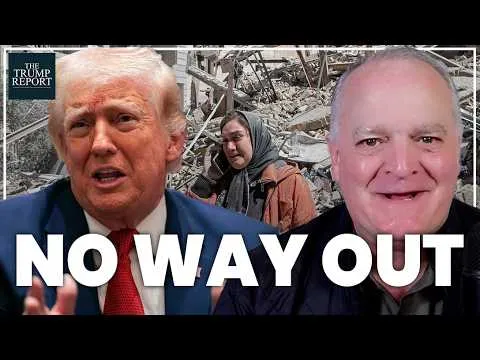
US Faces ‘Ugly Exit’ in Iran Amidst Confused Military Strategy
Recent statements from Donald Trump suggest the U.S. is in talks to end military operations in Iran, but the situation on the ground and the strategy appear deeply contradictory and unrealistic, according to former U.S. Army officer Lt. Col. Daniel Davis.
Trump’s pronouncements, often made via social media, have swung between suggesting negotiations with a “new and more reasonable regime” and threatening to “take the oil in Iran” or “seize Hog Island.” This inconsistency highlights a scattershot approach, lacking a clear basis in reality, Davis argues.
“You can’t compel them by words and force of personality to do what you want,” Davis stated bluntly. He pointed to a belief within Trump’s inner circle that a strategy successful in Venezuela – where a leader was replaced, leading to a more amenable government – could be replicated in Iran. However, Davis calls this idea “not even on the same planet” as the current situation.
Military Miscalculations and Unrealistic Goals
The core issue, Davis explained, is the U.S. military’s current strategy regarding the Strait of Hormuz. Iran has effectively used the closure of the strait as a powerful tool. The idea that the U.S. can simply force it open through military might is flawed.
“If we could have forced it open by force of arms, it would have already happened,” he noted. Allies have not offered ships for escort missions because they understand it would likely result in ships being sunk, not the strait being opened.
Furthermore, proposed ground operations, such as attacking locations like Hormuz Island or other inland targets, are deemed militarily unattainable with the current troop numbers. Even with an additional 10,000 troops, bringing the total to around 20,000, these forces are described as “a dot on a map” when facing multiple missions and vast geographical areas.
The Danger of Escalation
Attempting ground operations carries immense risk. Davis described the potential outcome of a failed insertion as turning a “disaster into catastrophe.” Helicopters, the likely insertion method, are highly vulnerable to even basic ground fire, like AK-47s, which can bring them down. He has witnessed such events firsthand during previous combat deployments.
Iran, aware of potential U.S. moves, is expected to have defenses prepared for any likely landing zones. Deception tactics might be employed by the U.S. to keep Iran guessing, but Iran is not considered naive and will likely anticipate moves.
The fundamental problem, Davis emphasized, is that these ground actions, even if partially successful, will not change the core dynamic of getting the Strait of Hormuz reopened. Some in the administration may believe taking targets will pressure the Iranian regime into submission, but this ignores past failures.
Historical Precedent Ignored
Davis drew parallels to previous military actions, pointing out that even assassinating leaders and destroying thousands of targets has not compelled Iran to change its course. Leaders are replaced, and key military assets like speedboats, drone boats, and submarines remain largely untouched. While missiles can be degraded, Iran has shown an ability to recover and replace them.
The current approach seems to be improvisational, a stark contrast to meticulously planned operations like Desert Storm or the 2003 invasion of Iraq. Those operations involved months of preparation, troop readiness, rehearsals, and complex logistical choreography. The current Iran strategy, however, appears to be piecemeal and reactive, lacking a solid foundation.
Political and Reputational Fallout
The political consequences of a failed military endeavor would be severe. Davis warned that if U.S. forces are forced to retreat or suffer significant casualties (captured or killed), the impression of America as the world’s greatest military power would be “permanently shattered.” This would erode respect from both allies and adversaries, leaving the U.S. in a worse position.
Domestically, increased opposition within Trump’s own party could emerge, especially if there are mass casualties. Supporters who might overlook discrepancies in rhetoric could waver when faced with the reality of coffins returning home.
The U.S. cannot militarily reopen the Strait of Hormuz; diplomacy is the only viable path. Davis believes that an attempt to force the strait open militarily would only result in more ships being shot down and burning.
An ‘Ugly Exit’ is Necessary
The only way to achieve a quick resolution, according to Davis, is to acknowledge a strategic loss and pursue a negotiated settlement. This would involve accepting that Iran now holds significant leverage over the strait, which it will not relinquish willingly. While such a deal would come at a “high price politically” and reputationally for Trump, attempting a military solution would likely make things far worse.
Davis expressed doubt that Trump would choose this path, given his personality and past decisions. He recalled a moment when Trump was reportedly offered a “golden bowl of amazingness” – a deal that would have been better than the Obama deal, including Iran agreeing to zero enrichment, proving no bomb, and allowing intrusive inspections. Trump was talked out of it, opting instead for military action.
Reports of considering actions like seizing reprocessed uranium are met with skepticism. Davis believes such operations are nearly impossible due to Iran’s likely dispersal and deep burial of such materials, coupled with heavily defended locations. Any attempt would likely result in immense expenditure of resources and potentially the loss of ground forces.
Parallels to Afghanistan’s Misrepresentation
Davis sees strong parallels between the current situation and his experiences in Afghanistan, where he famously blew the whistle on official misrepresentations of success. In both cases, he argues, military fundamentals are being ignored in favor of rhetoric. Public claims of victory and economic defeat of adversaries do not align with the reality on the ground.
The focus on the number of bombs dropped or missiles launched is misleading. What truly matters is the impact of these actions, which Davis suggests is minimal in compelling Iran to change its behavior. The current strategy, he concludes, is fundamentally flawed and risks a disastrous outcome for the United States.
Why This Matters
The analysis by Lt. Col. Daniel Davis presents a stark warning about the potential consequences of a poorly conceived military strategy in Iran. The implications extend beyond the immediate conflict, touching upon global economic stability, international reputation, and domestic political standing. If the U.S. cannot achieve its objectives without significant military and reputational damage, the long-term effects could be profound. The situation highlights the critical need for realistic strategic planning, clear objectives, and honest assessments of capabilities and risks in foreign policy decisions. The economic fallout from a prolonged closure of the Strait of Hormuz, impacting everything from fuel prices to grocery costs, underscores the interconnectedness of geopolitical events and daily life.
Historical Context and Background
The current tensions trace back to long-standing U.S.-Iran relations, marked by periods of hostility and diplomatic maneuvering. Iran’s strategic importance, particularly its control over the Strait of Hormuz – a vital global oil transit route – has made it a focal point for international policy. The U.S. has historically sought to counter Iran’s influence in the region, often through sanctions and military presence. Previous administrations have engaged in complex negotiations, including the Joint Comprehensive Plan of Action (JCPOA) concerning Iran’s nuclear program, which the Trump administration later withdrew from. The current situation appears to be a high-stakes gamble, with potentially severe repercussions if miscalculated.
Implications, Trends, and Future Outlook
The current trajectory suggests a potential for further escalation or a forced, “ugly exit” for U.S. forces. The economic strain on global markets, particularly for energy and shipping, is likely to intensify if the Strait of Hormuz remains closed. This could lead to increased pressure on leaders to find a resolution, potentially through diplomacy or through a costly military misadventure.
The trend of leaders relying on strong rhetoric and personality-driven diplomacy, rather than detailed strategic planning, is a concerning one. The disconnect between public pronouncements and military realities, as highlighted by Davis, risks leading to disastrous policy choices. The future outlook depends heavily on whether decision-makers prioritize pragmatic, negotiated solutions over the pursuit of unattainable military objectives. A failure to de-escalate could plunge the region into further conflict, with far-reaching global consequences.
Source: Trump can’t win the war in Iran. He must now make an ‘ugly exit’ | Lt Col Daniel Davis (YouTube)

Related Articles

Rubio Sparks NATO Debate After Iran Conflict
Senator Marco Rubio has sparked a debate on the future of NATO, calling for a U.S. re-evaluation of the alliance after the recent conflict with Iran. Critics argue Rubio's stance contradicts his past positions, while former diplomats defend NATO's historical support for the U.S. and express concern over the current state of American diplomacy.


Middle East Tensions Spark War Fears, Drive Gas Prices Skyward
Rising tensions in the Middle East, particularly concerning Iran and the Strait of Hormuz, have led to a significant increase in gas prices, with the national average hitting $4 a gallon. Defense officials have called the upcoming days "decisive" in the conflict, signaling potential escalation. The FBI also reports that a recent synagogue attack was inspired by Hezbollah, highlighting domestic security concerns.


Trump Pushes Europe Towards Gulf Conflict
Donald Trump is urging European allies, particularly the UK, to take a more active role in the Middle East, suggesting direct confrontation in the Strait of Hormuz. As the US faces military strain, Trump employs his unique 'weave' communication style, using diversions to manage public perception and diplomatic pressure. The article also contrasts British expatriate experiences in the US with those in Europe, noting surprising hospitality in America versus perceived negativity and resentment in some European cities.