President’s Ballroom Dreams Clash with American Hardship
President Trump's focus on building a new White House ballroom is criticized amidst economic hardship and controversial foreign policy decisions. Critics argue this highlights a disconnect between leadership priorities and the struggles of average Americans, impacting both domestic well-being and global standing.

President Trump’s Priorities Under Fire Amidst Economic Woes
The current political climate seems surreal, with President Trump reportedly focusing on building a new ballroom at the White House. This comes at a time when many Americans are struggling with economic difficulties. The video transcript highlights a deep disconnect between the administration’s perceived priorities and the everyday concerns of citizens.
Critics point to several economic factors impacting families. Tariffs, implemented by the Trump administration, are cited as a significant burden. Studies suggest these tariffs have cost the average American family about $1,000 annually, a substantial amount for households with limited emergency savings. This figure is projected to rise to $1,600 this year, adding further pressure.
Budget Cuts vs. War Spending
Adding to these concerns, the administration has reportedly cut healthcare funding, citing a lack of money and fiscal irresponsibility. However, the same administration is now considering sending $200 billion to the Pentagon to support ongoing military operations. This proposed spending on war, while healthcare faces cuts, strikes many as contradictory and deeply concerning.
The American people are suffering not only due to the war. We’ll get there in one second because Trump just screwed up badly this morning regarding the war. But they were already suffering due to the tariffs that Donald Trump placed.
During this period of economic strain, President Trump was reportedly seen on Air Force One, showcasing large photographs and plans for the new ballroom. The transcript describes him bragging about the ballroom’s features, including high-grade, bulletproof glass, while the nation faces significant economic challenges.
Political Rhetoric and Opposition
Beyond economic issues, the political rhetoric used by the President and his allies has also drawn sharp criticism. The transcript notes that President Trump has referred to Democrats as “terrorists.” This strong language is seen by some as a tactic to undermine political opposition and consolidate power, similar to efforts in redistricting or targeting specific organizations.
One segment of the transcript quotes a statement from Steven Miller, who described the Democratic Party as a “domestic extremist organization.” President Trump himself reportedly referred to Democrats as “sick individuals” and compared them to “gnats” that need to be dealt with. This kind of discourse, critics argue, is not only divisive but also dangerous.
Contrasting Actions and Rhetoric
The commentary contrasts this rhetoric with the actions of the Democratic Party, which, despite its own imperfections, is described as trying to prevent the U.S. from entering wars and seeking to limit the President’s power to impose tariffs. The author acknowledges that Democrats can be flawed, sometimes appearing weak or influenced by special interests, but emphasizes a significant difference between their actions and the President’s perceived priorities.
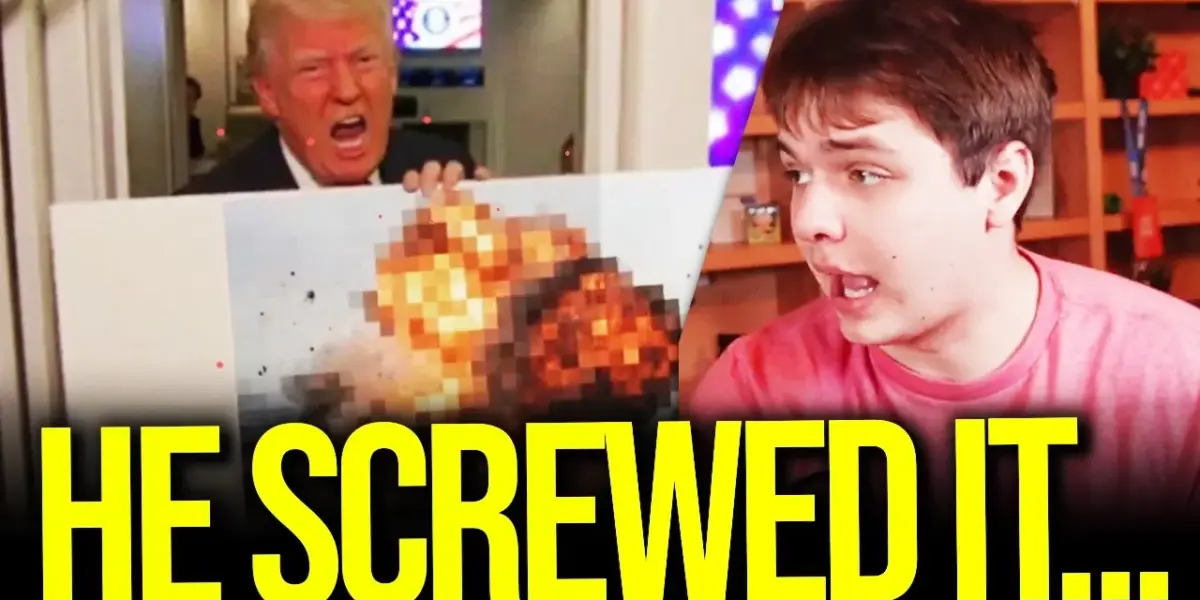
The transcript points to an instance where President Trump was asked about potential negotiations in Iran. While discussing the possibility of a deal, he was reportedly holding up a large board displaying his ballroom plans. This image is used to illustrate a perceived detachment from serious foreign policy discussions and a focus on personal projects.
He’s holding up his oversized board of the ballroom and talking about how we’re this close to a deal. He’s like a caricature of himself in the 80s.
Global Standing and Economic Impact
The analysis extends to the global stage, questioning the direction of U.S. foreign policy and its economic consequences. A specific example involves a Russian oil tanker heading to Cuba. While President Trump reportedly expressed indifference to this shipment, allowing Russia to profit and potentially gain influence, he had previously threatened tariffs on allies like Canada and Mexico for similar actions.
This inconsistency is seen as undermining American interests and strengthening adversaries. The transcript argues that Russia is becoming wealthier, enabling it to fund conflicts in Ukraine and support Iran, while the U.S. becomes poorer. This trend is viewed as contrary to the promise of making America “great again,” suggesting a future where Americans are worse off and enemies are stronger.
Fiscal Responsibility and Future Generations
The national debt is another major concern. The transcript notes that the U.S. has accumulated significant debt from past wars, with interest payments alone costing $1 trillion annually. Despite this, the administration is seeking additional funds for war and, paradoxically, for the construction of the President’s ballroom.
The funding for the ballroom itself is also controversial. It’s suggested that lawsuits against media and university organizations were settled with the condition that these entities contribute financially to the ballroom project. This practice is criticized as an authoritarian tactic that leverages legal battles for personal gain and burdens future generations.
His national approval rating right now is the lowest it’s been in either his first or second term. This is a new national poll done by the University of Massachusetts, Amherst. President Trump has a 33% approval rating, 62% disapproval on specific issues.
The piece concludes with a call to action, urging viewers to support a vision for a better America. It emphasizes the importance of working towards positive change and encourages engagement with the platform to build a community focused on these goals.
Why This Matters
This analysis highlights a critical tension in leadership: the balance between grand projects and the immediate needs of the populace. When a nation’s leader appears more focused on personal amenities, like a lavish ballroom, while citizens grapple with economic hardship, rising debt, and international instability, it raises fundamental questions about priorities and governance. The perceived disconnect between the President’s actions and the struggles of everyday Americans can erode public trust and create significant political division. Furthermore, foreign policy decisions that appear to benefit adversaries while weakening the U.S. have long-term implications for national security and economic stability. The rhetoric used by political leaders also matters deeply; labeling political opponents as “terrorists” can incite hostility and hinder constructive dialogue essential for a functioning democracy.
Historical Context and Trends
Throughout history, leaders have often undertaken large-scale building projects, sometimes as symbols of national pride or power. However, the context here is different. The criticism isn’t just about the project itself, but its timing and funding amidst war and economic distress. This echoes past debates about resource allocation during times of conflict or austerity. The use of strong, divisive language in politics is also not new, but its amplification through modern media channels raises concerns about its impact on political discourse and social cohesion. The trend of increasing national debt, particularly linked to military spending, is a long-standing issue that continues to challenge fiscal sustainability. The current situation reflects a broader debate about the role of the United States in global affairs and the economic policies that best serve its citizens.
Implications and Future Outlook
The implications of this perceived disconnect are far-reaching. It can lead to decreased public confidence in political institutions and increase political polarization. If citizens feel their leaders are out of touch with their struggles, it can fuel discontent and anti-establishment sentiment. On the global stage, inconsistent foreign policy and a focus on domestic projects over international stability can weaken alliances and embolden rivals. This could lead to a less secure and more volatile world order. Looking ahead, the focus on economic well-being, responsible fiscal management, and unifying political rhetoric will be crucial. The future will likely see continued debate over the balance between national security spending, domestic needs, and the ethical considerations of how public funds and political influence are used. The effectiveness of leadership in addressing these complex issues will shape the nation’s trajectory for years to come.
Source: Trump just screwed us over in ONE MOMENT (YouTube)

Related Articles
Trump’s World Order Collapse Sparks Global Chaos
Donald Trump's foreign policy decisions have shattered the post-WWII global security framework, leading to international distrust and economic instability. Allies question U.S. reliability as conflicts escalate and trade disputes arise, impacting global markets and national security.

Gulf Allies Urge Trump to Continue Iran Conflict
U.S. allies in the Persian Gulf are urging President Trump to intensify military action against Iran, believing Tehran has not been sufficiently weakened. The ongoing conflict raises concerns about regional stability and global energy prices, while questions linger about the administration's long-term strategy.

Trump’s Ego: Did War Games Warn of Iran Trap?
Military war games likely warned President Trump about the risks of confronting Iran, including potential control of key shipping lanes. The concern is that his ego and desire for a quick victory may have overridden these strategic warnings, potentially leading to an unfavorable outcome.