Gulf Allies Back US in Iran Standoff as Europe Falters
Key Gulf allies and Israel are strongly supporting US actions against Iran, contrasting with the hesitant stance of European nations. The US claims military success, but concerns remain about long-term strategic outcomes and the potential for rebuilding Iranian capabilities. The conflict also carries significant economic and geopolitical implications, signaling potential shifts in global alliances and messaging to major powers like China.

Gulf Allies Back US in Iran Standoff as Europe Falters
The United States is facing a critical moment in its standoff with Iran. While European allies are hesitant to fully support American efforts, key Gulf nations and Israel are firmly in Washington’s corner. This situation highlights a growing divergence in international priorities and a potential realignment of regional partnerships.
US Claims Success in Iran Campaign Amidst Media Skepticism
Despite reports suggesting otherwise, the US administration claims significant success in its military operations against Iran. According to the narrative presented, Iran’s naval and ballistic missile capabilities have been severely degraded. The regime is reportedly reconsidering a deal to halt uranium enrichment. However, some analysts express concern that the focus on military targets might not translate into strategic victory, recalling the ‘body count fallacy’ from the Vietnam War. The fear is that Iran’s strategy of ‘winning by not losing’ could prolong the conflict.
Europe’s Hesitation and the ‘Deadbeat Husband’ Analogy
A sharp contrast is drawn between the supportive Gulf states and the stance of European allies. The Economist, for instance, is cited as suggesting Iran is currently winning, a view dismissed as wishful thinking by supporters of the US campaign. European nations are described as unwilling to ‘pull their weight,’ benefiting from the mission to prevent a nuclear-armed Iran without contributing significantly. This reluctance is likened to a ‘deadbeat husband’ who offers little but demands much when needed. Former Assistant Secretary of State Mark Kimit noted that while the US has consistently supported Europe, the reverse is not always true, especially in the current Iran situation. He emphasized that Europe has more to lose from a nuclear Iran than the United States does, as the oil flowing through the Strait of Hormuz is primarily theirs.
Gulf States and Israel: Strong Support for US Action
In stark opposition to Europe, Saudi Arabia, the UAE, Bahrain, Qatar, and Israel have shown strong backing for the US strategy. Saudi Arabia reportedly urged the president to strike Iran and to continue until the job is done. The UAE has pledged troops if needed, and Israel’s cooperation is described as ‘indispensable.’ This support is rooted in Iran’s recent ballistic missile attacks on its Gulf neighbors. The strong ties between the US and these Gulf nations are further cemented by significant manufacturing investments totaling trillions of dollars made by Saudi Arabia, the UAE, and Qatar in the US.
NATO Alliance: A Mixed Assessment
The long-standing NATO alliance is acknowledged as historically successful. However, the current situation raises questions about burden-sharing. Retired Brigadier General Mark Kimit pointed out that while NATO has been effective for 75 years, complaints about member contributions have been a constant feature, even under President Trump’s pressure for increased spending. He believes European nations need to ‘try harder’ to meet their commitments.
Economic Implications: Oil Prices and Market Uncertainty
The conflict has created significant market uncertainty. Wall Street reportedly dislikes this prolonged period of unpredictability, leading to stock market losses. Everyday Americans feel the impact through higher gas prices. Oil prices have fluctuated, with some reports suggesting they have fallen below $100 a barrel. The correlation between oil prices and the stock market is noted, with expectations that a decrease in oil prices could calm the financial markets.
Veteran Community’s Perspective
Among the veteran community, opinions on the military’s involvement are varied. While some are understandably skeptical of government actions, many acknowledge the real threat posed by the Iranian regime and its past actions against Americans. There’s also a sentiment of pride, and perhaps a touch of vindication, among some veterans who recall Iran’s actions in Iraq. The younger generation is seen as more capable of distinguishing between just and unjust military aims.
China’s Role and Global Messaging
Beyond Iran, the US strategy is viewed as sending broader geopolitical messages. It’s suggested that the administration aims to force China to pay market rates for oil, moving away from ‘sweetheart deals’ with adversaries. This move is seen as a strategic way to impact China’s fragile economy. Furthermore, the actions are interpreted as a signal to China to stay out of Taiwan and to cease its influence in the Western Hemisphere. The conflict is framed not just as a fight over resources, but as a larger struggle for global order, with Western civilization positioned at the forefront.
Domestic Political Dynamics: Character vs. Policy
Domestically, the discussion touches on political character and its impact on policy. The controversial reaction of a former president to the death of Robert Mueller is analyzed as a potential double-edged sword: while offensive, it’s also seen as part of a willingness to fight without self-censorship, which can lead to the implementation of deeply held policy beliefs. This is contrasted with the perceived elitism of some Democratic figures who reportedly look down on working-class professions. The debate over character versus policy is also evident in primary elections, where candidates with questionable personal conduct but strong alignment with a particular movement face off against more traditional figures.
Future Scenarios and Diplomatic Off-Ramps
The path forward in Iran remains uncertain. While military objectives focus on degrading Iran’s nuclear, ballistic missile, and naval capabilities, concerns linger about the ability to achieve lasting strategic success without direct ground involvement. Some officials believe that while bombing targets is achievable, rebuilding programs like ballistic missiles could happen relatively quickly. The search for a diplomatic ‘off-ramp’ and new leadership within Iran is considered crucial. The overarching goal for many is to prevent Iran from becoming a nuclear-armed state, a prospect seen as destabilizing and a significant risk to global security.
Global Impact
This situation signifies a potential shift in global alliances, with a stronger alignment forming between the US and Gulf states, while traditional European partners show less commitment. The economic repercussions, particularly concerning oil prices and market stability, are felt worldwide. Furthermore, the actions taken in Iran are sending powerful signals to other global powers like China, influencing broader geopolitical strategies and the future international order.
Source: Europe’s refusal to help in Iran war; new midterm trouble for Dems?| Batya! Full Show 3/28 (YouTube)

Related Articles


Iran Conflict Threatens Global Chip Supply Chain
Recent attacks in the Middle East are disrupting the supply of helium, a key component in manufacturing semiconductors. This shortage, combined with rising energy costs, threatens the global chip supply chain, impacting everything from smartphones to AI technology.

US Strikes Ignite Global War Fears
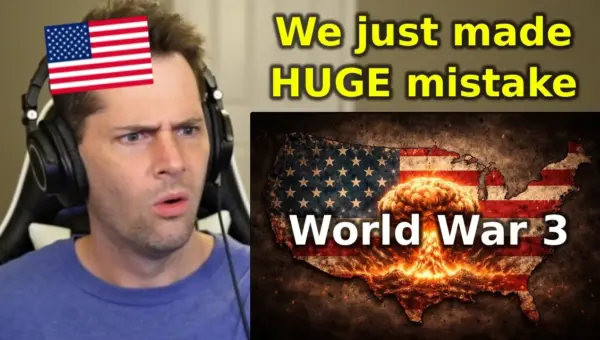
A recent video and its American reaction explore how US military actions in Iran have drawn over 20 countries into conflict, raising fears of a World War III. The analysis highlights a lack of awareness in the US about the global scale of the crisis and draws parallels to the lead-up to World War I.
Iran’s IRGC Faces Economic Ruin, Sparking Internal Revolt
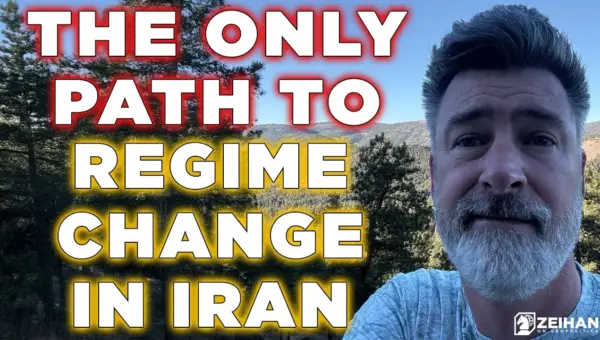
Iran's powerful Islamic Revolutionary Guard Corps (IRGC) faces a potential internal crisis as its economic foundations are targeted. Analysts believe crippling the IRGC's finances could spark an uprising from within, offering a path to regime change without a full military invasion. This strategy could reshape regional power and global economics.