Pentagon’s ‘Holy War’ Rhetoric Alarms Military Leaders
Pentagon Secretary Pete Hegseth's use of "holy war" rhetoric, including prayers for "overwhelming violence," is alarming military leaders and experts. Recent reforms have also drastically reduced the number of recognized religious codes for military chaplains, raising concerns about support for diverse service members.

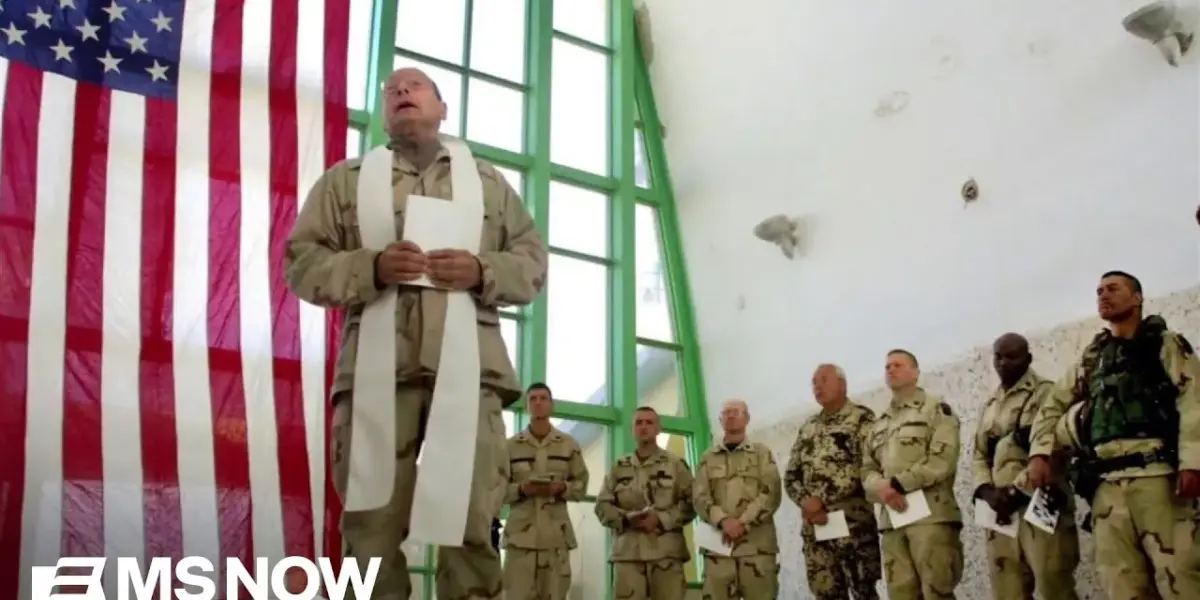
Hegseth’s Calls for ‘Overwhelming Violence’ Spark Controversy
Secretary Pete Hegseth is reportedly using language in Pentagon prayer services that alarms military leaders, legal experts, and veterans. During a recent monthly prayer service, Hegseth invoked Old Testament themes, praying for “overwhelming violence of action against those who deserve no mercy” and asking God to “break the teeth of the ungodly.” This rhetoric, drawing parallels to a “holy war” or crusade rather than a military operation, is seen by critics as a dangerous blurring of church and state.
The prayer service itself is a departure from military tradition. Hegseth has also invited speakers with controversial views to preach at the Pentagon. One such pastor has reportedly stated that women should not have the right to vote and suggested that slave ownership in the South was not inherently immoral for Christians. These actions raise concerns about the influence of extremist Christian ideology within the military.
Chaplaincy Reforms Reduce Religious Diversity Support
Beyond speeches, Hegseth has implemented significant changes to the military chaplaincy, the clergy who provide spiritual and emotional support to service members. Previously, there were 200 religious codes designed to ensure that individuals of various faiths, including Jewish, Muslim, and Hindu soldiers, sailors, and airmen, had access to chaplains who understood their beliefs. Hegseth has drastically reduced this list to just 31.
When asked for clarification on which 31 religious codes would be recognized, the Department of Defense could not provide a definitive answer. They referred back to Hegseth’s original statement, which claimed many of the reduced codes were rarely used. While approximately 70 percent of active-duty military personnel identify as Christian, hundreds of thousands of Americans from other religious backgrounds, including Jewish, Muslim, Hindu, atheist, and agnostic individuals, serve in uniform. These service members have sworn to defend a nation founded on religious freedom, and the cuts to chaplaincy services raise questions about their spiritual support.
“When your leader believes that you have a divine reason for waging such conflict, that there is a cosmic and transcendent sense to what you’re up to, that you have the side of the sacred with you well there’s a permission structure to do anything to win.”
Expert Analysis: A New Strain of American Evangelicalism
Brad Onishi, co-host of the Straight White American Jesus podcast and author of the upcoming book “American Caesar,” expressed concern over Hegseth’s language. Onishi noted that Hegseth’s use of Psalm 144, an “imprecatory psalm” traditionally used to call down vengeance, is not in line with the teachings of Jesus. He described Hegseth’s rhetoric as part of a “new strain of American evangelicalism that openly calls for holy war.”
Onishi explained that while past leaders have invoked faith, the current approach is different. He pointed to the specific use of phrases like “in the name of Jesus Christ,” which can exclude those not adhering to that particular interpretation of faith. The reduction of chaplaincy codes, he argued, sends a message to service members that their religion might not be considered “real” by the institution, potentially alienating those who serve and sacrifice for the country.
Concerns Over Divine Permission for Military Actions
The idea of a divinely sanctioned war, according to Onishi, creates a dangerous “permission structure” for military actions. If leaders believe they have God on their side, it could lead to a disregard for the consequences of conflict. He suggested that actions like accidentally bombing a girls’ school might be rationalized as necessary for a divine victory.
This perspective contrasts sharply with the traditional understanding of faith in public life and military service. While prayer and faith have always been present, the explicit calls for vengeance and the narrowing of religious support within the military are seen as significant shifts.
Guardrails Failing to Address the Moment
Onishi also raised concerns about societal and institutional guardrails failing to prevent these developments. He cited Hegseth’s own appointment as a symptom of this failure, suggesting that individuals who might hinder diversity and inclusion efforts are being placed in positions of power. The Senate’s approval of Hegseth’s leadership is seen as a critical moment where these guardrails were bypassed, leading to the current controversial practices within the Department of Defense.
The lack of vocal opposition from Congress and the slow response from the courts further highlight these concerns. The situation at the Pentagon underscores a broader debate about the role of religion in public institutions and the protection of religious freedom for all Americans, especially those serving in uniform.
Source: GOD OF WAR: How Pete Hegseth is waging a holy war (YouTube)

Related Articles
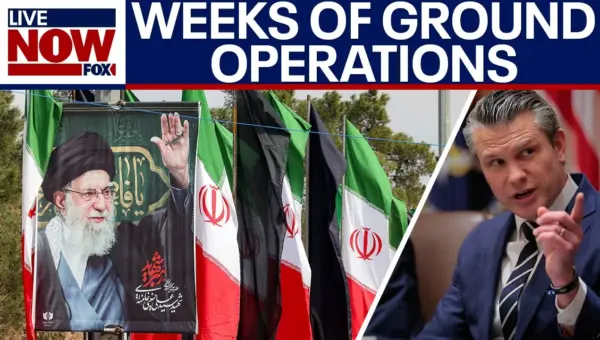
Pentagon Plans Weeks of Iran Ground Ops Amid Escalating Conflict
The Pentagon is reportedly preparing for weeks of ground operations in Iran, signaling a potentially dangerous escalation. This comes as missile defenses near Jerusalem are being scrutinized after two missiles penetrated. The conflict is widening into a regional war, involving various actors and raising concerns about global economic stability.

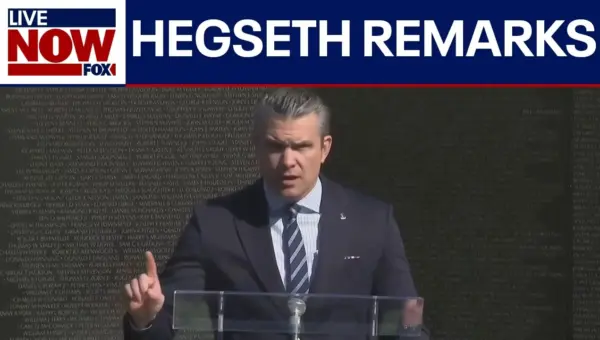
Vietnam Vets Honored: ‘Always Remember’ Call at Memorial
Vietnam veterans were honored at a recent ceremony in Washington D.C., with speakers emphasizing the need to "always remember" their courage and sacrifice. Secretaries Doug Collins and Pete Hegseth highlighted the Vietnam generation's lasting impact on veterans' care and urged continued support for all service members. The event focused on lessons learned and the importance of prioritizing veterans.
US Readies Ground Raids on Iran Amid Tensions
The Pentagon is reportedly preparing for possible ground raids in Iran, not a full-scale invasion, according to The Washington Post. These operations could focus on key areas like the Strait of Hormuz. It remains unclear if President Trump has approved these plans, though the White House states he has options.