Trump Sees Iran Deal as War’s Root; US Boosts Mideast Troops
Amid rising tensions, former President Trump suggested Iran seeks a deal while the U.S. has significantly boosted its military presence in the Middle East. Experts believe Iran views the conflict as a long-standing war, with recent events prompting a strategic reassessment by both nations.

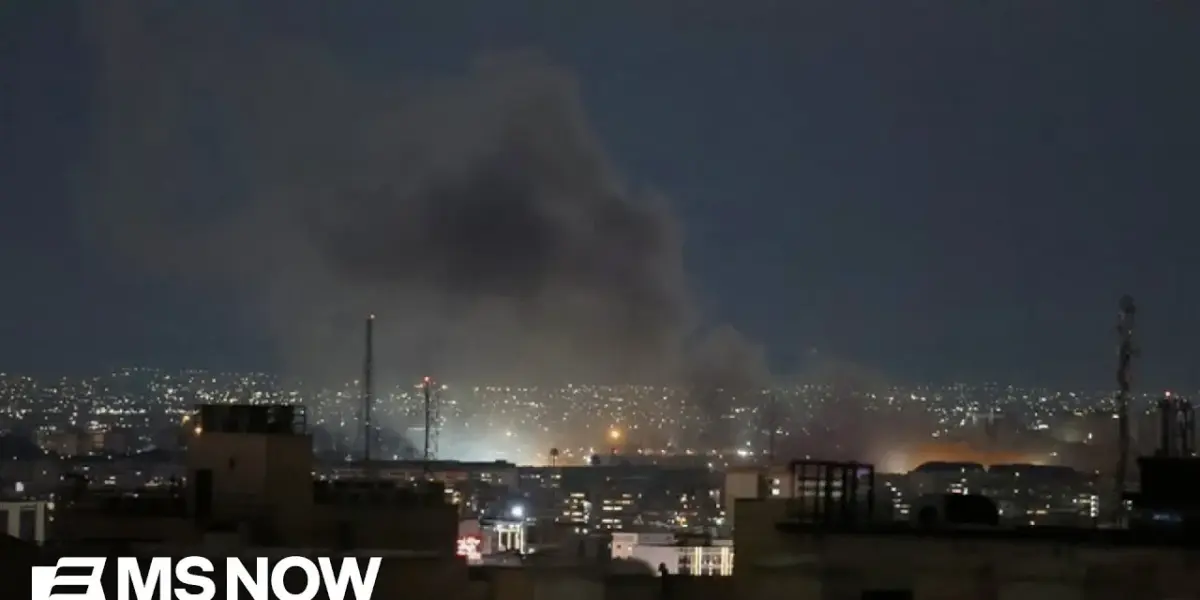
Trump Sees Iran Deal as War’s Root; US Boosts Mideast Troops
Former President Donald Trump suggested Iran is eager for a deal amid escalating tensions in the Middle East, while the U.S. significantly increased its military presence in the region. Trump stated in an interview that Iran “wants to do one very badly,” adding that “anybody wants a deal if you are getting decimated.” He also indicated the U.S. could take control of the Strait of Hormuz, saying, “Yeah, sure, it’s already happening.” This comes as reports indicate a substantial deployment of U.S. Marines and sailors to the Middle East, bringing the total American troop count in the region to over 50,000, an increase of 10,000 above usual levels.
Pentagon Prepares for Ground Operations
The Pentagon is reportedly preparing for potential ground operations inside Iran, according to The Washington Post. Officials suggest that any such operation would likely not be a full-scale invasion. Instead, it could involve targeted raids carried out by a mix of special operations forces and conventional infantry. However, it’s noted that President Trump has not made any final decisions regarding these potential actions.
Expert: Iran Views Conflict as Long-Standing
Kian Tajbakhsh, a professor of international relations at NYU and Columbia University, and a former political prisoner in Iran, offered a deeper perspective on the conflict. He reframed the current situation not as the U.S. and Israel starting a war with Iran, but as Iran responding to a war it began in 1979. “I think they are responding to a war that Iran started 47 years ago in 1979,” Tajbakhsh stated.
“I was up close and personal with a lot of the IRGC officers over many years and hours of interrogation. One of them told me something very telling. He said, ‘You have to understand that the way we look at the world… we view that we are at war.'”
Tajbakhsh, who spent over a year imprisoned in Iran before being released under the 2015 nuclear deal, shared an anecdote from his time in prison. An officer told him that Iran viewed its relationship with the U.S. and Israel as a form of cold war, but a war nonetheless. This perspective, he believes, has been consistent for decades.
October 7th as a Turning Point
According to Tajbakhsh, the events of October 7th, 2023, marked a significant turning point in Middle East geopolitics, changing the rules of engagement in two key ways. First, it exposed the high cost of ignoring Iran’s proxies and ballistic missiles. The 2015 Iran nuclear deal, while instrumental in his own release, overlooked these critical threats. October 7th demonstrated Iran’s capacity to create regional chaos, with the Gaza war seen as a continuation of this.
Second, the attacks led Iranian officials to openly discuss pursuing nuclear weapons, feeling vulnerable after perceived Israeli actions. This shift in calculus, coupled with Iran’s pursuit of nuclear capabilities, ballistic missiles, and regional instability, prompted the U.S. to reassess its national interests. Tajbakhsh believes this led to the realization that the U.S. must secure its interests by keeping the Strait of Hormuz open, curbing Iran’s nuclear ambitions, and addressing its proxy activities. This, he argued, provides a strategic logic for the deployment of ground troops, aiming to weaken Iran and protect regional allies.
Military Experts Raise Concerns Over Strategy
David Rodin, a senior national security reporter, highlighted concerns from military experts regarding the current strategy. He noted that plans being drawn up at the Pentagon suggest operations could last for weeks or even months, potentially longer than initially indicated. Military experts have told Rodin that seizing control of the Strait of Hormuz, a key objective, would require a much larger force than the approximately 2,500 Marines currently deployed.
“Military experts told me it’s a disaster waiting to happen if it’s just that you take. The Marines alone, 2,500 of them are part of this Marine Expeditionary Unit that’s there now. That’s not enough troops to sort of seize the Straits of Hormuz,” Rodin reported. He added that while taking the strait might be possible, the troops would then be vulnerable to rocket and missile attacks from Iran, a scenario that deeply concerns military officials.
Iran’s Geography and ‘Mosaic Doctrine’ Complicate Plans
The rugged terrain of Iran, often described as a fortress of mountains, presents significant challenges for any potential ground operations. Iran is a vast country, larger than Spain, Italy, and France combined, with a population of 92 million. This geography, particularly the mountainous regions in the west and north, could complicate U.S. military efforts.
Tajbakhsh also discussed Iran’s “Mosaic Doctrine,” a strategy developed in the 2000s by the head of the IRGC. This doctrine decentralizes military decision-making, granting significant autonomy to commanders in Iran’s 31 provinces. “The Mosaic strategy, I think, has been activated,” Tajbakhsh suggested, pointing to the widespread firing of ballistic missiles and conflicting messages from Iranian leadership as evidence.
While this decentralization offers short-term resilience and the ability to act quickly, Tajbakhsh believes it could degrade morale and communication within the IRGC over time. For U.S. forces considering ground operations, the most immediate geographical concern is the Persian Gulf. The southern coast of Iran is long, and key oil export facilities like Kharg Island are deep within the gulf, exposing U.S. ships to potential Iranian fire.
Looking Ahead
As the U.S. increases its military posture in the Middle East, the strategic goals and the feasibility of ground operations remain critical questions. The effectiveness of Iran’s decentralized command structure and the complex geography of the region will undoubtedly play a significant role in shaping any future military actions. International attention will remain focused on diplomatic efforts and the potential for further escalation.
Source: Former Iranian political prisoner speaks out amid U.S.-Iran war (YouTube)

Related Articles

Iran Conflict Escalates: US Weighs Ground War, Diplomatic Off-Ramps Narrow
Concerns are mounting over potential U.S. ground operations in Iran, with lawmakers questioning the lack of Congressional approval and the risk of a protracted conflict. Iran claims it can still inflict pain despite strikes, while diplomatic options appear increasingly narrow.


US Border Crisis Stalls, Iran Tensions Flare Amidst Stalemate
U.S. lawmakers are on recess, leaving TSA workers unpaid amidst a DHS funding stalemate. Simultaneously, tensions with Iran are rising, with reports of potential U.S. ground operations clashing with diplomatic talks.


Trump’s Mideast Gamble Fuels Global Oil Crisis
Escalating U.S.-Iran tensions have triggered a global oil crisis, sending prices soaring and forcing nations to ration fuel. Iran's oil revenue is up despite battlefield pressure, while storage limits loom for producers. This instability threatens widespread economic disruption and highlights the human cost of conflict.