Jimmy O. Yang Calls US Math Skills a ‘Joke’
Comedian Jimmy O. Yang shared his thoughts on American math education, calling it a "joke" compared to his experience in Hong Kong. He recounted being placed in advanced classes in Asia at a young age, only to find 8th-grade algebra in the U.S. surprisingly easy.

Jimmy O. Yang Calls US Math Skills a ‘Joke’
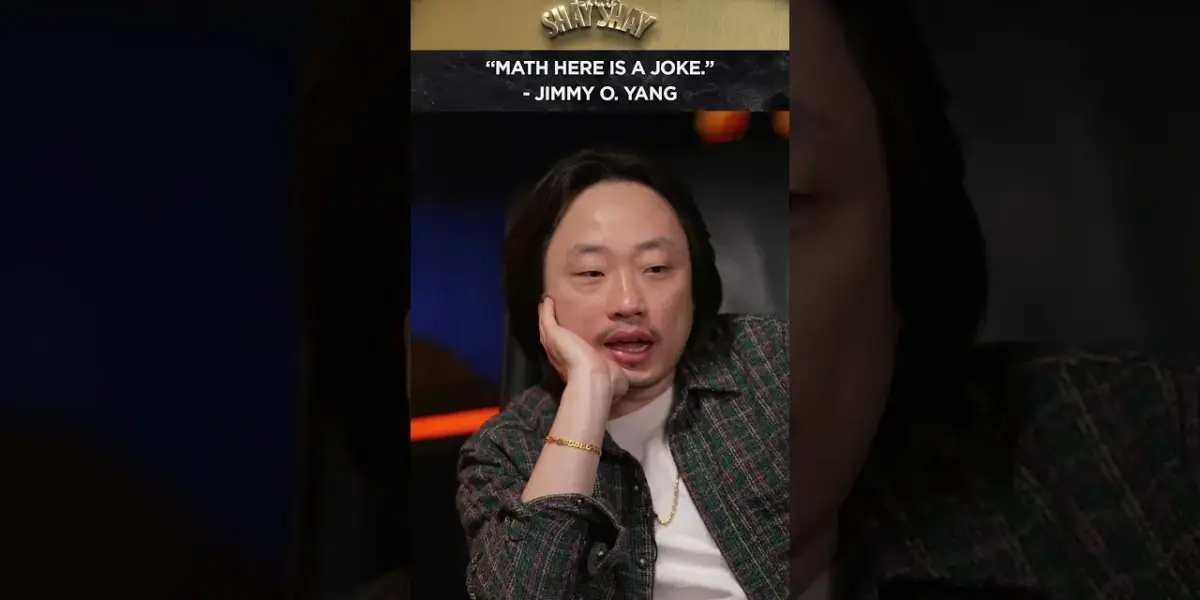
Comedian Jimmy O. Yang recently shared a hilarious observation about the difference in math education he experienced growing up in Hong Kong compared to the United States. He boldly stated, “Math here is a joke. Okay?” Yang, known for his roles in “Crazy Rich Asians” and “Silicon Valley,” described his early math education in Hong Kong as far more advanced than what he encountered when he moved to the U.S. in the 8th grade.
“People are like, Asian people are good at math. No, Americans are just horrible at math,” Yang explained on the podcast “Club Shay Shay.” He recalled being in Hong Kong around ages 12 or 13 and already studying geometry and algebra. This early exposure to complex topics set the stage for a stark contrast when he arrived in the American school system.
Upon arriving in the U.S., Yang found himself in 8th grade where students were still learning basic math. His father, noticing this discrepancy, spoke with the school principal to see if Yang could be placed in a more advanced program. The principal, however, seemed to think he had offered Yang the best available option.
“Can you put him in whatever the top, yeah, magnet class is?” Yang’s father asked the principal. The principal responded, “Okay, our best class was algebra. Have you learned that?” This question led to a moment of comedic deception from the young Yang.
Yang admitted he told the principal he had never learned algebra, but then added, “I learned it two years ago.” He found the material incredibly easy, stating, “I was just… it was so easy. It’s just Come on.” This experience highlights a significant difference in curriculum pacing and expectations between the two educational systems, according to Yang.
The comedian’s remarks tap into a common stereotype about Asian people and math proficiency. However, Yang reframes this by suggesting that the perceived difference isn’t about innate ability but rather about the level of instruction received at a young age. His story suggests that the U.S. educational system, at least in his experience, might not be challenging its students enough in foundational math subjects during crucial developmental years.
This comparison is more than just a funny anecdote; it touches on broader discussions about educational standards and international competitiveness. Many wonder if American students are adequately prepared for higher education and careers in STEM fields when compared to their peers in other parts of the world. Yang’s personal story provides a relatable, albeit humorous, perspective on this complex issue.
While Yang’s experience is specific to his time and place, it resonates with many who have observed similar disparities. His candidness offers a lighthearted yet pointed critique of a system he found lacking in rigor. The implication is clear: the gap in math education could be much wider than many realize, and that has significant consequences for students aiming for success in an increasingly technical world.
The comedian’s journey from advanced math in Asia to finding U.S. algebra lessons basic underscores the importance of curriculum alignment and challenging students appropriately. It prompts a question: are we setting our students up for success, or are we holding them back by not pushing them hard enough? Yang’s joke about math being a “joke” in the U.S. might just contain a kernel of truth that educators and parents should consider.
This discussion also brings to mind the pressure many Asian American students face to excel in math, a stereotype Yang himself acknowledges. His personal story, however, flips the narrative, suggesting that the stereotype is less about inherent talent and more about a system that, in his view, fails to adequately challenge students early on. It’s a perspective that invites further conversation about how we teach and what we expect from our young learners.
The takeaway from Yang’s comments is not to disparage American students but to question the educational structures that may be underestimating their potential. His experience in 8th grade algebra, which he found “so easy” after having already learned it years prior, serves as a potent example. It’s a reminder that early foundational skills are critical, and ensuring students are appropriately challenged from the start can make a significant difference in their academic journey and future opportunities.
“Math here is a joke. Okay? Like I I wasn’t in any genius classes. Like people are like Asian people are good at math. No, Americans are just horrible at math.” – Jimmy O. Yang
After sharing his thoughts on math education, Yang briefly mentioned PrizePicks, a daily fantasy sports platform. He noted the ease of getting a $50 bonus after playing his first $5 lineup, adding a bit of lighthearted commentary on his own winning streak or accurate predictions. This brief mention of PrizePicks serves as a small, humorous aside in his broader commentary on education.
Source: "Math here is a joke." – Jimmy O. Yang I CLUB SHAY SHAY (YouTube)

Related Articles


Jimmy O. Yang Blasts “Small Dick” Stereotype
Comedian Jimmy O. Yang tackles persistent Asian stereotypes, Hollywood casting, and the evolution of comedy. He also shares insights into his parents' marriage and his innovative approach to releasing his own comedy special.


Iranian-American Comedian Uses Humor to Bridge Divides
Iranian-American comedian Max Amini is using his sold-out shows and growing platform to foster understanding amidst the ongoing war with Iran. He recently made history headlining Madison Square Garden, where he broke his usual silence on politics to address the protests within Iran. Amini aims to bridge cultural divides and challenge misconceptions about his heritage through humor and authentic storytelling.


Jimmy O. Yang Cries After Meeting Hero Dave Chappelle
Comedian Jimmy O. Yang shared a deeply emotional story about meeting his hero, Dave Chappelle, which left him in tears. He also discussed his new Hong Kong-based comedy special, 'Finally Home,' its theatrical release, and the importance of representation in comedy.