Aston Martin Valhalla: Supercar Performance, Hypercar Looks?
The Aston Martin Valhalla boasts hypercar looks and a potent hybrid powertrain, but does it truly live up to the title? While its design and performance are staggering, practicalities and launch control nuances blur the lines between supercar and hypercar.

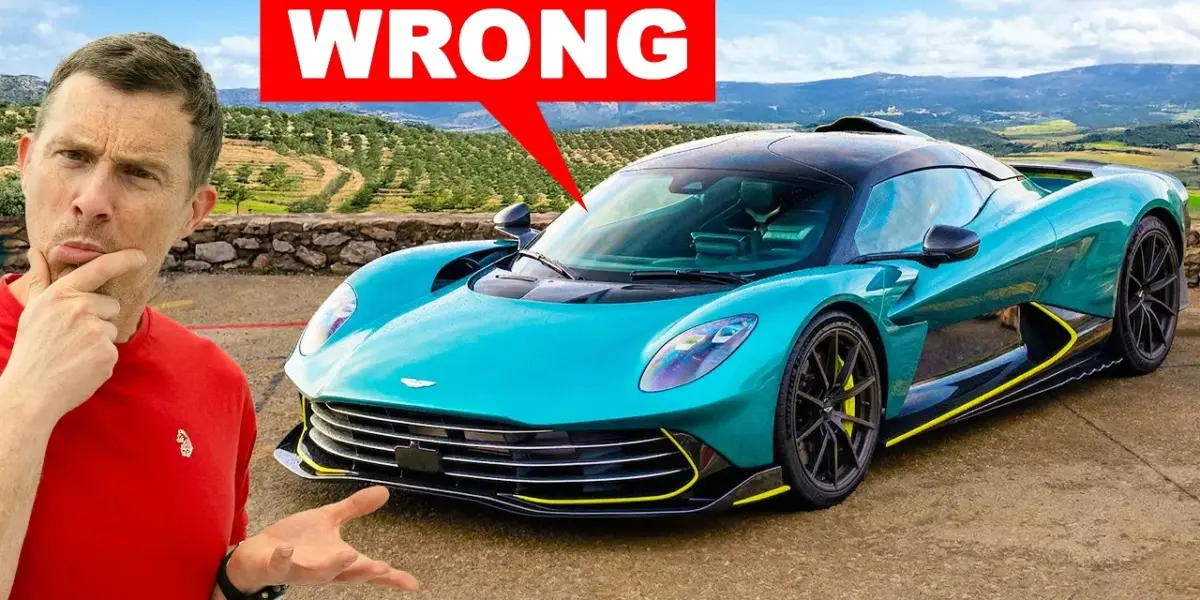
Aston Martin Valhalla: A Hypercar in Disguise?
The Aston Martin Valhalla aims for hypercar status, blending extreme looks with serious power. But does it truly reach that elite level, or is it a very fast supercar? After a day of track driving and road cruising, the lines begin to blur, leaving us to ponder its true identity.
Design That Screams Hypercar
From the moment you see it, the Valhalla makes a bold statement. Its aggressive lines, massive aerodynamic wings, and intricate strakes are pure hypercar. You can see the suspension components and massive cooling fans working hard, even when the car is just sitting still. The large air intakes feeding the engine and the quad exhaust pipes exiting through the rear diffuser all scream ‘exotic’. Aston Martin has packed so much aerodynamic tech into this car, inspired by its Valkyrie hypercar sibling, that it generates an incredible 600 kg of downforce at just 50 mph. This isn’t just for show; it’s functional art that defines its hypercar looks.
Powertrain: Hybrid Powerhouse
Underneath its stunning bodywork lies a complex hybrid powertrain. At its heart is a 4.0-liter twin-turbo V8 engine, derived from AMG but significantly upgraded by Aston Martin. It features a flat-plane crank, a design choice usually found in race cars for better throttle response and a more exotic sound. This V8 alone produces a massive 830 horsepower and 870 Nm of torque. But that’s not all. Aston Martin has added three electric motors: one integrated into the 8-speed dual-clutch automatic gearbox and one on each front wheel. This setup brings the total system output to a staggering 1,080 horsepower and 1,000 Nm of torque. This electric power also enables advanced torque vectoring, allowing the car to precisely control power to each wheel for incredible agility.
Performance: Almost There, But Not Quite
The Valhalla’s performance figures are undeniably impressive. Aston Martin claims a 0-60 mph time of just 2.5 seconds. However, during testing, the car struggled to achieve its claimed launch control time. Without the sophisticated ‘race start’ system engaging properly, the best time achieved was a still-blistering 2.99 seconds. While this is incredibly quick, it falls short of true hypercar benchmarks. On the track, especially in wet conditions, the Valhalla proved to be a capable machine. The advanced aerodynamics and hybrid system work together to keep it planted, though the car’s electronics sometimes limit full power in ‘Race’ mode to ensure sustained performance during longer track sessions. This decision, while logical for endurance, might disappoint drivers expecting maximum attack all the time.
Interior: A Blend of Luxury and Function
Inside, the Valhalla continues its blend of high-performance and luxury. The carbon fiber bucket seats are supportive and feel exquisite, holding you firmly in place. The extensive use of carbon fiber throughout the cabin gives it a decidedly exotic feel. While the infotainment screen graphics might not be class-leading, many functions are controlled by physical buttons, which is a welcome touch in a car like this. The low dashboard design provides excellent forward visibility, making it easier to place the car on the road. However, practicality is not its strong suit. Storage is extremely limited, with only small pockets and a wireless charging pad. There’s no glove box, and the door bins are tiny. You’ll be fighting over the single, not-so-secure cup holder. This car is clearly designed for spirited drives, not long road trips.
Value and Target Buyer
The Aston Martin Valhalla is positioned at the very top of the automotive pyramid. While pricing details were not fully disclosed in the original transcript, comparable hypercars often start in the $1 million range. This car is for the discerning enthusiast who wants extreme performance, breathtaking design, and the prestige of the Aston Martin badge, but perhaps with a slightly more usable character than the track-focused Valkyrie. It’s for someone who appreciates cutting-edge technology and is willing to make compromises on practicality for the sake of exhilaration. Compared to rivals like the Ferrari SF90 Stradale or Lamborghini Revuelto, the Valhalla offers a unique blend of British luxury and aggressive performance. It aims to be a hypercar that you can actually drive and enjoy more regularly, without the extreme fragility of some of its competitors.
Verdict: A Glorious Grey Area
So, is the Aston Martin Valhalla a supercar or a hypercar? It’s a question that sparks debate, and honestly, the lines are incredibly blurred. Its design, powertrain, and performance figures place it firmly in hypercar territory. The advanced aerodynamics, hybrid system, and staggering power output are undeniable. However, the slight shortfall in launch control performance and the interior’s limited practicality nudge it towards the upper echelon of supercars. On the road, it feels more accessible and less intimidating than some pure hypercars, offering a comfortable ride for its class and excellent driver feedback. It might not have the raw, visceral sound of some rivals, but its overall driving experience is undeniably special. Ultimately, the Valhalla sits in a fascinating grey area, offering a hypercar experience with a touch more everyday usability. It’s a car that will thrill its owners and turn heads wherever it goes, whether you call it a supercar or a hypercar.
Source: Aston Martin is lying about this car (YouTube)

Related Articles

Aston Martin Valhalla: A Million-Dollar Masterpiece?
The Aston Martin Valhalla, a 1,064-horsepower hybrid hypercar, delivers a stunning blend of performance and luxury. We tested its exhilarating capabilities on both road and track, finding it to be a beautifully engineered machine that largely justifies its seven-figure price tag.


Bugatti Divo vs. Koenigsegg Jesko: The Ultimate Hypercar Drag Race Unfolds
In a chaotic yet thrilling two-day event in the Middle East, the Bugatti Chiron Super Sport faced off against the Koenigsegg Jesko Attack in a highly anticipated rematch, with the Jesko ultimately claiming victory. The day also featured a host of other hypercar battles, including a surprising win for an electric Xiai SU7 Ultra against a Ferrari SF90 XX.

Maserati MC20 GT2 Stradale: Track Ready, But Does It Deliver?
The Maserati MC20 GT2 Stradale aims to be a track-ready supercar, boasting aerodynamic upgrades and sharper suspension. While it offers improved track capability, it struggles with everyday usability due to its race-focused interior and compromises on driver engagement.