Home Prices Stall as Buyers Wait for Bigger Drops
Zillow's revised forecast points to a national housing market slowdown, with flat to declining prices expected in many U.S. cities. Persistently low buyer demand, driven by affordability issues and rising mortgage rates, is creating a significant disconnect between seller expectations and buyer capacity. This could lead to further price drops in overvalued markets.


Home Prices Stall as Buyers Wait for Bigger Drops
The U.S. housing market is showing signs of a slowdown, with major real estate firms like Zillow now predicting flat to declining home values in many areas. Zillow recently lowered its 2026 housing market forecast. Instead of expecting a 1.9% price increase, they now predict only a 0.5% rise nationally. This change suggests a significant shift from previous optimistic outlooks.
Several factors are contributing to this cooling market. A primary concern is the persistently low demand from potential buyers. The number of homes going under contract in early 2026 is at a record low. Additionally, housing demand indexes are also near historic lows, showing a clear lack of buyer interest.
Markets Facing Potential Price Declines
Zillow’s updated forecast identifies several major cities where home prices might fall over the next year. These include Dallas, Houston, Washington D.C., San Francisco, Seattle, Denver, and San Antonio. This outlook contrasts with the rapid price growth seen in recent years.
On the ground, some real estate professionals observe even greater potential for price drops. They point to an increase in listings with significant price cuts and sellers accepting losses. For example, a 3-bedroom, 2-bathroom home in a desirable area south of Nashville, Tennessee, listed for $434,000, has been on the market for 120 days. The owner bought it for around $430,000 in 2022, meaning there has been no appreciation in value over two years. Tools analyzing the local market suggest a more conservative offer of $383,000, significantly below the asking price.
Rising Interest Rates and Seller Expectations
A key issue is the disconnect between what sellers expect and what buyers can afford. With current 30-year fixed mortgage rates around 6.7%, up from a recent low of 5.9%, monthly payments are higher. This rise is partly due to concerns about inflation and increased gas prices, which affect bond yields.
For many sellers who bought homes in recent years with lower mortgage rates, their monthly payments are much lower than what a new buyer would face. For instance, a seller might have a $2,600 monthly payment on a home, while a new buyer purchasing at current prices and rates could face a $5,700 monthly payment. This gap makes it difficult for buyers to enter the market and for sellers to achieve their desired sale prices.
This situation often leads to sellers holding onto unrealistic price expectations. Many sellers still believe their homes are worth what they were a few years ago. However, with demand so low, they may be forced to accept lower offers. Some may even consider renting out their properties instead of selling at a loss, especially if they can still generate positive cash flow.
Buyer Sentiment and Affordability Crisis
Buyer sentiment surveys reveal a strong hesitancy to purchase homes. In a recent poll of potential buyers, only 8% were certain about buying in 2026. Many more indicated they would only consider buying if prices dropped significantly, with 42% stating they would purchase if prices fell by 20% to 40%.
This indicates a major affordability problem. Home prices, when adjusted for inflation, are in what some analysts describe as the largest bubble in 130 years, even surpassing the 2006 bubble. While mortgage rates are considered somewhat normal, the high prices make purchasing a home out of reach for many.
Forecasting Future Market Trends
While Zillow forecasts a modest national price increase of 0.5% by March 2027, other analysts predict an even flatter market, with national prices rising only 0.2% over the next 12 months. However, these national averages can be misleading.
A flat national market means that some regions could experience price declines of up to 10%. In certain individual cases, prices could drop by 30% to 40% before buyers return in significant numbers. These projections are based on analyzing market trends, days on market, price cuts, and recent appreciation.
Regional Variations and Seller Strategies
The housing market is not uniform across the country. Some areas, like Williamson County, Tennessee, south of Nashville, are identified as highly overvalued. These markets may be more susceptible to larger price corrections.
For sellers, understanding the local market conditions is crucial. Pricing a home correctly from the start is essential to avoid lengthy market times and significant price reductions. Sellers with lower mortgage rates might feel secure, but as more homeowners face higher rates, the market pressure to adjust prices could increase.
The Disconnect Explained
The core issue remains the wide gap between the cost for existing homeowners and the cost for new buyers. This affordability gap is suppressing demand. Until prices adjust significantly to reflect the current economic realities and buyer capacity, the housing market is likely to remain sluggish.
Tools that analyze listing data, market comparables, and local trends can help both buyers and sellers make more informed decisions. For buyers, these tools can identify potential deals. For sellers, they can help set realistic price expectations to attract buyers in a challenging market.
Source: U.S. Housing Market CANCELLED. (Zillow cuts forecast) (YouTube)

Related Articles

Builders Slash Prices, Signaling Market Shift
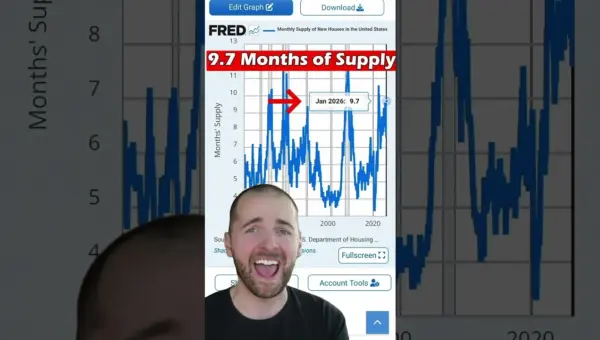
Major home builder Lennar has cut prices by 24% due to a significant buildup of unsold inventory, signaling a market correction. With a 9.7-month supply of homes, builders are offering deep discounts and mortgage incentives, especially in oversupplied regions. Buyers may find new opportunities, but the extent of future price drops remains uncertain.


Denver Housing Market Faces Steep Drop
Denver's housing market is facing a significant downturn, with home sales at a 10-year low and inventory surging. Rising prices have eroded affordability, prompting an exodus of residents. Experts predict further price drops, marking a potential major correction for the city.


Home Affordability Crisis: Buyers Demand Falls
The typical American household needs $109,000 to afford a home, but only earns $85,000, creating a major affordability crisis. This demand slowdown echoes past market downturns and presents challenges for buyers and opportunities for investors.