Iran Conflict Timeline Shifts as War Plans Unravel
Gas prices are up due to Middle East tensions, but officials suggest it's temporary. However, the projected timeline for conflict resolution has shifted, raising questions about 'mission creep' and the potential for 'mission inversion' where fixing original mistakes becomes the new goal.


Iran Conflict Timeline Shifts as War Plans Unravel
Gas prices have seen a noticeable jump lately. This rise is directly linked to the events unfolding in the Middle East. However, there’s a strong suggestion that this increase is just a temporary blip. The belief is that the current conflict is short-lived. Officials have stated that the intention is not to remain in Iran for an extended period, like a year or two. The focus is on completing the task quickly and then withdrawing.
The narrative surrounding the potential duration of this engagement has shifted quite rapidly. Initial discussions pointed to a conflict lasting between four to six weeks. This timeline has since been extended, with some now suggesting a maximum of one to two years. This changing timeline raises questions. It suggests an awareness that prolonged military actions are generally unpopular with the public. Therefore, the strategy might involve adjusting the stated goals and timelines to manage public perception.
Understanding ‘Mission Creep’ and ‘Mission Inversion’
The concept of ‘mission creep’ is a well-understood phenomenon in military strategy. It describes how the scope and objectives of a military operation can gradually expand over time. This often leads to longer deployments, increased costs, and prolonged involvement, sometimes stretching into decades and costing trillions of dollars. Think of it like starting a small home repair project that turns into a full-blown renovation because new problems keep popping up.
A related, but distinct, idea discussed is ‘mission inversion.’ This occurs when an initial operation goes so wrong that the new primary objective becomes fixing the original mistakes. Instead of achieving the initial goal, the focus shifts entirely to damage control. This is a critical point when examining the current situation. The Strait of Hormuz has reportedly been closed, leading to significant concern and what’s described as outright panic. This suggests that the current actions may not be going as planned, possibly necessitating a shift in focus to address unforeseen consequences.
Historical Context of Middle East Engagements
The United States has a long history of involvement in the Middle East. These involvements have often been complex and have had far-reaching consequences. From the initial interventions to ongoing efforts to maintain stability, the region presents unique challenges. Each engagement has its own set of stated goals, which sometimes evolve or become complicated by on-the-ground realities.
Past conflicts in the region have demonstrated how quickly situations can change. Initial objectives can become blurred, and timelines can stretch far beyond what was initially anticipated. This historical pattern often leads to public skepticism when new military actions are proposed or initiated. The repeated experiences of prolonged engagements and shifting justifications have created a cautious public outlook on foreign military interventions.
Balancing Security and Public Trust
Governments often face the difficult task of balancing national security interests with the need for transparency and public trust. When military actions are undertaken, clear communication about objectives and expected timelines is crucial. However, the dynamic nature of international conflicts can make precise predictions difficult. This can lead to situations where stated timelines and goals need to be adjusted as circumstances evolve.
The challenge lies in how these adjustments are communicated. If the public perceives that timelines are being manipulated or that the true objectives are being hidden, trust can erode. This can make future policy decisions, even those necessary for security, harder to gain support for. Finding the right balance between necessary operational secrecy and open communication is key to maintaining public confidence during times of international tension.
Why This Matters
The shifting timelines and the potential for ‘mission inversion’ in the Middle East have significant implications. For the average person, the most immediate impact can be seen at the gas pump. Fluctuations in oil prices are a direct consequence of instability in this vital region. Beyond economic effects, prolonged or poorly managed military engagements carry heavy human and financial costs.
Understanding these dynamics is important for informed public discourse. It helps us critically evaluate government statements and military strategies. The history of U.S. involvement in the Middle East shows that initial plans do not always go as expected. Being aware of concepts like ‘mission creep’ and ‘mission inversion’ provides a framework for analyzing current events. It allows us to look beyond surface-level explanations and consider the deeper complexities at play.
Implications and Future Outlook
The situation in the Middle East remains fluid. The effectiveness of current strategies and the accuracy of projected timelines are subjects of ongoing debate. If the current issues escalate, it could lead to further economic disruption. It could also draw the U.S. into a more protracted conflict than initially suggested.
Conversely, a swift resolution, as initially suggested, would ease economic pressures and prevent further entanglement. The outcome will likely depend on a complex interplay of diplomatic efforts, regional dynamics, and strategic decisions. The way these events unfold will shape future U.S. foreign policy and its approach to conflict resolution in the region. It also highlights the constant need for vigilance and critical thinking when assessing international affairs.
Source: Trump’s Iran War Timeline Keeps Changing as Plan Falls Apart #politics #fyp #new (YouTube)

Related Articles
Pentagon Plans Weeks of Iran Ground Ops Amid Escalating Conflict
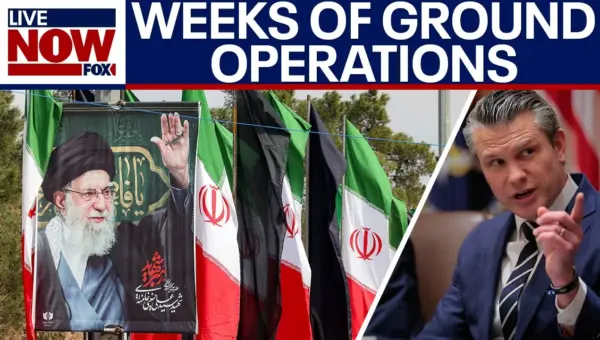
The Pentagon is reportedly preparing for weeks of ground operations in Iran, signaling a potentially dangerous escalation. This comes as missile defenses near Jerusalem are being scrutinized after two missiles penetrated. The conflict is widening into a regional war, involving various actors and raising concerns about global economic stability.


US Consumers Face Historic Financial Misery: Expert Warns
American consumer sentiment has fallen to near historic lows, driven by soaring gas prices and lingering supply chain woes. Professor Justin Wolfer warns that the current economic mood is one of the worst in post-war U.S. history. Compounding these issues are disruptions caused by the longest-ever government shutdown, impacting sectors like air travel.

US Bombs Iran: Leaders Killed, Invasion Looms
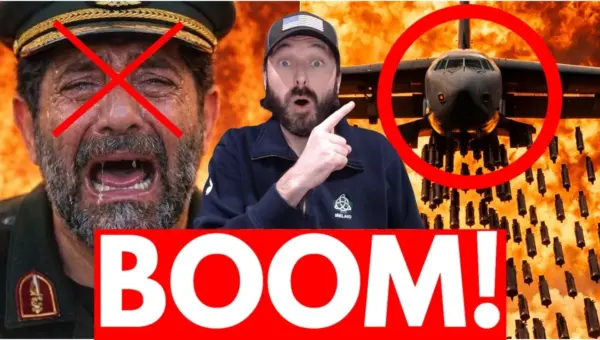
The United States has launched powerful bombings against Iran, destroying key military targets and reportedly killing six senior leaders. With B-52 bombers involved and US ground troops moving into the region, a ground invasion appears imminent, signaling a dramatic escalation.