US Overreaches in Iran Standoff, Experts Warn
U.S. military experts warn President Trump has overextended American capabilities in the escalating standoff with Iran. With significant troop deployments and Iranian threats, the situation is precarious. Experts call for a clear strategy and a diplomatic "off-ramp" to avoid wider conflict.

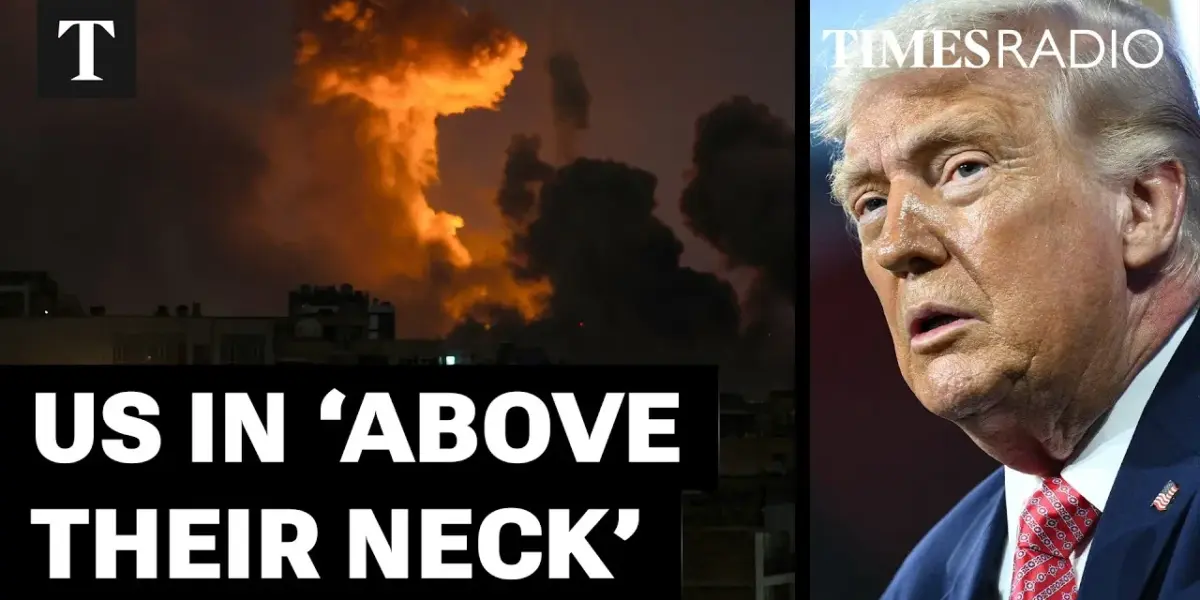
US Overreaches in Iran Standoff, Experts Warn
The United States has placed itself in a precarious position with Iran, with military experts warning that President Donald Trump may have overextended American capabilities. The escalating tensions, marked by troop deployments and Iranian threats, suggest a potential for conflict that could draw in the wider world.
Military Buildup and Iranian Response
Recent weeks have seen a significant American military buildup in the Middle East. This includes the arrival of approximately 3,500 U.S. Navy sailors and Marines aboard the assault ship USS Tripoli. These forces are part of an amphibious ready group, positioned to potentially move into the Persian Gulf or the Strait of Hormuz.
In addition to the naval deployment, elements of the 82nd Airborne Division have also arrived in the region, with reports suggesting their numbers could range from 1,000 to 2,000 personnel. These new deployments add to the roughly 40,000 U.S. troops already stationed in the Middle East. These existing forces include naval, air force, and army units, along with fighter jets, tankers, reconnaissance aircraft, and air defense units.
Iran has responded with strong warnings. The country’s military spokesperson stated that Iranian forces are prepared to retaliate with force if U.S. ground troops enter its territory. “The US president has proven that the only language he understands is a language of force,” the spokesperson said. “The fighters of Islam have long been awaiting such actions in order to demonstrate that aggression and occupation will yield no result.”
Expert Analysis: A Plan is Needed
Military analysts, including former U.S. Air Force Colonel Cedric Leighton, have noted that the current troop movements are indicative of preparations for some form of ground operation. However, Leighton pointed out that the scale of this deployment is not as extensive as those seen in previous Gulf Wars, suggesting potentially different strategic objectives.
Lord Dannatt, former head of the British Army, echoed concerns about the lack of a clear strategy. “What are they for? What are they going to do? Where are they going to attack? What’s the strategy? What’s the objective?” he questioned, emphasizing the need for a well-defined plan.
Potential U.S. Objectives
If advising President Trump, Leighton suggested focusing on specific objectives. The first priority would be to secure the Strait of Hormuz, ensuring it remains open for naval commerce and alleviates any shipping blockades. A secondary objective could be to target Kharg Island, which is crucial for Iran’s oil exports.
A more difficult option, considered a last resort, would be an operation to secure Iran’s enriched uranium. This would require a much larger and more extensive operation, and current intelligence does not indicate an immediate need for such action.
British Stance and Diplomatic Off-Ramps
Lord Dannatt indicated that the British government’s stance is to remain largely out of the conflict. He noted that unlike previous Gulf Wars, there are no United Nations Security Council resolutions supporting the current U.S. actions, nor has a coalition of the willing been formed.
Both experts agreed that President Trump needs to find an “off-ramp” – a way to deescalate the situation with dignity. Lord Dannatt urged humility and a respect for Iran’s position, acknowledging its influence in the region. Leighton suggested that if President Trump can frame any outcome as a victory, even through “ambidextrous manipulation of the facts,” a diplomatic solution might be possible.
The Difficulty of Regime Change
Drawing on his experience in Iraq and Afghanistan, Lord Dannatt stated that regime change in the Middle East with Western boots on the ground is extraordinarily difficult. He believes that any change in Iran would need to come from within, driven by the Iranian people.
However, he noted that the opposition in Iran is fragmented, and the current regime has shown a willingness to use force to suppress dissent. Furthermore, external attacks on Iran might inadvertently strengthen support for the current regime among its population.
Defense Spending and European Security
Lord Dannatt also addressed defense spending, urging the UK government to increase its budget. He stressed the importance of defense in protecting the country and its citizens, particularly in light of threats from Russia and the ongoing conflict in Ukraine. He called for increased spending to meet NATO commitments and deter future aggression.
He also suggested that the UK’s focus should be on European security, particularly in the Baltics, Scandinavia, and the High North, rather than extensive involvement in the Middle East. “Take an interest in the Middle East. Not our problem,” he stated, emphasizing that the primary focus should be on supporting allies closer to home.
Looking Ahead
As tensions remain high, the world watches to see if diplomatic channels can be utilized to prevent further escalation. The effectiveness of President Trump’s approach and the potential for finding a face-saving resolution will be critical in determining the future course of events in the region.
Source: Trump Is In ‘Well Above’ His Neck With Iran War | Lord Dannatt (YouTube)

Related Articles


Trump Eyes Iran Invasion as Fox Pushes for War
Reports indicate the Pentagon is preparing for ground operations in Iran, potentially deploying thousands of U.S. troops. Simultaneously, some Fox News hosts are actively advocating for military intervention, focusing on Iran's uranium program. This situation raises serious questions about the path to conflict and the media's role in shaping public opinion.

Objects in Orbit Hint at Pre-Human Intelligence
New scientific papers suggest artificial objects orbited Earth before human satellites, hinting at non-human intelligence. Declassified CIA documents also reveal serious investigation into psychic abilities via Project Stargate. These developments challenge our understanding of history and the universe.

US Escalates Iran Tensions: Troops Deploy, Markets Reel
The U.S. is increasing its military presence in the Middle East amid escalating tensions with Iran, leading to a surge in oil prices and market instability. President Trump is considering sending more troops as diplomatic talks remain uncertain. Meanwhile, a funding dispute over the Department of Homeland Security continues, impacting federal workers and airport security.