US Frees Hostages, But 41 Americans Still Held Abroad
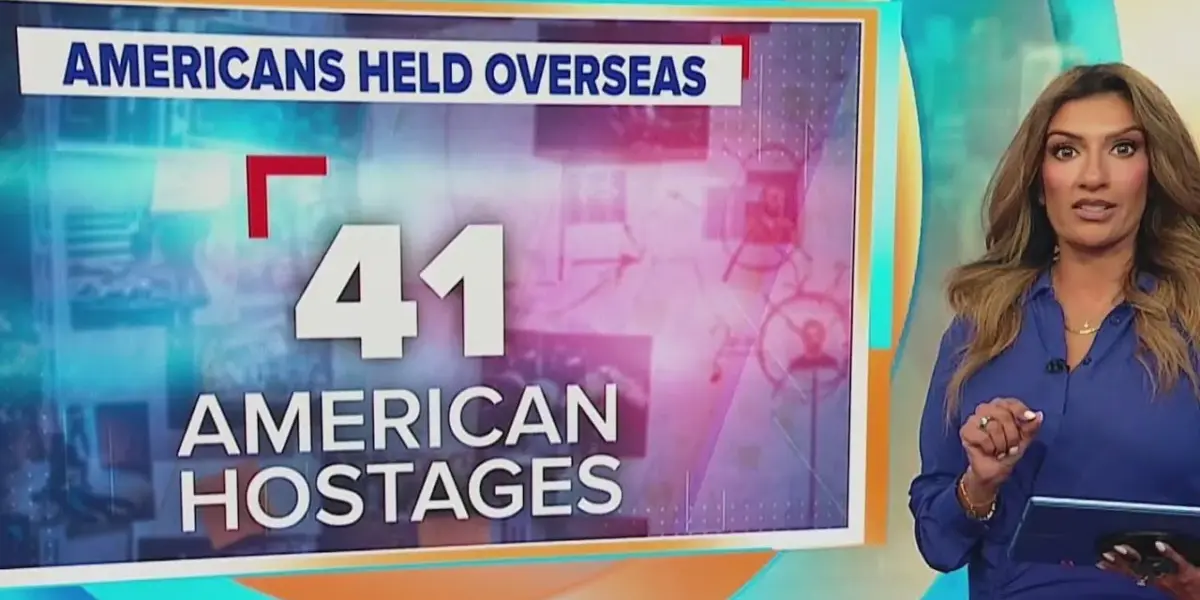
American Dennis Coyle has returned home after over a year in Taliban custody in Afghanistan. While his release is a victory, 41 other Americans remain unjustly detained in countries including China, Russia, and Iran, highlighting ongoing international challenges.

US Frees Hostages, But 41 Americans Still Held Abroad
American Dennis Coyle is finally home with his family after spending over a year held by the Taliban in Afghanistan. Coyle had lived in Afghanistan for almost 20 years before his detention in January 2025. He was taken from his home by Taliban forces. The U.S. government states he was wrongly detained. For nine months, authorities did not say what laws he broke or why he was taken. His mother and three sisters lost contact with him before learning he was still alive.
His sister, Molly Long, shared how emotional it was to see him step off the plane in the United States. “It moved all of us to be impacted, knowing that he’s free,” she said. While Coyle’s return is a happy event, it highlights a larger issue. Many families are still waiting for their loved ones to return.
Dozens Still Held Captive
As of now, 41 known American hostages are being held in various countries. Some of these cases have been going on for many years. For example, the State Department reports that at least two other Americans are still held in Afghanistan. Mahmoud Habibi was taken in August 2022. Author Paul Overby was kidnapped in May 2014 while researching a book.
These stories go beyond Afghanistan. Data from the James Foley Foundation shows that a few countries are responsible for most Americans held unjustly. As of 2025, China has detained 13 people, including two taken that year. Russia is holding 8 Americans wrongly. Iran has held 6 people for over a year.
Diplomatic Efforts Continue
The White House has worked to bring home detained Americans. Since President Trump took office, they say 105 Americans held abroad have been released. Dennis Coyle’s case shows that progress is being made. However, his release also reminds us that many others are still waiting to come home.
Global Impact
The issue of Americans held hostage overseas involves complex international relations. Countries holding these individuals often use them as bargaining chips. This can be for political concessions, financial gains, or to punish perceived enemies. The U.S. government faces difficult choices in these situations. They must balance the desire to bring citizens home with not appearing to give in to demands.
These detentions can strain diplomatic ties between the U.S. and the countries involved. It also creates significant emotional and financial burdens for the families of those held captive. The long waits and uncertainty take a heavy toll. The U.S. strategy often involves quiet diplomacy, public pressure, and sometimes, direct negotiations or sanctions.
Historical Context
The practice of holding foreign nationals for political leverage is not new. Throughout history, countries have used prisoners of war or civilians as a way to gain an advantage. In recent decades, groups like terrorist organizations and certain states have increasingly used this tactic. This has become a significant challenge in modern diplomacy. It requires constant attention from governments around the world.
Economic and Regional Dynamics
The countries where Americans are most often detained, like China, Russia, and Iran, are major global players. Their relationships with the U.S. are often complex, involving trade, security, and political disagreements. Sometimes, detentions are linked to broader geopolitical tensions. For instance, tensions between the U.S. and Iran have often led to the detention of Americans.
Trade and economic ties can also play a role. While not directly stated in this report, powerful nations might use economic tools like sanctions. These can be aimed at pressuring a country to release detainees. However, such actions can also impact global trade and economic stability. The control of energy routes and resources can also be part of the larger geopolitical picture, though not explicitly detailed here.
Future Scenarios
The situation for the remaining 41 Americans will likely depend on several factors. Continued diplomatic efforts by the U.S. government will be key. The willingness of the detaining countries to negotiate will also be important. Geopolitical events and the overall relationship between the U.S. and these nations will influence outcomes.
It is possible that more Americans will be released through diplomatic channels, similar to Dennis Coyle. However, some cases may remain unresolved for extended periods. In other scenarios, escalating tensions could lead to new detentions. The ongoing challenge requires persistent international cooperation and strategic engagement from the United States.
Source: About 41 American hostages being held hostage overseas | Morning in America (YouTube)

Related Articles

Iran Conflict Escalates: US Weighs Ground War, Diplomatic Off-Ramps Narrow
Concerns are mounting over potential U.S. ground operations in Iran, with lawmakers questioning the lack of Congressional approval and the risk of a protracted conflict. Iran claims it can still inflict pain despite strikes, while diplomatic options appear increasingly narrow.

Iran Escalates Mideast Conflict, Threatens US Campuses
Iran has escalated its involvement in the Middle East conflict by attacking a chemical plant and threatening US university campuses abroad. This move broadens the conflict's scope, impacting civilian infrastructure and potentially drawing more nations into the crisis.


Trump’s War Gamble: Unpopular Conflict Risks Voter Backlash
President Trump is reportedly considering sending 10,000 more troops to the Middle East amid widespread public disapproval of the Iran conflict. Polls show a significant majority disapprove of his handling of the war and the economy, suggesting a political backlash looms.