Multiverse Theory: Science or Speculation?
The multiverse, a vast ensemble of universes, is explored as a potential explanation for cosmic fine-tuning. While criticized as unfalsifiable, proponents argue it arises naturally from theories like string theory and eternal inflation, and can be indirectly tested.

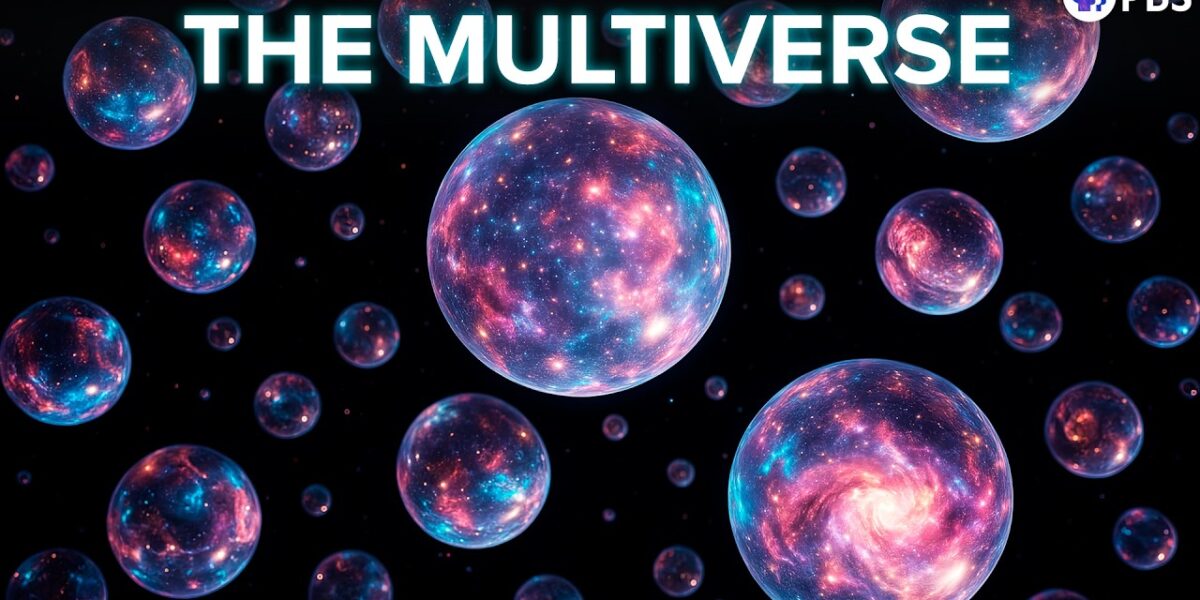
The Multiverse Hypothesis: A Cosmic Ensemble
The concept of a multiverse, a vast collection of universes existing alongside our own, is now a compelling, albeit controversial, idea in modern physics. It arises from several theoretical frameworks and is proposed as a potential explanation for some of the universe’s most perplexing characteristics, particularly the apparent ‘fine-tuning’ of fundamental physical constants that allow for life as we know it. However, the multiverse also faces significant criticism, with some arguing it represents ‘bad science’ due to its perceived unfalsifiability and violation of principles like Ockham’s Razor.
Defining Our ‘Universe’
Before digging into the multiverse, it’s crucial to clarify what we mean by ‘universe.’ Historically, the term encompassed the totality of existence. In contemporary cosmology, however, ‘universe’ typically refers to our specific, continuous spacetime that originated from a particular Big Bang.
The ‘observable universe’ is the portion of this spacetime from which light has had time to reach us, bounded by the particle horizon. Regions beyond this horizon are generally considered part of our universe, assuming the laws of physics remain consistent.
Types of Multiverses
Several theoretical models suggest the existence of other universes:
- Quilt Multiverse: In an immensely vast, connected spacetime, the laws of physics might vary across extremely large distances. Regions with different physical laws could, in this view, be considered separate universes.
- Eternal Inflation Multiverse: The theory of eternal inflation posits that a greater spacetime continues to expand at a rapid rate. Within this inflating expanse, ‘bubbles’ of more gently expanding space emerge, forming universes like our own. These bubble universes might also possess different physical laws.
- Other Cosmological Models: Concepts like Lee Smolin’s cosmological natural selection propose universes can be ‘born’ within black holes, potentially with evolving physical laws. Cyclic universe models suggest universes go through cycles of expansion and contraction, with laws potentially shifting between cycles.
- Many-Worlds Interpretation (MWI) of Quantum Mechanics: This interpretation suggests that every quantum measurement causes the universe to split into multiple, parallel universes, each representing a different outcome. While relevant, this article focuses more on multiverses with varying physical laws.
The ‘Fine-Tuning’ Problem and the Anthropic Principle
A primary driver for multiverse theories is the observation that our universe’s fundamental parameters—such as the mass of the Higgs boson, the strength of dark energy, or the fine-structure constant—appear exquisitely tuned to permit the existence of stars, galaxies, and ultimately, life. If these constants were even slightly different, our universe would likely be inhospitable.
The anthropic principle offers an explanation: we observe our universe to be habitable because we, as observers, can only exist in a universe that supports our existence. This is akin to finding ourselves in a habitable biosphere within our own universe; it’s unsurprising because we *must* be in a place where we can emerge and survive.
Applied to the multiverse, the anthropic principle suggests that if a vast ensemble of universes exists with all possible parameter values, it’s statistically inevitable that some will be habitable, and we would naturally find ourselves in one of them. This selection bias explains why our universe seems so ‘fine-tuned’ without requiring a designer or an unexplained cosmic coincidence.
String Theory and the Landscape
String theory, a candidate for a unified theory of everything, predicts a vast ‘landscape’ of at least 10500 possible vacuum states. Each vacuum state corresponds to a universe with a different set of physical laws, particle masses, and force strengths. String theory itself cannot specify which vacuum state our universe occupies, leading to the idea that our universe’s specific configuration might be one of many that arose randomly.
Criticisms of the Multiverse: Ockham’s Razor and Falsifiability
The multiverse concept faces two major criticisms:
- Violation of Ockham’s Razor: This principle, often phrased as ‘entities must not be multiplied beyond necessity,’ suggests that simpler explanations are preferable. Critics argue that positing an infinite or near-infinite number of universes is an extravagant multiplication of entities, violating this principle.
- Unfalsifiability and Explanatory Dead End: If a theory cannot be tested or potentially disproven through experiments or observations, it is often deemed unscientific. Critics argue that the multiverse, by its very nature, is impossible to observe or interact with, rendering it scientifically useless and a dead end for inquiry.
Re-evaluating the Criticisms
Proponents of the multiverse argue that these criticisms are often misapplied:
- Ockham’s Razor Refined: A more precise understanding of Ockham’s Razor, as articulated by Isaac Newton, focuses on minimizing the number of *causes* or *hypotheses* in an explanation, not necessarily the number of predictions or outcomes. If a theory like eternal inflation or string theory, developed for other reasons, naturally predicts a multiverse, then the multiverse is an extension of the theory, not an arbitrary addition. Historical biases against vastness (e.g., the debate over the size of the universe) show that our intuition about ‘necessity’ can be flawed. The parsimony of a multiverse theory, therefore, depends on the parsimony of the underlying theory that predicts it.
- Falsifiability and Testability: While direct observation of other universes might be impossible, multiverse theories are not necessarily unfalsifiable. Some proposals suggest indirect tests, such as looking for specific patterns in the cosmic microwave background that might indicate collisions with other universes. Anthropic arguments, when coupled with multiverse theories, can make testable predictions about observable phenomena in our own universe. For instance, Steven Weinberg’s work on dark energy used anthropic reasoning to predict its value. If a multiverse theory leads to specific, testable predictions about our universe, it remains within science.
Conclusion: A Frontier of Science
The multiverse remains a speculative but scientifically grounded concept. When proposed as a natural consequence of well-developed theories like string theory or eternal inflation, and when it allows for testable predictions about our own reality, it can be considered a valid scientific hypothesis.
The danger lies in proposing the multiverse as a facile, unfalsifiable ‘explanation’ for phenomena like fine-tuning without a concrete underlying mechanism. Treated with scientific rigor, the exploration of the multiverse represents a profound and potentially revolutionary frontier in our quest to understand the cosmos.
Source: Why The Multiverse Could Be Real (YouTube)

Related Articles


Universe’s End Time Shrinks Dramatically
New research suggests the universe's end may arrive much sooner than previously thought, with a revised timeline of 10 to the power of 78 years. This 'heat death' theory posits that all matter will decay, not just black holes. While still an immense duration, it's a significant shift from earlier predictions.


Distant Galaxy Appears to Break Light Speed Limit
A distant galaxy, GN-z11, appears to be moving away from Earth faster than the speed of light due to the expansion of space. This phenomenon, while seemingly violating Einstein's laws, is a key indicator of the universe's dynamic growth and offers insights into its early history.

Universe’s Expansion Outpaces Light Speed: A Cosmic Loophole
The universe's expansion appears to exceed the speed of light, but this doesn't violate Einstein's laws. It's the stretching of space itself, not objects moving through space, that causes distant galaxies to recede faster than light. The expansion rate, unlike speed, doesn't have a universal limit.