Cosmic Fine-Tuning Hints at Multiverse Existence
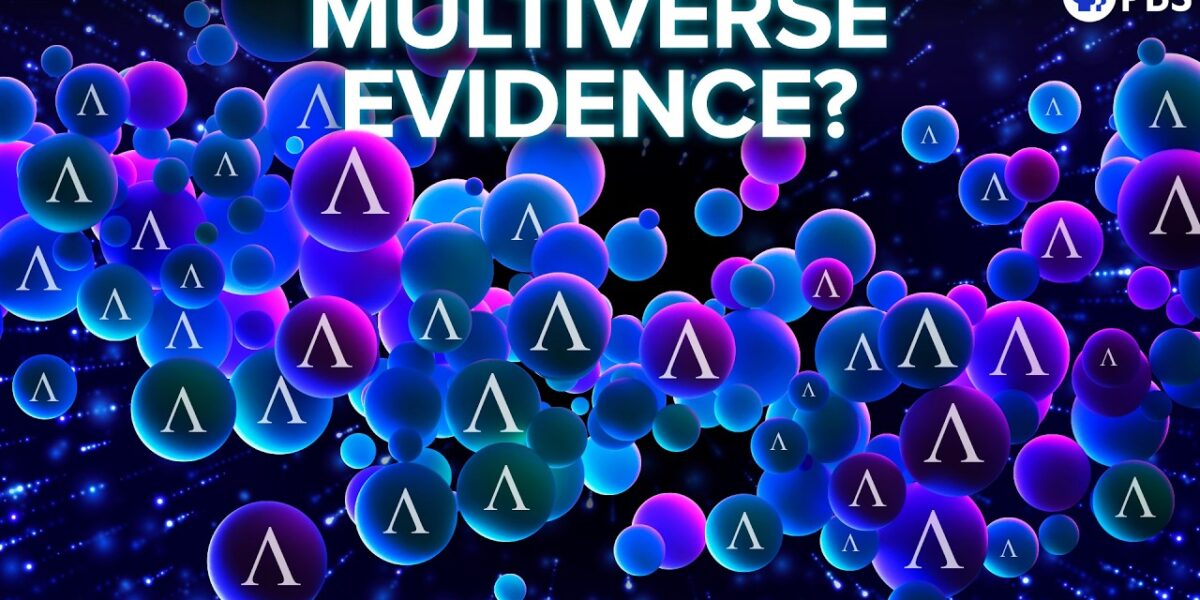
The universe's seemingly perfect tuning for life, particularly the value of the cosmological constant, might be evidence for a vast multiverse. Steven Weinberg's 1987 paper used anthropic reasoning to estimate this constant, a prediction remarkably close to later observations, suggesting we inhabit a life-permitting universe within a cosmic ensemble.

Cosmic Fine-Tuning Hints at Multiverse Existence
In the grand mix of the cosmos, our universe appears remarkably, almost impossibly, suited for the emergence of life. From the precise strength of fundamental forces to the delicate balance of cosmic expansion, several physical constants seem exquisitely tuned.
This apparent fine-tuning has long puzzled scientists, leading to profound questions about our place in the universe. Now, a re-examination of a seemingly minor 1987 paper by Nobel laureate Steven Weinberg, originally focused on the cosmological constant, offers a compelling, albeit indirect, piece of evidence that we might not be alone in existence – not in the sense of other civilizations, but in the grander, more mind-bending concept of a vast multiverse.
The Anthropic Principle and the Fine-Tuning Problem
The universe we inhabit possesses several characteristics that seem perfectly calibrated for life. For instance, the nuclear binding energy of helium is such that stars can efficiently produce carbon, an essential element for life as we know it. If this energy level were slightly different, our universe would be predominantly hydrogen or would have no hydrogen at all.
Similarly, the mass of the Higgs boson and the relative weakness of gravity compared to other fundamental forces are crucial. If gravity were significantly stronger, matter would collapse into dense blobs or black holes, precluding the formation of complex structures like stars and galaxies. These are just a few examples of the ‘fine-tuning’ problem: physical constants that appear to have values that are statistically improbable yet necessary for a universe capable of supporting observers.
One of the most striking examples of this fine-tuning is the value of the cosmological constant, a term introduced by Albert Einstein into his equations of general relativity. This constant, now associated with dark energy, drives the accelerating expansion of our universe.
While theoretical calculations based on quantum field theory predict a vacuum energy density that is staggeringly larger—by some 120 orders of magnitude—than what we observe, the actual value is remarkably small. This discrepancy, often called the ‘worst prediction in physics,’ suggests that either our understanding is incomplete, or there’s a reason for this minuscule value.
Weinberg’s Insight: The Cosmological Constant and the Multiverse
The anthropic principle offers one potential explanation: if a vast number of universes exist, each with different physical constants, it’s not surprising that we find ourselves in one where the constants are conducive to life. We simply couldn’t exist to observe a universe that wasn’t.
However, simply invoking the anthropic principle can feel like an explanatory dead end. Steven Weinberg, in his 1987 paper, took this idea a step further by attempting to estimate the value of the cosmological constant using anthropic reasoning and the principle of mediocrity.
The principle of mediocrity suggests that a randomly selected object or phenomenon is more likely to come from the most numerous categories. In the context of a multiverse, this implies that we should not find ourselves in an unusually special universe. Weinberg applied this to the cosmological constant.
If many universes exist with a wide range of cosmological constants, and only a fraction allow for the formation of structures like galaxies and stars, then observers like us would naturally reside in one of these life-permitting universes. However, the mediocrity principle further suggests that, within the subset of universes that can support observers, we should not find ourselves in one with an *unusually* small cosmological constant – it should be close to the maximum value that still allows for observers.
Calculating the Limit for Life
Weinberg’s calculation focused on determining the maximum possible value of dark energy that would still permit the formation of structures necessary for life. He considered the balance between the universe’s expansion and gravity’s pull. For galaxies and stars to form, gravity must be able to overcome the outward push of expansion over sufficiently large scales.
If dark energy were too strong, the universe would expand too rapidly, preventing matter from clumping together to form these essential structures. Early star formation is critical, as it produces the heavier elements necessary for planets.
Weinberg estimated that the maximum allowable dark energy density, for structures like galaxies to form, would be about 500 times the energy density of matter in the modern era. Our universe’s observed value, where dark energy is roughly 2.3 times the energy density of matter, is significantly smaller than this calculated limit. This suggests that our universe’s cosmological constant is indeed much smaller than the upper bound required for galaxy formation, but not *so* small as to be statistically improbable even within the anthropic framework.
Refinements and Implications
While Weinberg’s initial calculation was groundbreaking, subsequent observations, particularly from the James Webb Space Telescope (JWST), have revealed the existence of massive galaxies much earlier in the universe’s history than previously thought. This implies that dark energy could potentially be even stronger than Weinberg’s calculation allowed and still permit galaxy formation.
However, a refinement of the anthropic argument, known as the self-sampling assumption, suggests that observers might preferentially find themselves in universes that produce *more* observers. Universes with more and larger galaxies would likely host more potential observers, pushing the preferred value of the cosmological constant even lower.
The most striking aspect of Weinberg’s work is that he made these calculations *before* the accelerating expansion of the universe, and thus dark energy, was experimentally confirmed in the late 1990s. At the time, many physicists believed the cosmological constant was zero, implying a perfect cancellation by undiscovered symmetries.
Weinberg’s prediction, derived from anthropic reasoning within a multiverse context, landed him remarkably close to the observed value, even without knowing dark energy existed. This success, for some, lends significant weight to the idea that our universe is one among many, and that its specific properties are a result of a cosmic selection effect.
The Path Forward
While the multiverse hypothesis remains untestable in the traditional sense of direct observation or travel, phenomena like the fine-tuning of physical constants, particularly the cosmological constant, provide indirect evidence. Weinberg’s paper, by using anthropic arguments to constrain a value that was later experimentally measured to be within that constraint, offers a compelling case for this line of reasoning. It suggests that the seemingly improbable values of our universe’s constants might be explained not by sheer luck, but by the statistical necessity of existing within a vast ensemble of universes.
The quest to understand these fundamental questions continues. Future missions and theoretical advancements will undoubtedly refine our understanding of cosmology, particle physics, and the very nature of reality. Whether the multiverse is a true description of existence or a placeholder for deeper physics yet to be discovered, the pursuit of these answers pushes the boundaries of human knowledge and inspires awe at the profound mysteries of the cosmos.
Source: Is There Evidence For a Vast Multiverse? (YouTube)

Related Articles

Webb Telescope Reveals New Cosmic Secrets
The James Webb Space Telescope has selected its next batch of scientific projects, promising new insights into alien worlds and the early universe. Researchers will use Webb to study exoplanet atmospheres, investigate distant galaxies, and explore objects within our own solar system.


Universe’s End Time Shrinks Dramatically
New research suggests the universe's end may arrive much sooner than previously thought, with a revised timeline of 10 to the power of 78 years. This 'heat death' theory posits that all matter will decay, not just black holes. While still an immense duration, it's a significant shift from earlier predictions.


Distant Galaxy Appears to Break Light Speed Limit
A distant galaxy, GN-z11, appears to be moving away from Earth faster than the speed of light due to the expansion of space. This phenomenon, while seemingly violating Einstein's laws, is a key indicator of the universe's dynamic growth and offers insights into its early history.